



Oxygen near an explosion limit, carbon monoxide in a rotary kiln, ammonia slip behind a DeNOx catalyst, hydrogen purity in a turbo generator: in many plants, the most important process values are gas concentrations. A continuous gas analyzer measures them around the clock and turns them into signals for the control system. Choosing one starts with two questions: do you take a sample out of the process or measure directly inside it, and which measuring principle suits the gas you need to see?

Why Continuous Gas Analysis Pays Off
Laboratory samples show what happened hours ago. Continuous analysis shows what is happening now, which is what process control needs. Plants typically invest in online process gas analysis for four reasons:
- Process optimization: tighter control of combustion, reactions and separation steps saves fuel and raw materials and raises yield.
- Product quality: constant monitoring keeps the product within specification and documents it.
- Safety: analyzers detect flammable or toxic concentrations before they become dangerous for people and equipment.
- Emission compliance: certified measurements prove that legal limits for flue gases are met.
Extractive Or In-Situ Gas Analyzer?
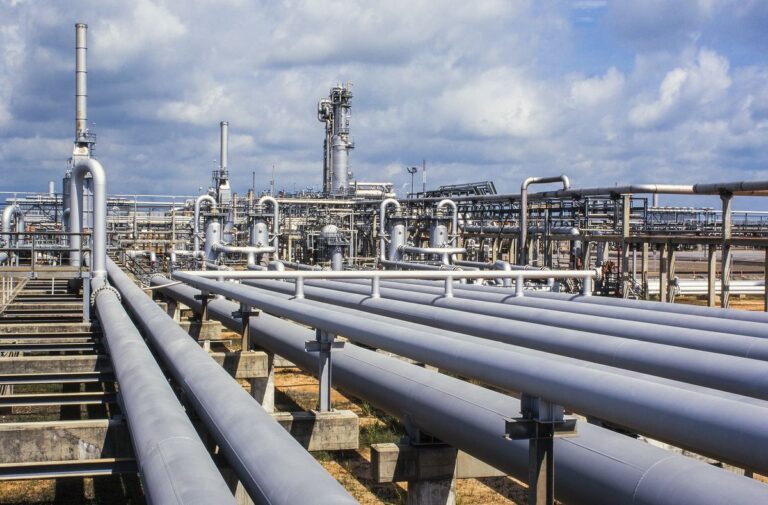
An extractive analyzer draws a sample from the process through a probe and sample line, conditions it by filtering, cooling or heating, and measures it in an analyzer cabinet or shelter. An in-situ analyzer measures directly in the duct, stack or pipe, usually by sending a laser beam across the gas stream, so no sample leaves the process.
| Extractive | In-situ | |
|---|---|---|
| Response time | Seconds to minutes, depending on sample line length | Seconds, no transport delay |
| Components per analyzer | Often several, from ppb to percent levels | Usually one or two per measuring path |
| Sample conditioning | Required: probe, filters, cooler or heated line, pump | Not required, measurement under process conditions |
| Harsh gases | Corrosive, sticky or condensing gases are challenging to transport | Well suited, no contact between sensor and gas |
| Maintenance | Mainly in the sample system, but analyzers are easy to reach | Low, although alignment and window purging need attention |
| Typical use | Multi-component emission monitoring, process control, gas quality | Combustion control, ammonia slip, safety oxygen, fast process loops |
Measuring Principles And The Gases They Measure
Each measuring principle responds to a physical property of the gas. That is why the component list largely decides which technology you need:
| Principle | Typical components | Strengths |
|---|---|---|
| NDIR (non-dispersive infrared) | CO, CO2, NO, SO2, CH4, hydrocarbons | Multi-component, ppm to percent, proven for emissions |
| Paramagnetic | O2 | Fast, accurate, long-term stable, suitable for safety functions |
| Zirconium dioxide (ZrO2) | O2, down to trace ppm levels | Very low detection limits, combustion and trace oxygen |
| Thermal conductivity | H2, He, Ar in binary mixtures | Simple and robust for hydrogen purity and cooling gas |
| Flame ionization (FID) | Total hydrocarbons (THC, VOC) | Sensitive to sub-ppm organic carbon |
| UV photometry | NO, NO2, SO2, H2S | Low ppm without water vapor interference |
| Chemiluminescence (CLD) | NO, NOx | Reference method for nitrogen oxides |
| Tunable diode laser (TDLAS) | O2, CO, NH3, H2O, HCl, HF, CH4 | In-situ, very fast, virtually free of cross-interference |
| Electrochemical cell | O2, H2S | Compact and economical add-on to multi-gas analyzers |
Many analyzers combine principles in one housing, for example infrared channels for CO and CO2 with a paramagnetic or electrochemical oxygen sensor. That saves space, sample conditioning and cost.
Emission Monitoring In Power Plants And Incinerators
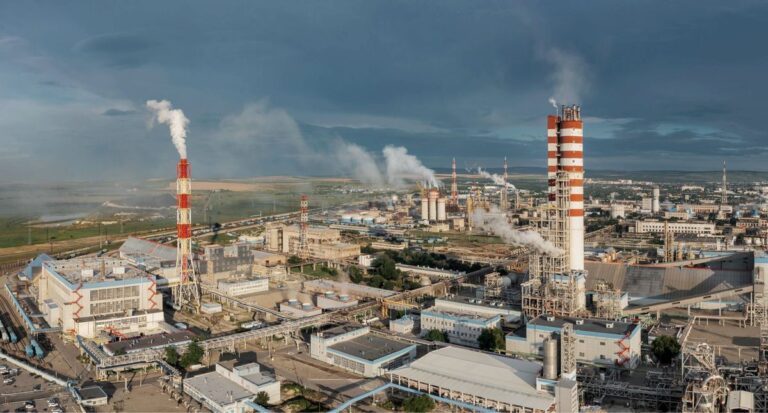
Continuous emission monitoring systems (CEMS) measure CO, NOx, SO2 and O2 in the flue gas of boilers and furnaces, and in waste incineration also HCl, NH3, total organic carbon and dust. The measurements are legally binding, so the analyzers must hold the right approvals: QAL1 certification to EN 15267 and EN 14181 in Europe, MCERTS in the United Kingdom, and performance specifications under 40 CFR Part 60 or Part 75 in the United States.
The choice of analyzer depends on the measuring ranges, the components on the permit and the type of plant. A gas-fired power generation boiler needs a different package from a waste-to-energy plant with acid gases in the flue gas.
Combustion Control In Rotary Kilns And Furnaces
A rotary kiln in a cement plant is the most energy-intensive part of the process, and its optimum operating window is narrow. Oxygen and carbon monoxide at the kiln inlet show whether combustion is efficient: too much oxygen wastes fuel, too much CO means incomplete combustion and a risk of explosion in the electrostatic precipitator. Sampling at the kiln inlet takes water-cooled probes built for high temperature and heavy dust loads, while in-situ laser analyzers are increasingly used where response time is critical.
Safety Applications: Oxygen, Hydrogen And Smoldering Fires
Some of the most demanding analyzer applications are about keeping a process out of the explosive range:
- Oxidation reactors: in processes such as ethylene oxide production, yield rises with oxygen concentration, so operators run as close to the explosion limit as they safely can. That calls for a very fast and accurate oxygen measurement, often in a SIL-rated safety loop.
- Hydrogen-cooled turbo generators: hydrogen cools better and causes less friction than air, but forms explosive mixtures with it. Thermal conductivity analyzers monitor hydrogen purity during operation and during purging with CO2.
- Coal silos and bunkers: smoldering fires show up as rising CO and CH4 in the headspace long before flames appear. Continuous measurement gives time to inert the silo.
- Flammable and hydrogen storage: oxygen and hydrogen measurements confirm that blanketing and purging work as designed.
DeNOx Control With Ammonia Slip Measurement
Selective catalytic and non-catalytic reduction systems inject ammonia or urea to convert nitrogen oxides into nitrogen and water. Unreacted ammonia, the so-called slip, costs reagent, fouls downstream equipment with ammonium salts and adds to emissions. Because ammonia is sticky and reactive, it is hard to transport through a sample line. In-situ laser analyzers installed across the duct measure it in real time, so the reagent dosing can be controlled precisely.
Checklist For Selecting A Continuous Gas Analyzer
Before requesting quotations, collect the answers to these questions. They narrow the choice quickly and make offers comparable:
- Components and ranges: which gases, what concentration ranges, and the lowest value that must be detected reliably.
- Process conditions: temperature, pressure, moisture, dust, corrosive or condensing components.
- Response time: how fast the value must follow the process, especially for control and safety loops.
- Approvals: emission certification (QAL1, MCERTS, EPA), hazardous area approval (ATEX, IECEx, Class I Div 2) and functional safety (SIL).
- Housing: 19-inch rack unit in a shelter or cabinet, or a field housing with IP65 protection for outdoor installation.
- Wetted materials: stainless steel, titanium, Hastelloy or tantalum in the gas path for corrosive samples.
- Communication: 4–20 mA and relay outputs, Modbus, PROFIBUS, Ethernet or HART, plus remote diagnostics.
- Calibration and drift: automatic calibration with ambient air or internal references, test gas consumption and documented long-term drift.
- Life-cycle support: spare parts availability, service contracts, repair and loaner programs.
Drift, Autocalibration And Maintenance
Drift matters most at low ranges. An error of one percent of span means little at 25 vol% oxygen, but a lot when you measure 50 ppm CO against an emission limit. Modern multi-component analyzers therefore run a daily automatic zero calibration. Published week-long drift tests on infrared analyzers with a 24-hour autocalibration cycle show zero and span deviations of about one ppm or less on CO and NO ranges of 50 to 100 ppm, comfortably within typical tolerances of 2.5 to 3 percent of the measuring range.
The largest share of maintenance, however, is usually in the sample system: filters, pumps, coolers and heated lines. A well-designed sampling system with easy access and condition monitoring pays for itself in uptime.
Installation, Start-Up And Commissioning
Even the best analyzer delivers poor data when the installation is wrong. A structured start-up and commissioning procedure typically includes:
- Mechanical inspection: probe location, sample lines, slopes, heat tracing and support.
- Electrical checks: power, grounding, signal wiring and terminations.
- Function tests: every component of the analyzer system, followed by calibration with certified test gases.
- Communication tests: signals and alarms verified in the control system.
- Leak check: all sample lines and the conditioning system, before process gas is introduced.
- Sample verification: temperature, flow, pressure and phase of the sample checked. A laboratory sample confirms that the process gas is within specification before it reaches the analyzers.
- Handover: several process runs under observation, calibration certificates and on-the-job training for operators.
Watch: Gas Analyzer Technology Explained
Gas Analyzer Manufacturers In The Directory
These manufacturers of continuous gas analyzers and analyzer systems are listed in the Fluid Handling Pro directory:
- ABB Measurement and Analytics: extractive and laser gas analyzers, CEMS
- AMETEK: process analyzers for refining and chemicals
- Emerson: continuous gas analyzers and gas chromatographs
- Endress+Hauser: TDLAS and Raman analyzers
- Gasmet Technologies: FTIR multi-gas analyzers for emissions
- Servomex: paramagnetic, zirconia and laser oxygen analyzers
- SICK: in-situ and extractive emission monitoring
- Yokogawa: tunable diode laser spectrometers and zirconia oxygen analyzers
Find more suppliers in the Analytical Systems section of the Equipment Guide or the complete Manufacturers Directory. Working with biogas? Read our guide on how biogas analyzers monitor methane, CO2, oxygen and H2S.
Sources And Further Reading
- SICK, Monitoring emissions from stack gases: in-situ versus extractive
- Endress+Hauser, Principles of tunable diode laser absorption spectroscopy
- Servomex, Paramagnetic oxygen analyzer technology
- Yokogawa, Optimum combustion control by tunable diode laser gas analyzer (technical report)
- Manufacturer application literature on continuous gas analysis, analyzer selection and commissioning services (2021)