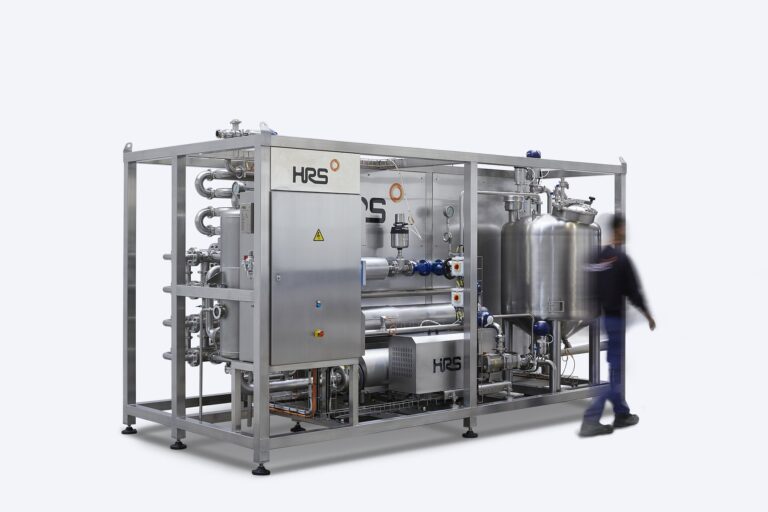
A Compact and Complete Pasteurisation Solution
Pasteurisation and sterilisation are widely recognised as being among the most effective and efficient processes to reduce or remove microbes from food and drink products, ensuring product safety,…


Market
Beverage production moves liquid from raw ingredient to sealed pack without losing quality or hygiene. Pumps, valves, flow meters, level sensors, heat exchangers, filters and CIP systems handle water, wort, juice, syrup, beer, dairy and carbonated product, under food-grade design, gentle product handling and cleaning requirements that shape the whole line.
Latest in this market
Pasteurisation and sterilisation are widely recognised as being among the most effective and efficient processes to reduce or remove microbes from food and drink products, ensuring product safety,…
Promoted videos
Ask the Expert
Engineers and product specialists who answer technical questions from readers. The answer comes back to you by e-mail; when we publish it, other readers benefit too.
 Matt Smith
Silverson
Matt Smith
Silverson
Matt Smith is Sales Director at Silverson Machines, which has over 70 years of experience helping customer in the field of high…
Ask a question Erik Tiemensma
Bronkhorst High-Tech B.V.
Erik Tiemensma
Bronkhorst High-Tech B.V.
Erik Tiemensma, Sales Knowledge Manager, has over 20 years of experience in flow and pressure measurement and control for gas, liquid and…
Ask a question Francisco Hernandez
HRS Heat Exchangers
Francisco Hernandez
HRS Heat Exchangers
Francisco graduated as an industrial technical engineer at the Universidad Politécnica de Cartagena (Murcia, Spain) in 1993, and joined HRS in 1998.…
Ask a question Natalie Waldecker
VEGA Grieshaber KG
Natalie Waldecker
VEGA Grieshaber KG
Natalie Waldecker, Portfolio Manager Food and Pharma, knows the challenges of the demanding industries inside out. With her broad application knowledge, she…
Ask a questionMarket & Technology Focus
Every Thursday edition takes one market or technology in depth. These are the editions on this market — read them online or get the next one by e-mail.
Questions and answers
The beverage industry (the drink industry) manufactures drinks and ready-to-drink products. Examples are bottled water, soft drinks, energy drinks, milk products, coffee and tea-based products, nutritional beverages, and alcohol.
The beverage industry is traditionally a market with specific high demands regarding hygiene and related technologies.
Exquisite hygiene is needed to maintain the end product's high-quality standards and shelf life, whether mineral/drinking water, lemonade, fruit juice, beer, wine, or (sparkling) wine.
Beverage production varies mainly depending on the product being made.
The beverage industry consists of two major categories:
The beverage processing industry faces many challenges. The costs of raw materials, ingredients, and production are rising, but the ever-more demanding consumers still want tasty, low-priced drinks.
Beverage industries must also comply with increasingly stringent restrictions placed on their products and minimize the environmental impacts of production set-ups.
Freshwater consumption and wastewater treatment are essential cost factors for beverage manufacturers.
Water consumption is one of the most significant cost factors in the sector since water is the main ingredient of their products, such as mineral water,
lemonades, fruit juices, beer, and cider.
In addition, bottle washing, or cleaning of machines and equipment also requires substantial amounts of clean water. This makes fresh water consumption is an essential cost factor in the production of beverages.
Food and beverage water treatment requires systems and technologies that meet the strictest disinfection and purification specifications.
The beverage industry is driven by responding to customer and consumer trends and needs.
It is challenging to find a source covering all aspects of beverage manufacturing and food manufacturing.
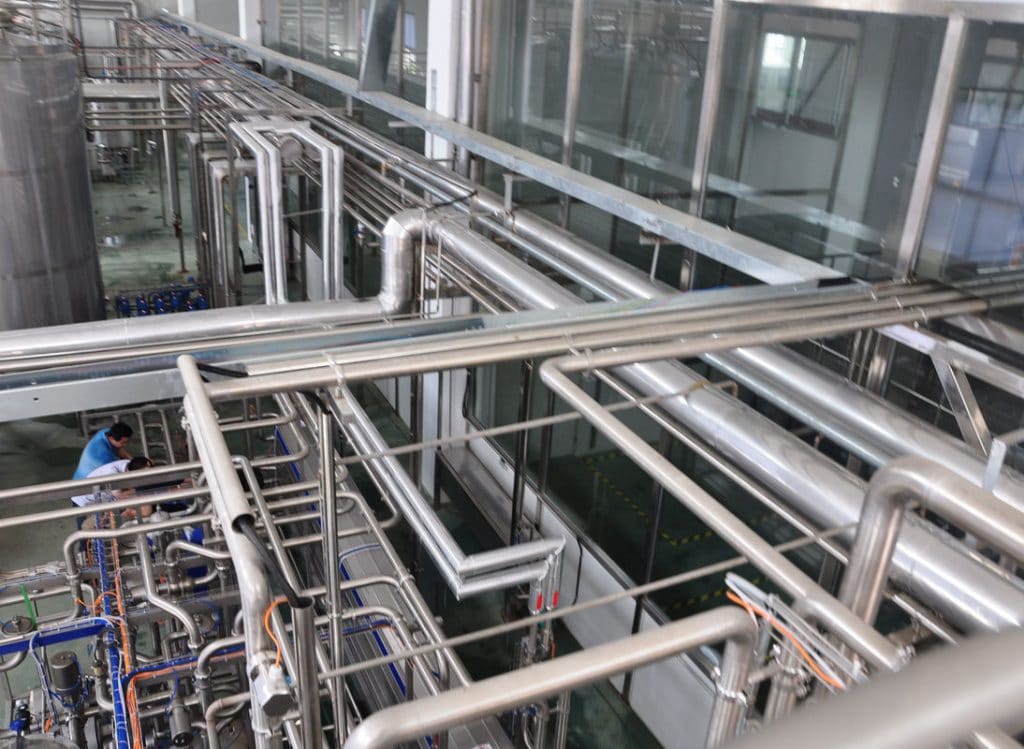
From product supervisors to plant and project engineers, they all need to keep updated with the latest beverage industry solutions.
Relevant beverage industry news may offer everything about drink innovation and trends worldwide.
Having access to news on breakthrough technologies in beverage processing, beverage processing innovations, general beverage industry news, and events.
How to maintain an optimum level and flow control for beverage manufacturing processes.
Different viscosities and the requirement for hygienic process environments make beverage production very challenging.
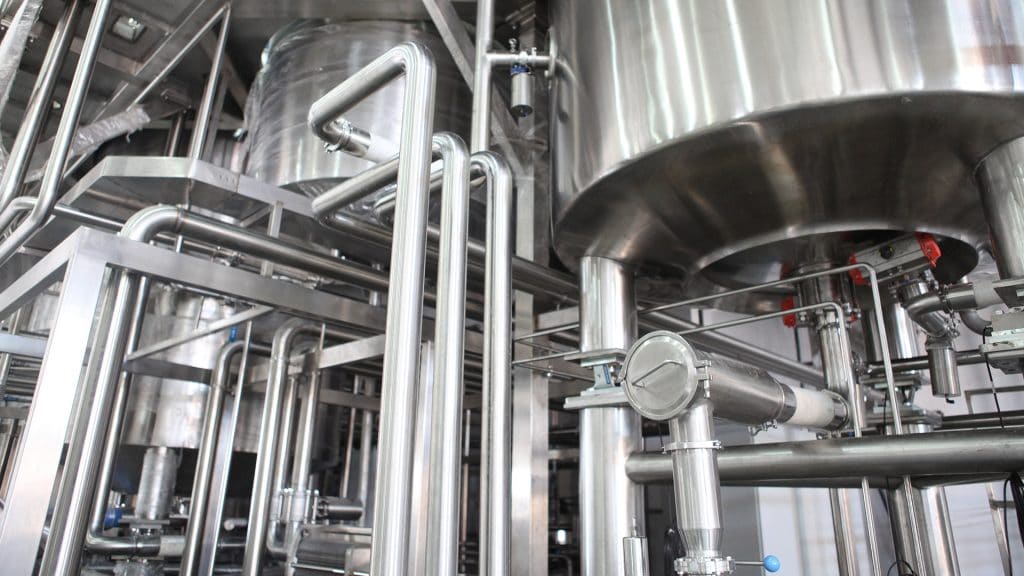
Selecting the most suitable level sensor requires several variables to be considered, especially as increasingly strict regulations require more reliable and precise level measurement, plus safety redundancy.
Improvements to the accuracy of process control enable product quality to be increased while also reducing costs and waste.
Read more innovations and news about fluid level measurement and level control.
The beverage industry, in general, is characterized by high water consumption and considerable wastewater discharge volumes.
For this reason, this industry faces high costs for water supply and trade effluent disposal. In addition to that, there are pumping, water, and effluent treatment costs to be considered.
Also, increased global competition, rising raw material prices, and energy supply rates have highlighted the importance of more efficient production processes.
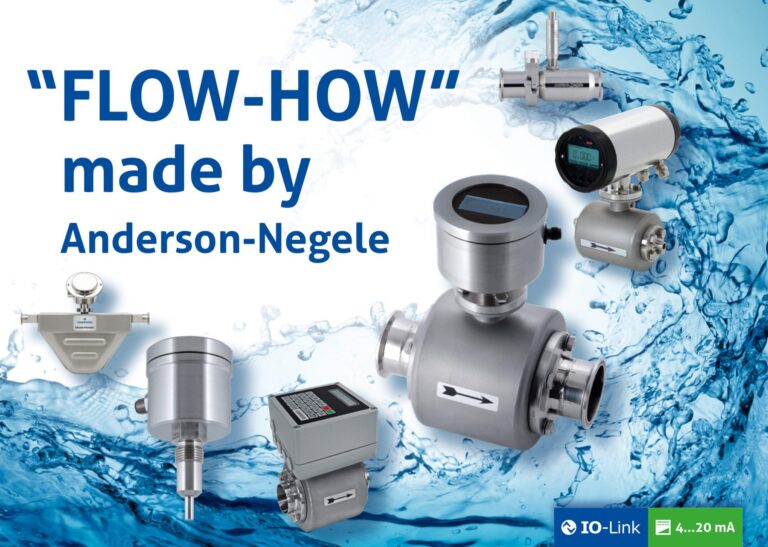
For these reasons, almost every type of business in the beverage industry has to monitor its liquid flow processes in greater detail.
Read more innovations and news about fluid flow measurement and flow control here.
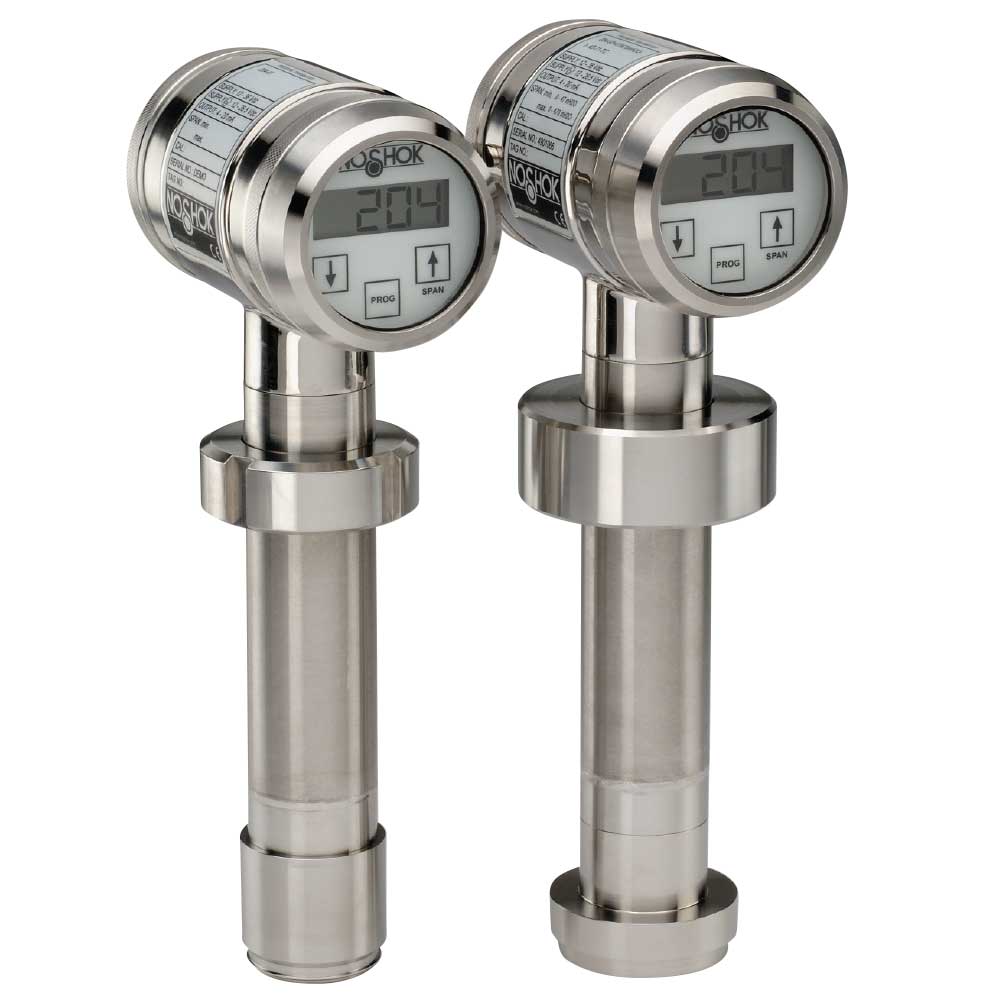
Temperature control is a crucial variable in the food and beverage industry. If poorly controlled, the best-case result would be a loss of efficiency, with the worst case a completely unusable batch of product.
Check here for innovations and news about temperature measurement and temperature control.
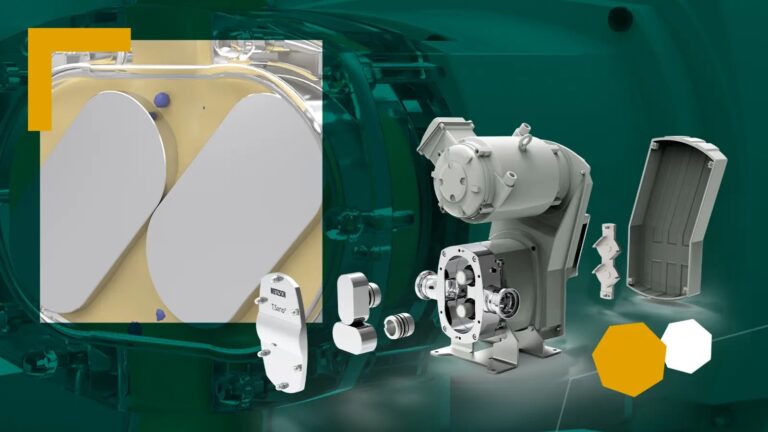
Beverage lines use hygienic centrifugal pumps for water, wort and finished product, and positive displacement pumps such as lobe, circumferential piston and progressing cavity types for syrups, yeast slurries, fruit preparations and other shear-sensitive or viscous media. Seals, surface finish and drainability decide whether a pump is accepted in a food-grade line. More in Pumps and Pumping Systems.
Filtration removes yeast, haze and micro-organisms without heat, from crossflow membranes in beer and wine to sterile filtration ahead of aseptic filling and reverse osmosis in brewing water treatment. Membrane life and the cleaning regime matter as much as the retention rating. More in Fluid Filtration Systems.
Inline analysers measure CO2, oxygen, alcohol, original gravity, conductivity and turbidity, which keeps blending and carbonation on target and separates product from water during CIP changeover. Fewer lab samples and faster correction are the main gains. More in Process Gas and Liquid Analytical Systems.
Mix-proof double seat valves separate product from cleaning fluid in the same manifold, butterfly valves handle routing and isolation, and control valves manage pressure and temperature in pasteurisers and carbonation. Seat material, dead space and cleanability determine the choice. More in Process and Control Valves.
Pressure decides how much CO2 stays in solution, how gently product moves through the line and whether a filler runs stable. Pressure transmitters and regulators guard fermenters, carbonation units and filler bowls, and a differential pressure reading across a filter is the first sign that it is blinding. More in Pressure Control and Measurement.
Use the Manufacturers Directory A–Z or the Equipment Guide. Partner profiles carry direct contact details; other listings link to the company website.
Yes. Ask the Expert puts your question to a field expert active in Beverage Processing. The answer comes back to you by e-mail; when we publish it, other readers benefit too.