




But when is which measurement technology suitable: flow meter, flow switch, magnetic-inductive, Coriolis/density measurement, turbine, PMO-approved, ultrasonic, calorimetric?
Precise Flow Measurement Is the Basis for Safe and Efficient Processes
Precise flow measurement is the basis for safe and efficient processes in almost all applications in the food, beverage, and pharmaceutical industries.
In this overview, Anderson-Negele shows you various measurement technologies and gives you tips on how to find the best solution for your application.
Flow Meters and Flow Switches
Flow meters for the accurate detection of quantity, volume or speed of media flowing into systems are the basis for safe and efficient processes in almost all applications in the food, beverage and life science industries.
Flow switches are used in almost all production plants to monitor the plant’s technical safety and the correct operation of the processes. A possible malfunction of a pump, a closed valve, or a misdirected medium is reliably detected and signaled.
Wide Application Range
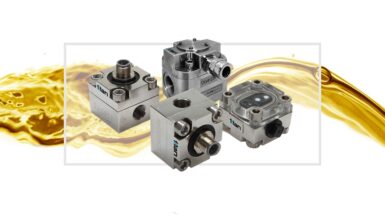
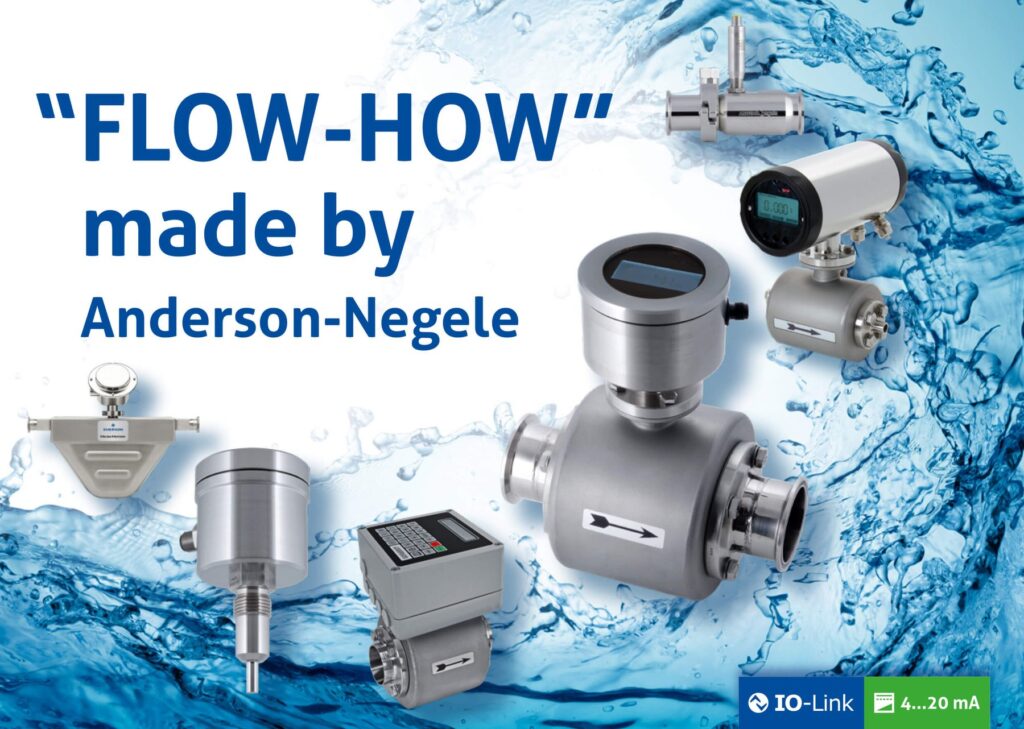
With various technologies, Anderson-Negele’s flow sensors and flow switches offer a suitable measuring system for every application, every process, and every fluid:
- Magnetic-Inductive Flow Metersfor media with minimum conductivity >5 μS/cm. With FMQ, FMI and IZMSA 3 sensor types are available for DN10 to DN100, with an accuracy up to ±0.20% / ±1mm/s
- Turbine Flow Metersfor all aqueous media, regardless of conductivity. The turbine HM-E / HMP-E is available for Food and for Life Science applications
- Coriolis Mass Flow Metersin co-operation with Emerson Micro Motion
- Ultrasonic Flow Switchestype FWS/FWA for all media with turbidity > 1 NTU or particles > 50 μm
- Calorimetric Flow Switcheswith the FTS series, for all aqueous media, even high-purity fluids, independent of conductivity
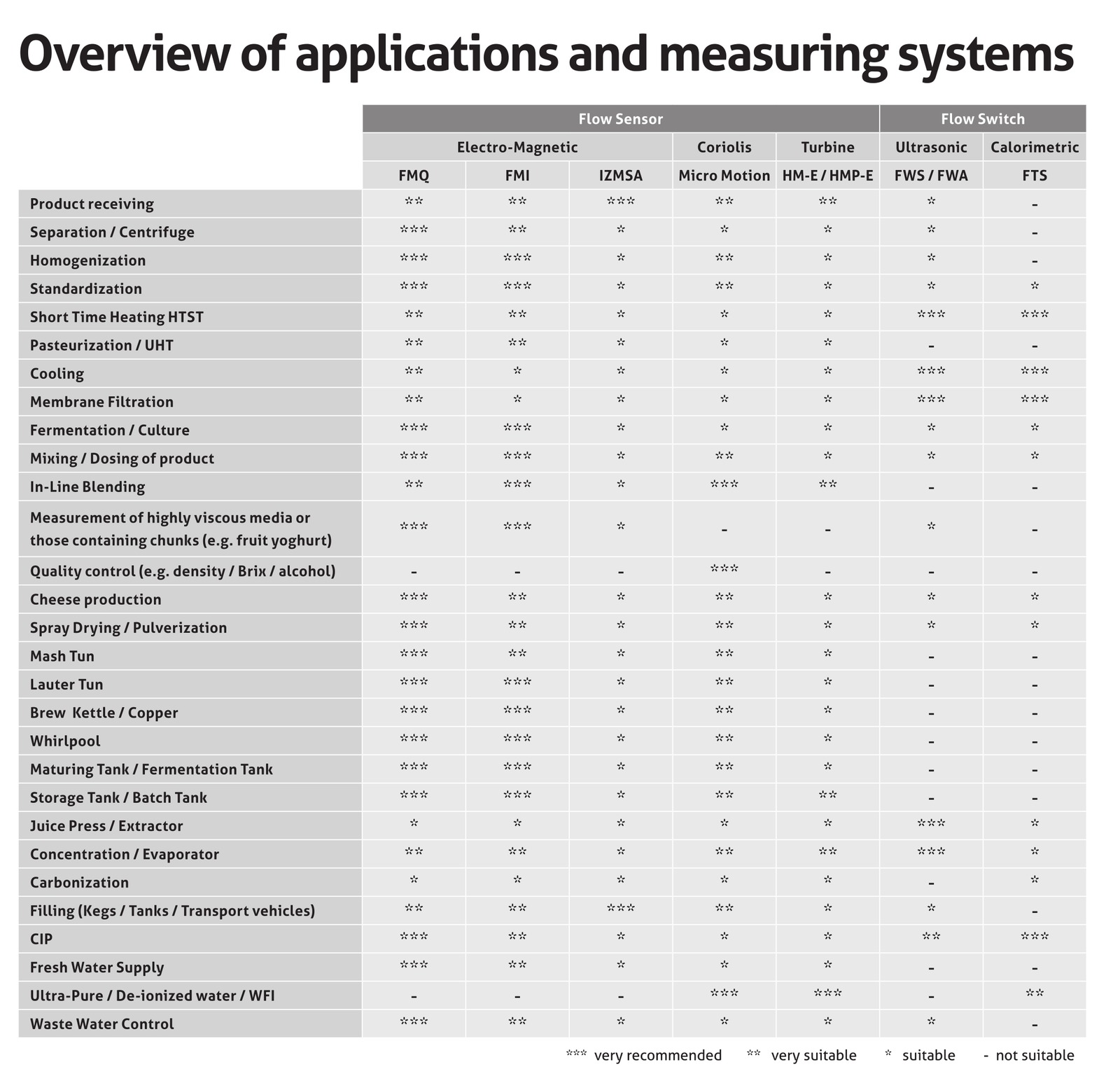
Overview of Applications and Measuring Systems
The Overview of applications and measuring systems indicates in how far each technology complies with typical requirements in those applications:
Magnetic-Inductive Flow Meters
Starting from a minimum conductivity of > 5 μS/cm, the induced voltage can be measured. This technology is suitable for media such as milk, cream, beer, water, ketchup, sauces, creams, mash, molasses, yogurt, concentrates, cleaning media, and many others.
Anderson-Negele offers a wide range of magnetic-inductive flow meters:
- FMQrobust, versatile, compact, cost-efficient. For tubes from DN10 to DN100, range 30…280 000 l/h, max. process temperature 165 °C, optional IO-Link.
- FMIhigh accuracy ±0.20% / ±1mm/s, durable, versatile electronics.
- IZMSAcertifiable version with certificate TC7520 for installation in official measuring systems according to 2014/32/EU
Turbine Flow Meters
Turbine flow meters with non-contact pulse measurement are the reliable, precise, and economical alternative to mass flow meters or magnetic-inductive flow meters. This measurement technology is also suitable for non-conductive, aqueous media such as filtered fruit juice or beer, alcohols, light oils, salt solutions, cleaning media, and acids, but also process water, demineralized water, and WFI.
- HM-Ecompact, robust, fast, range 1 600…56 750 l/h
Coriolis Flow Meters
Mass and volume flow values are calculated from mass flow rate and the density measurement. For density measurement the measuring tubes are vibrated at their natural frequency. A change in the mass of the fluid contained inside the tubes causes a corresponding change to the tube natural frequency. The frequency change of the tube is used to calculate density.
These measuring instruments are suitable for almost all production processes in the food and beverage industry and are particularly advantageous in applications where the density (or concentration, Brix, Plato, Proof or Baumé value) must be determined at the same time as the flow rate.
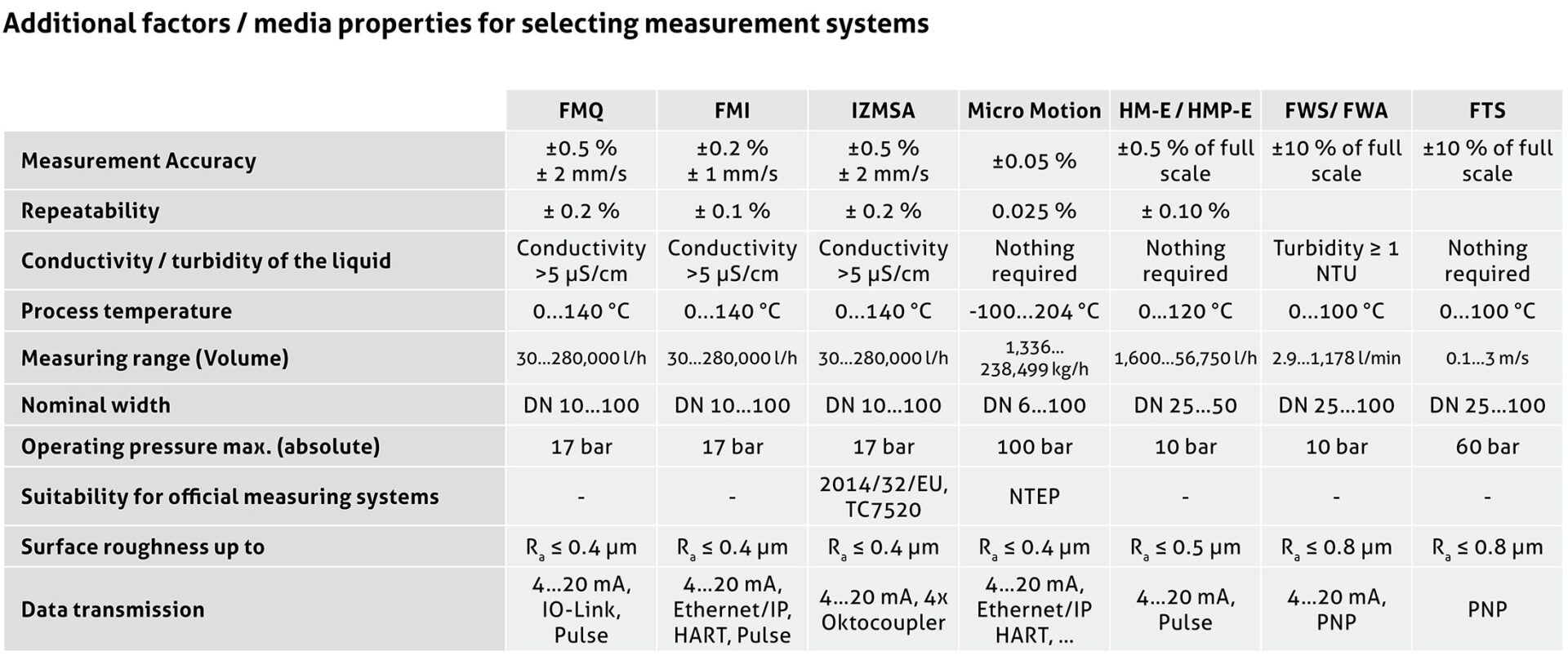
Additional Factors for Selecting a Measurement System
As each technology offers specific advantages, besides the pure technical specifications there are other criteria which influence the decision for a specific sensor:
Ultrasonic Flow Switch
When an emitted ultrasonic wave hits particles, e.g., sediments, dirt, or air bubbles moving in the direction of flow, this is reflected and can be measured. Many flow monitors are limited to aqueous media. In contrast, the ultrasonic Doppler measuring principle is ideally suited for all media with the slightest turbidity or with air bubbles. This technique can be used when other flow monitors do not work, e.g., with dough, glycol, oils and oil-based media, adhesive or viscous media, creams, but also drinking water, milk, juice (unfiltered), and CIP media. The switching output is adjustable in % of the flow rate.
The FWS/FWA has a measuring range of 0,1…2,5 m/s, a response time < 1sm hysteresis 0,2 m/s, process temperature up to 100 °C.
Calorimetric Flow Switch
The sensor tip of the FTS series flow switch is periodically heated and the diverting influence on stationary or flowing medium is measured. This measuring principle is ideal for all aqueous products, including demineralized and highly filtered media such as cola and other soft drinks, filtered beer, demineralized water, as well as for media in pressure lines. The measuring range is 0,1…3 m/s, the switching output is adjustable in % of the flow rate.