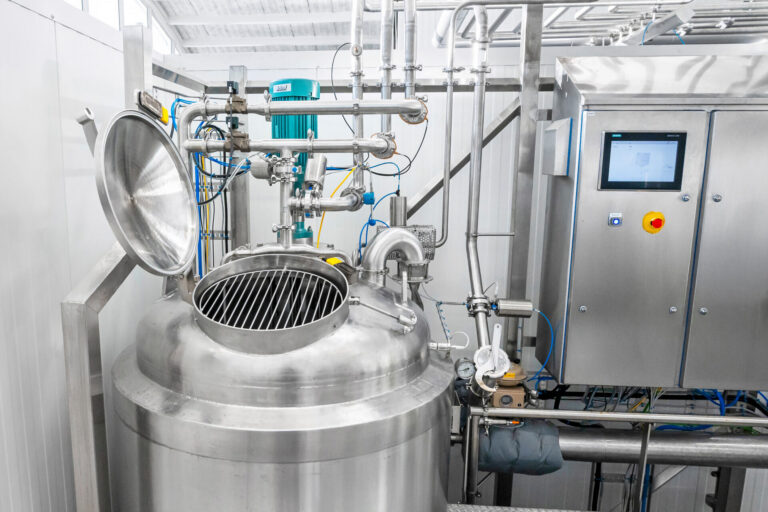
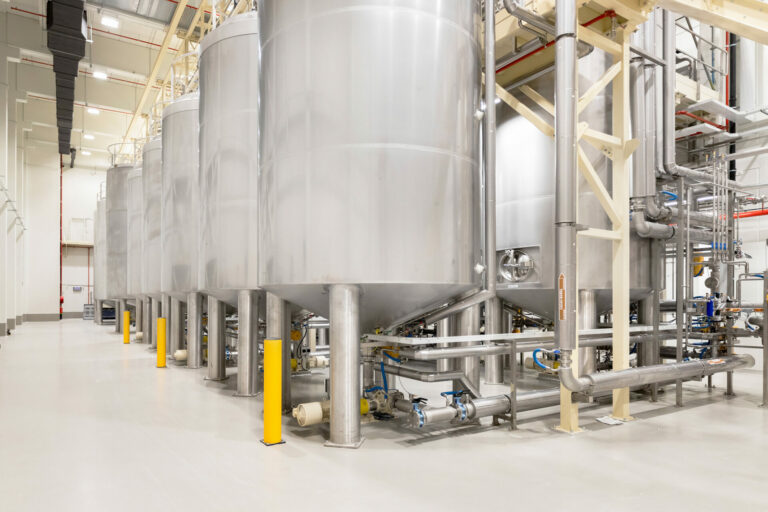
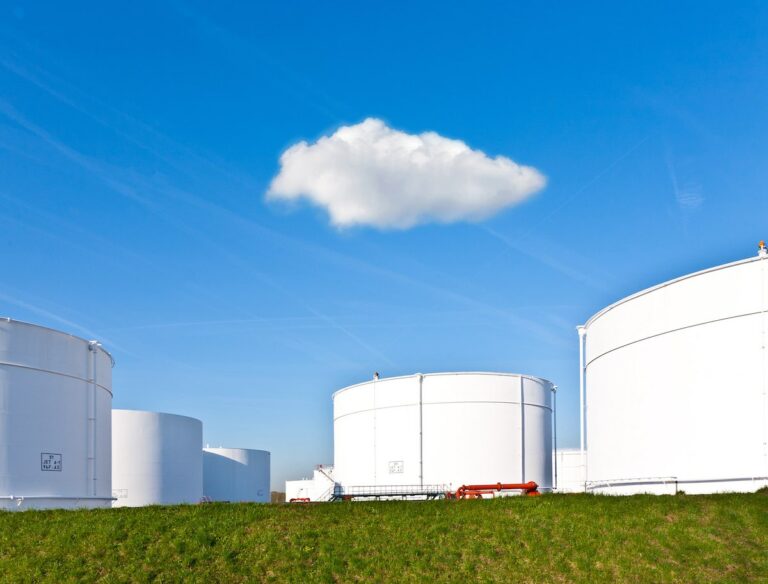
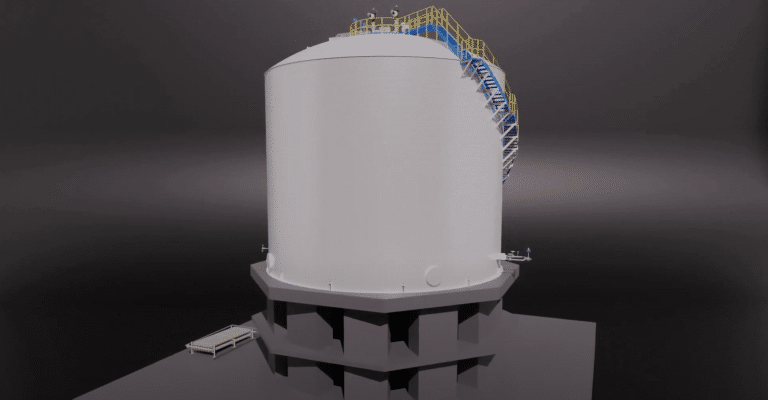
Fluid storage holds liquids and gases safely between process steps. This zone covers tanks, vessels, containers, tank equipment and the monitoring and safety systems around them.
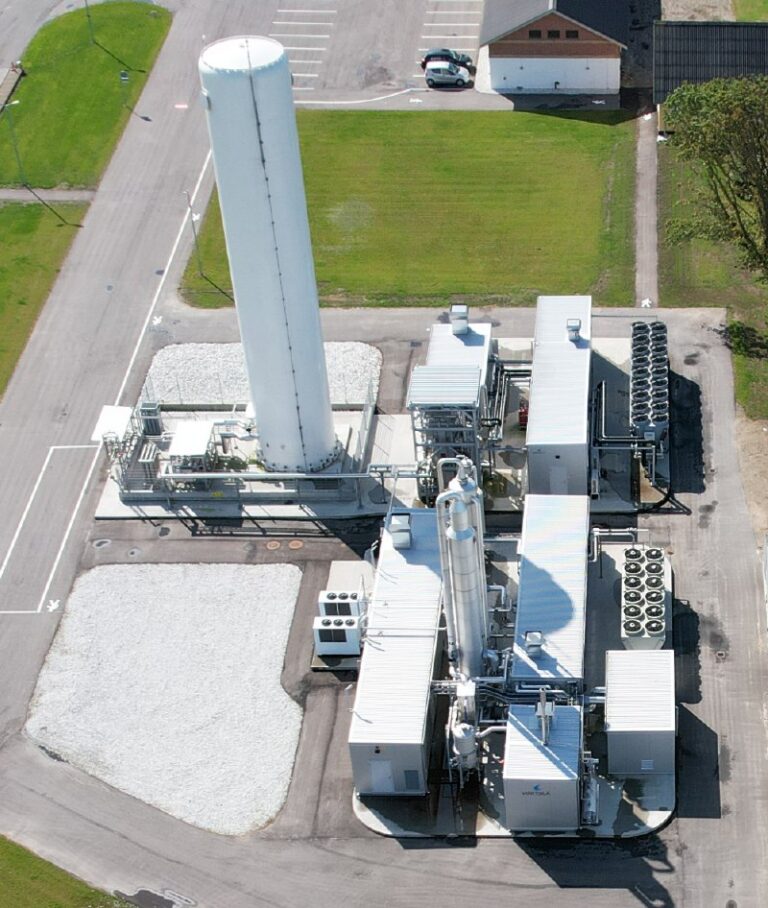
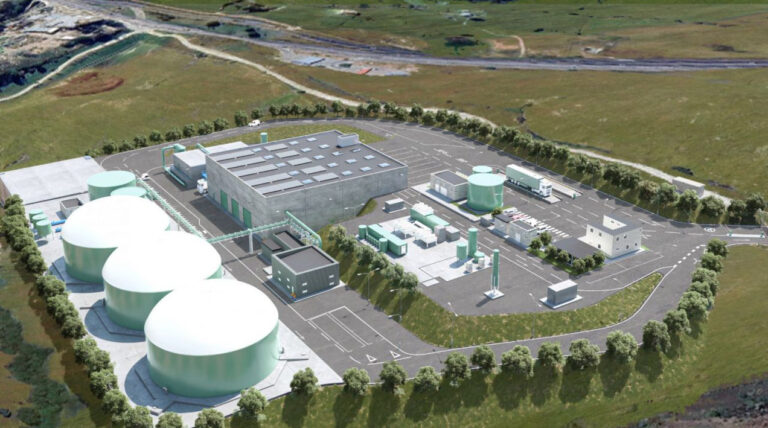
Nord Gas Solutions has secured a contract for a 35-ton-per-day biogas liquefaction plant in Poland, marking a significant milestone in the country's developing biomethane sector. The project is…
Fluid Storage: how it works, key numbers and troubleshooting
Fundamentals
What decides the tank type
Pressure, temperature and the vapour pressure of the product decide the shape before anything else. Atmospheric products sit in fixed roof tanks; anything that breathes expensively or dangerously goes into a floating roof or an internal floating roof; liquefied gases and volatile solvents move to pressure vessels, spheres or bullets. Everything after that, the material, the coating and the insulation, follows from the product and the climate.
Breathing, blanketing and vapour
A fixed roof tank breathes with every fill, every empty and every warm afternoon, and each breath takes product out and air in. A nitrogen blanket with a regulator and a relief keeps oxygen away from the product and the product away from the atmosphere; a vapour recovery unit puts the value back. The pressure and vacuum vent is the safety device that makes all of it survivable, and it is an inspection item.
Containment and overfill
A bund sized for the largest tank plus rainfall is the last line, not the first. Ahead of it sit an independent high level switch, an alarm the operator cannot silence and forget, and a fill procedure that does not rely on someone watching a gauge. Most large spills are traced back to a level measurement shared between control and protection, which is exactly the arrangement a safety review removes.
IBCs, drums and portable containment
Not all storage is a tank. Intermediate bulk containers, drums and portable tanks carry a large share of chemicals, and they bring their own rules: stacking limits, compatibility of the liner with the product, UN approval and a service life. The transfer points, the couplings and the grounding are where the incidents happen, not the container itself.
Inspection and the slow failures
Storage fails slowly. Bottom plate corrosion, settlement of the foundation, coating breakdown at the liquid line and water accumulating under the product all take years and give little warning from the control room. Formal inspection to a recognised standard, with thickness readings and a settlement survey, is what turns those into planned work instead of an emergency.
Key parameters
Parameter
Typical range
Rule of thumb
Bund capacity
110 % of the largest tank, or 25 % of the total
Check the local rule and add rainfall; the number is not universal
Vent sizing
Sized on the maximum fill and empty rate plus thermal breathing
Fire case usually sets the size, not the normal operation
Nitrogen blanket pressure
5 to 20 mbar above atmospheric
Too high wastes nitrogen through the vent, too low lets air in on cooling
Fill velocity for static-prone products
Below 1 m/s until the inlet is submerged, then up to 7 m/s
Splash filling a low conductivity solvent builds charge; fill from the bottom
Freeboard and overfill margin
High high level at least one fill minute below the vent
Size the margin on how long it takes to stop the pump, not on the trip point
Shell thickness inspection
External every 5 years, internal every 10 to 20
Interval follows the standard and the corrosion rate, not the calendar
Insulation and heating
Maintain 5 to 10 degrees above the pour point
Measure at the coldest corner of the tank, not at the outlet
IBC stacking
Two to three high depending on the design
Check the rating with product in, not the empty stacking figure
Troubleshooting
Symptom
Likely causes
What to do
Tank breathes product to atmosphere on warm days
No blanket, vent set too tight, or a fixed roof on a volatile product
Add or correct the nitrogen blanket, check the pressure and vacuum vent settings, and consider an internal floating roof
Vacuum damage to the shell after emptying
Vacuum vent blocked or frozen, or an emptying rate faster than the vent can pass
Inspect and free the vent, size it on the real pump-out rate, and never blank a vent for a pressure test without a procedure
Water in the product bottom
Condensation from breathing, a leaking heating coil, or rain entering at the roof seal
Dip for water, pressure test the coil, inspect the roof and the seal, and drain on a routine
High level alarm did not stop an overfill
Alarm and control sharing one instrument, alarm silenced routinely, or the switch coated
Fit an independent switch on another principle, alarm it separately, and test it as a safety function
Coating blistering at the liquid line
Wrong coating for the vapour phase, or condensation cycling at the interface
Specify the coating for both phases, and inspect the vapour space rather than only the wetted wall
Foundation settlement on one side
Ground conditions, poor drainage, or repeated hydrotest cycles
Survey the ring at fixed points on a schedule, fix the drainage, and involve a civil engineer before the shell distorts
Static discharge during filling
Splash filling, low conductivity product, or a container not bonded to the fill line
Fill from the bottom, keep the initial velocity low until the inlet is submerged, and bond and ground every container
Engineers and product specialists who answer technical questions from readers. The answer comes back to you by e-mail; when we publish it, other readers benefit too.
When oxygen harms the product, when the vapour space would otherwise sit in the flammable range, or when breathing losses are worth money. A blanket needs a regulator, a relief and a check that the pressure stays in a narrow band: a few millibar too high and you vent nitrogen continuously, a few too low and air comes back in as soon as the tank cools.
How big does the bund have to be?
The common rule is 110 % of the largest tank, or a quarter of the total volume, whichever is larger, plus an allowance for rainfall. The exact number is set by local regulation, so check it rather than assuming. The more useful question is what stops the liquid reaching the bund in the first place, because containment is the last defence, not the first.
Why should the high level trip be a separate instrument?
Because a trip that shares the transmitter with the control loop shares every one of its failure modes: the same coating, the same lost echo, the same drifted zero. An independent switch on a different principle, alarmed separately and tested as a safety function, is cheap compared with a single overfill and it is what an assessment expects to find.
Fixed roof or floating roof?
Fixed roof for products that do not evaporate expensively or dangerously, and it is the cheaper structure. A floating roof, external or internal, removes the vapour space and with it most of the breathing losses, which pays for itself quickly on volatile products and is often required by emission rules. The trade is the seal, which becomes a maintenance and inspection item for the life of the tank.
How do I fill a solvent tank safely?
From the bottom, slowly at first. A low conductivity product falling through the vapour space builds static charge, and the tank is full of exactly the mixture that dislikes a spark. Keep the velocity below about a metre per second until the inlet is submerged, then raise it, and make sure every container and line in the transfer is bonded and grounded.
What are the failures that inspection catches and instruments miss?
Bottom plate corrosion, water sitting under the product, coating breakdown at the liquid line, and foundation settlement. None of them shows up in the control room and all of them take years. Thickness readings, a settlement survey on fixed points and an internal inspection at the interval the standard sets are what turn them into planned work.
How long can product stay in an IBC?
That depends on the product and the liner, not on the container. Plastic liners absorb and permeate, UV degrades them outdoors, and many products change specification long before the container does. Check the compatibility and the shelf life together, respect the stacking rating with the container full, and treat the couplings and grounding at the transfer point as the real risk.
What is the difference between this Technology Zone and the Equipment Guide?
The zone is the editorial side: news, case studies, videos, newsletter editions and field experts. The Equipment Guide is the directory side: equipment types and the manufacturers that build them. This page links to its Equipment Guide category and back.
How do I find a manufacturer of fluid storage equipment?
Open the Equipment Guide category for this zone, pick an equipment type and open a manufacturer profile. Partner profiles carry direct contact details; other listings link to the company website.
Can I ask a technical question before I buy?
Yes. Ask the Expert puts your question to a field expert in this zone. The answer comes back to you by e-mail; when we publish it, other readers benefit too.
Your company in this zone?
Do you manufacture fluid handling equipment and want your company listed under a market? A basic listing is free.
To provide the best experiences, we use technologies like cookies to store and/or access device information. Consenting to these technologies will allow us to process data such as browsing behavior or unique IDs on this site. Not consenting or withdrawing consent, may adversely affect certain features and functions.
Functional
Always active
The technical storage or access is strictly necessary for the legitimate purpose of enabling the use of a specific service explicitly requested by the subscriber or user, or for the sole purpose of carrying out the transmission of a communication over an electronic communications network.
Preferences
The technical storage or access is necessary for the legitimate purpose of storing preferences that are not requested by the subscriber or user.
Statistics
The technical storage or access that is used exclusively for statistical purposes.The technical storage or access that is used exclusively for anonymous statistical purposes. Without a subpoena, voluntary compliance on the part of your Internet Service Provider, or additional records from a third party, information stored or retrieved for this purpose alone cannot usually be used to identify you.
Marketing
The technical storage or access is required to create user profiles to send advertising, or to track the user on a website or across several websites for similar marketing purposes.
Get compact market and technology updates twice a week, with editorial insights and key industry news delivered straight to your inbox. No spam, only practical insights for fluid handling professionals.