



Market

Power Generation

Power plants live on fluids. Feedwater, condensate, steam, cooling water, lubricants and fuel all have to be moved, measured and controlled with high availability, from boiler and turbine circuits to cooling towers and emissions control. Pumps, control valves, flow and level instruments and heat exchangers decide plant efficiency, and increasingly how well a plant follows a fluctuating grid.

Every article below is selected for this market, alongside the experts, the videos and the newsletter editions that cover it.

Browse by market

Latest Power Generation news

Navigating Grid Volatility: The Evolving Role of Direct Mass Flow Measurement in Today’s Major Industrial Facilities

September 4, 2026
Behind the headlines around artificial intelligence, digital currency, and data center buildouts is the unprecedented demand for natural gas and...
Read more

MAN Reduces CO2 Emissions Through District Heating: Energy Supplier N-ERGIE Relies on Schubert & Salzer Valves

March 18, 2026
Decarbonisation is one of the particularly relevant focus areas in MAN Truck & Bus's sustainability strategy. This is why district...
Read more

Crisp Factory Tackles ‘Energy-Guzzling Monster’

December 11, 2025
When it comes to energy saving in Dutch industry, some low-hanging fruit remains to be picked. The energy-guzzling giants, such...
Read more

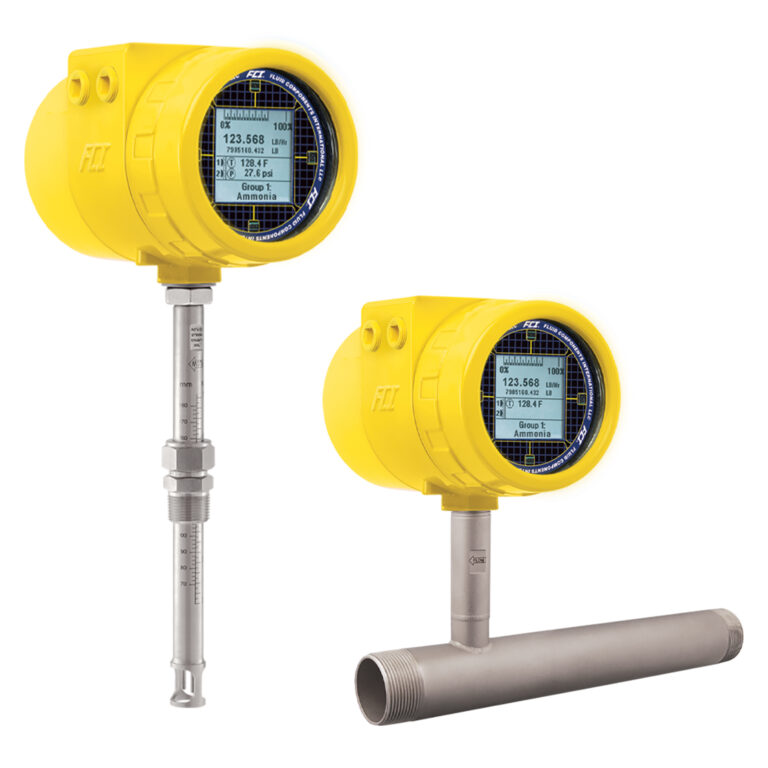
Thermal Flow Meter Offers Precise NH3 Injection for NOx Control in Coal-Fired Power Plants

November 13, 2025
Process and pollution control engineers will find that the FCI ST100A Flow Meter helps them more accurately control the application...
Read more

How Small Adjustments Can Lead To Big Savings

August 27, 2025
Pharmaceutical manufacturers face a twofold challenge. They not only have to produce vital medicines faster and more efficiently. They must...
Read more

Power Generation experts

Bob Steinberg is the founder, president, and CEO of Sage Metering. He has over 40 years of instrumentation experience. Before forming Sage Metering in 2002, Steinberg managed thermal mass flow meter sales at Kurz Instruments, Sierra Instruments, and Eldridge Products. While at Weston Instruments, he was a product marketing engineer. He has a BSEE and a BA from Rutgers University.

Erwin Weber has been working in the pump industry for over 35 years and has exceptionally broad technical and sales expertise. He began his professional career in design, gaining in-depth insight into manufacturing, assembly and service, and went on to play a key role in the development of the NETZSCH rotary lobe pump. He has been working successfully in international sales, project business and business development for more than 25 years and is recognised as an expert in handling complex liquids. Today, as Sales Director EMENA, he is responsible for strategic sales management in Europe, the Middle East and North Africa. His profile is characterised by many years of experience, strategic foresight, entrepreneurial thinking, strong leadership skills and proven success in international sales and key account management.

A pump is more than just rotary equipment. It is the promise to solve a pumping task safely and reliably. In his function as a product and application manager at HERMETIC-Pumpen GmbH, Dominik Hegen takes care of transparently presenting the knowledge about pump technology and the selection of the pump to the customer. After an apprenticeship as a mold mechanic for high injection tools, Dominik graduated as an industrial engineer and specialized in the field of product management and has 9 years of professional experience in this field in different positions. At HERMETIC – Pumpen GmbH he is responsible for standardized canned motor pumps which are used in chemistry, Petrochemistry and oil and gas applications. With numerous webinars and user-friendly brochures, he supports customers and interested parties in the selection of suitable pumps and works as an interface between sales and technology. Should you want to know more about one of the most safe, cost efficient and reliable pump technologies do not hesitate to contact Dominik Hegen.

Casey Williamson

Casey Williamson

GF

Casey Williamson is Head of Business Development Microelectronics Global Industries for Georg Fischer. For the last 25 years, he has provided support for the semiconductor and photovoltaic sub-segments; through the years, he has been instru­mental in defining fab construction requirements as they apply to piping systems for the conveyance of high-purity liquids, process cooling, and chemical waste streams as well as analytical control systems to optimize the operations of UPW and waste systems.

Latest newsletters on Power Generation

Our Market and Technology Focus editions, most recent first. Every Tuesday the week in fluid handling, on Thursday one market or one technology zone in depth.

More Power Generation articles

Boosting The Value Of Digestate With Recovered Energy

June 5, 2025
Southern Europe has huge potential to expand its use of anaerobic digestion (AD) and biogas, and in the process reduce...
Read more

An Innovative Project with VEGA Measurement Technology Showed: Heating with Hydrogen Mixtures via Existing Natural Gas Pipelines is Feasible

March 18, 2025
How can excess renewable electricity be stored and used sensibly? One possible answer to this question was provided by the...
Read more

Helping Energy Facilities Redefine Efficiency with IMI Insyt

March 18, 2025
Riverside 1, an energy-from-waste site in Belvedere, Kent, is one of the UK’s largest facilities of its kind. Operated by...
Read more

New Steam Traps Result in Lower Steam Losses

March 12, 2025
Mercer sets new standards in the Stendal plant in terms of energy efficiency and sustainability: The use of modern venturi...
Read more

Good Start to the Year 2025

February 19, 2025
ABEL has started 2025 with three significant pump orders. An Indian energy company recently placed an order for six HMQ...
Read more

DESMI Pumps for Power-To-X Production in Denmark

January 22, 2025
With an array of DESMI Centrifugal pumps, they are able to provide ships around the world with about 32,000 tons...
Read more

Sludge Control for Centrifuge Feeding in Power Plant

September 19, 2024
The Munich public utilities company has been operating the combined heat and power plant North in Unterföhring, Bavaria with three...
Read more

Paques Cuts Downtime Using Watson-Marlow Pumps at Biogas Plant

July 4, 2024
Pumps were chosen for their highly accurate chemical dosing and ability to handle abrasive and corrosive fluids
Read more

Power Generation experts

Bob Steinberg is the founder, president, and CEO of Sage Metering. He has over 40 years of instrumentation experience. Before forming Sage Metering in 2002, Steinberg managed thermal mass flow meter sales at Kurz Instruments, Sierra Instruments, and Eldridge Products. While at Weston Instruments, he was a product marketing engineer. He has a BSEE and a BA from Rutgers University.

Erwin Weber has been working in the pump industry for over 35 years and has exceptionally broad technical and sales expertise. He began his professional career in design, gaining in-depth insight into manufacturing, assembly and service, and went on to play a key role in the development of the NETZSCH rotary lobe pump. He has been working successfully in international sales, project business and business development for more than 25 years and is recognised as an expert in handling complex liquids. Today, as Sales Director EMENA, he is responsible for strategic sales management in Europe, the Middle East and North Africa. His profile is characterised by many years of experience, strategic foresight, entrepreneurial thinking, strong leadership skills and proven success in international sales and key account management.

A pump is more than just rotary equipment. It is the promise to solve a pumping task safely and reliably. In his function as a product and application manager at HERMETIC-Pumpen GmbH, Dominik Hegen takes care of transparently presenting the knowledge about pump technology and the selection of the pump to the customer. After an apprenticeship as a mold mechanic for high injection tools, Dominik graduated as an industrial engineer and specialized in the field of product management and has 9 years of professional experience in this field in different positions. At HERMETIC – Pumpen GmbH he is responsible for standardized canned motor pumps which are used in chemistry, Petrochemistry and oil and gas applications. With numerous webinars and user-friendly brochures, he supports customers and interested parties in the selection of suitable pumps and works as an interface between sales and technology. Should you want to know more about one of the most safe, cost efficient and reliable pump technologies do not hesitate to contact Dominik Hegen.

Casey Williamson

Casey Williamson

GF

Casey Williamson is Head of Business Development Microelectronics Global Industries for Georg Fischer. For the last 25 years, he has provided support for the semiconductor and photovoltaic sub-segments; through the years, he has been instru­mental in defining fab construction requirements as they apply to piping systems for the conveyance of high-purity liquids, process cooling, and chemical waste streams as well as analytical control systems to optimize the operations of UPW and waste systems.

Gerard joined Panametrics in 2008 as a Flow Product Specialist for the Europe, Middle East and Africa Regions and is now the Global Flow Commercial Development Leader. He started his career in 1990 in the process industry after receiving his MSc. Before joining Panametrics, Gerard had several technical and commercial roles with several industries. Subject Matter Expertise – Flow, field instrumentation and process industries

Natalie Waldecker, Portfolio Manager Food and Pharma, knows the challenges of the demanding industries inside out. With her broad application knowledge, she is at home on topics such as hygiene design, certificates and cleanability. As product manager for pressure measurement technology, she is also responsible for one of the most important measuring principles for the industry. Natalie gathers her knowledge as close to the application as possible. Preferably directly at the customer’s site, experiencing “real world” practice. She has thus gotten thoroughly acquainted with international customer requirements and knows the ins and outs of the market. With this background, she is able to not only explain technical relationships in an understandable way, but also offer valuable tips and convincing solutions. In the 12 years she has been with VEGA, she has steadily improved her expertise which makes her the right person to contact for new product ideas and tailored customer solutions.

Questions and answers about Power Generation

All power plants are created with one particular goal: to produce electric power as efficiently as possible. There are several types of power plants depending mainly on the sources of energy that are used. The introduction of more sustainable forms of energy has caused an increase in the improvement and creation of particular power plants.

Thermal power plants

Thermal power plants are split into two different categories; those that create electricity by burning fuel and those that generate electricity via prime mover:

  • Fossil fuel power plants: Generates electric power by burning fossil fuels like coal, natural gas, or diesel.
  • Nuclear power plants: The controlled nuclear reaction is maintained to generate electricity.
Hydroelectric power plants

Hydroelectric power plants use energy from falling water in rivers and reservoirs to spin a generator and create electricity. This energy source tends to be more reliable (dispatchable) than other renewable resources, especially when the facility runs off of a reservoir.

Solar power plants

Solar power plants convert sunlight into electricity, either directly using photovoltaics (PV) or indirectly using concentrated solar power (CSP). Concentrated solar power systems use lenses, mirrors, and tracking systems to focus a large area of sunlight into a small beam.

Wind power plants

Wind power plants / Wind turbines convert the kinetic energy from the wind into mechanical power. This mechanical power can be used for specific tasks (such as grinding grain or pumping water), or a generator can convert this mechanical power into electricity.

How do power plants work?

Steam Turbine

Electrical power starts at the power plant. In most cases, a power plant consists of an electric generator. Something has to spin that generator — it might be a water wheel in a hydroelectric dam, a large diesel engine, or a gas turbine. But in most cases, the object spinning the generator is a steam turbine. The steam might be created by burning coal, oil, or natural gas. Or the smoke may come from a nuclear reactor.

Electricity is a secondary energy source, which means that electricity is obtained from converting other primary sources of energy, such as coal, natural gas, nuclear, solar, or wind energy. The power plant is the location in which the energy conversions take place.

Electricity generation generates electricity from primary energy sources, such as coal, natural gas, nuclear, solar, or wind energy.

Example of a Power Station

The power plant generator is a device that converts mechanical energy obtained from an external source into electrical energy as the output—understanding that a generator does not actually ‘create’ electrical power. It uses the mechanical energy supplied to it to force the movement of electric charges present in the wire of its windings through an external electric circuit.

The power generation industry can be split into three areas: power generation, transmission and distribution networks, and metering and sales. Large energy companies tend to operate in all three areas, which is more cost-effective, but smaller companies often only work in one of these areas.

Tubes

In each plant, whether nuclear or fossil-fueled, the following essential power generation equipment is present:

  • Heat source: Provides heat to generate steam. The heat source in a nuclear power plant is the nuclear reactor, often referred to as the reactor core.
  • Turbine/generator: Uses the energy of the steam to turn a turbine/generator that produces electricity.
  • Condenser: Condenses the steam back to the water to be returned to the heat source to be heated again.
  • Pump: Provides the force to circulate the water through the system.

Pump in a Power Station

Each electric power station’s technology has advantages and disadvantages. For example, nuclear power plants provide large quantities of reliable power with low levels of greenhouse gas emissions. Fossil fuel power plants deliver on-demand, consistent and reliable energy when the resources are available. Hydro, solar, and wind power plants generate renewable electricity, producing emissions-free electricity.

Boiler feedwater pumps, condensate extraction pumps, circulating water pumps and a long list of auxiliary and lubrication pumps keep a plant running. Feedwater pumps in particular work at high pressure and temperature and are among the most critical rotating machines on the site. More in Pumps and Pumping Systems.

Feedwater, steam, cooling water and fuel flow all need measurement, from differential pressure and vortex meters on steam to ultrasonic and magnetic meters on water. Heat rate and efficiency calculations are only as good as those readings. More in Flow Control and Measurement.

Drum level is one of the classic safety and control loops: too low and the tubes overheat, too high and water carries over into the turbine. Three element control combines drum level, steam flow and feedwater flow to keep it stable during load changes. More in Level Control and Measurement.

Turbine control and stop valves, high pressure bypass valves, feedwater regulating valves and safety relief valves all work at severe pressure drops and temperatures. Trim design and material choice decide whether a valve survives cycling or erodes within a season. More in Process and Control Valves.

Pressure control runs from the boiler drum through the steam header to the condenser vacuum, and it decides both efficiency and safety. Plants that follow a fluctuating grid cycle far more often than they were designed for, which puts extra load on pressure parts and instruments. More in Pressure Control and Measurement.

Online conductivity, pH, dissolved oxygen, sodium and silica measurement protect boiler and turbine against corrosion and deposits. A chemistry excursion that goes unnoticed for hours can cost far more than the analyser that would have caught it. More in Process Gas and Liquid Analytical Systems.

Three ways on from here

Power Generation equipmentProduct types and the manufacturers that build them.Power Generation videosSee the equipment run before you shortlist.Power Generation eventsWhere the industry meets this year.