Market

Water Processing

Drinking water and process water reach users through a chain of pumps, valves, meters and filters that has to work without interruption. Fluid handling technology moves raw water, doses coagulants and disinfectants, measures flow and level across the network and keeps pressure stable, while leakage, energy use and water quality are all under growing scrutiny.

Every article below is selected for this market, alongside the experts, the videos and the newsletter editions that cover it.

Browse by market

Latest Water Processing news

Very Challenging Filter Effluent Rate of Flow Controller Project for Municipal Water Treatment

July 17, 2026
From the late 1940’s to the mid-1960’s, several companies developed an effective filter effluent and backwash rate of flow controller...
Read more

Electromagnetic Flow Meter Meets the Challenges of Today’s Water Pumping Stations

June 24, 2026
Water, such a precious resource, but let’s be honest, something many of us take for granted given the UK’s moist...
Read more

PROCO ProFlex™ 710TT Rubber Check Valves for Mixing Water

June 16, 2026
Stockton, CA – Proco Products Inc, offers the ProFlex™ Style 710TT Rubber Check Valve, engineered and developed to ensure 100%...
Read more

Seawater Self-Priming Pump Eliminates Submersible Pump Downtime

June 10, 2026
In our latest case study, we were approached by a customer who was frequently experiencing downtime with their submersible pumps...
Read more

bNovate Technologies and Best Water Science Sign Commercial Agreement to Expand Real-Time Water Monitoring Coverage in the US

June 10, 2026
bNovate Technologies SA and Best Water Science (BWS), part of the BWT Group - a leading global water treatment technology...
Read more

Water Processing experts

Casey Williamson

Casey Williamson

GF

Casey Williamson is Head of Business Development Microelectronics Global Industries for Georg Fischer. For the last 25 years, he has provided support for the semiconductor and photovoltaic sub-segments; through the years, he has been instru­mental in defining fab construction requirements as they apply to piping systems for the conveyance of high-purity liquids, process cooling, and chemical waste streams as well as analytical control systems to optimize the operations of UPW and waste systems.

Natalie Waldecker, Portfolio Manager Food and Pharma, knows the challenges of the demanding industries inside out. With her broad application knowledge, she is at home on topics such as hygiene design, certificates and cleanability. As product manager for pressure measurement technology, she is also responsible for one of the most important measuring principles for the industry. Natalie gathers her knowledge as close to the application as possible. Preferably directly at the customer’s site, experiencing “real world” practice. She has thus gotten thoroughly acquainted with international customer requirements and knows the ins and outs of the market. With this background, she is able to not only explain technical relationships in an understandable way, but also offer valuable tips and convincing solutions. In the 12 years she has been with VEGA, she has steadily improved her expertise which makes her the right person to contact for new product ideas and tailored customer solutions.

Eric Heilveil is a 30-year plus veteran in the process instrumentation marketplace. He started out his career working for Emerson Electric and later moved on to work with his current employer Siemens Process Instrumentation Flow Division. Throughout his career in industrial flow measurement he has held positions as a field service manager, a field sales manager, application engineer, product line manager, sales and product trainer, among other roles. Eric has worked extensively in the semiconductor, biotech, water and wastewater, food and beverage, automotive, oil and gas, and chemical industries. His current position with Siemens is as a Product Marketing Manager for flow products. Eric holds a dual MBA in marketing and finance. Based in Harleysville, Pennsylvania, throughout his career Eric has been responsible for business development and marketing of the Coriolis, clamp-on ultrasonic, magnetic flow and vortex flow products. He has been expertly selling, managing, consulting, designing, training, marketing and writing about flow measurement and control products that serve industry for his entire career.

Bob Steinberg is the founder, president, and CEO of Sage Metering. He has over 40 years of instrumentation experience. Before forming Sage Metering in 2002, Steinberg managed thermal mass flow meter sales at Kurz Instruments, Sierra Instruments, and Eldridge Products. While at Weston Instruments, he was a product marketing engineer. He has a BSEE and a BA from Rutgers University.

Latest newsletters on Water Processing

Our Market and Technology Focus editions, most recent first. Every Tuesday the week in fluid handling, on Thursday one market or one technology zone in depth.

More Water Processing articles

New Smart Air Valve Integrates Operational Reliability and Hygiene in Drinking Water Networks

June 9, 2026
The VAG DUOJET® @ON Smart Air Valve is the first solution to combine automated hygienic flushing with intelligent network monitoring...
Read more

Tailored Solutions for Modern Data Centers

May 27, 2026
Within data center applications, the continuous monitoring of flow, water quality and toxic and combustible gas is essential to HVAC...
Read more

Microbial Safety Checks: the Key to Unlocking Europe’s Direct Potable Reuse Revolution?

May 8, 2026
AALST, Belgium – Near-real-time microbial monitoring data supplied by Swiss-based bNovate Technologies is ensuring Europe’s first direct potable reuse (DPR)...
Read more

Airport Turns to Panametrics for Reliable Measurement of Sewage

May 8, 2026
AquaTrans AT600 clamp-on Panametrics ultrasonic flowmeter.
Read more

Making Water Work – Sulzer at IFAT 2026

April 15, 2026
Solving operator challenges in wastewater collection and treatment. Sulzer will be bringing a range of solutions, including an exciting new...
Read more

Veolia Celebrates 25 Years at Hoskote in Bangalore: a World-Class Hub for Advanced Water Technologies and Global Innovation

April 10, 2026
Veolia celebrated a landmark moment in its India journey on 1st April with the inauguration of its new Customer Experience...
Read more

ProMinent Presents New Metering, Measuring and Sensor Systems IFAT 2026: New Solutions for Water Treatment

March 26, 2026
Increasing regulatory requirements, higher operating costs and a shortage of skilled labour are putting increasing pressure on operators of water...
Read more

Smarter Motor Control: Unlocking the Power of the PowerMonitor™

March 5, 2026
Across water, wastewater, HVAC, mining, and industrial operations, electric motors power critical processes. But while motors do heavy lifting, many...
Read more

Water Processing experts

Casey Williamson

Casey Williamson

GF

Casey Williamson is Head of Business Development Microelectronics Global Industries for Georg Fischer. For the last 25 years, he has provided support for the semiconductor and photovoltaic sub-segments; through the years, he has been instru­mental in defining fab construction requirements as they apply to piping systems for the conveyance of high-purity liquids, process cooling, and chemical waste streams as well as analytical control systems to optimize the operations of UPW and waste systems.

Natalie Waldecker, Portfolio Manager Food and Pharma, knows the challenges of the demanding industries inside out. With her broad application knowledge, she is at home on topics such as hygiene design, certificates and cleanability. As product manager for pressure measurement technology, she is also responsible for one of the most important measuring principles for the industry. Natalie gathers her knowledge as close to the application as possible. Preferably directly at the customer’s site, experiencing “real world” practice. She has thus gotten thoroughly acquainted with international customer requirements and knows the ins and outs of the market. With this background, she is able to not only explain technical relationships in an understandable way, but also offer valuable tips and convincing solutions. In the 12 years she has been with VEGA, she has steadily improved her expertise which makes her the right person to contact for new product ideas and tailored customer solutions.

Eric Heilveil is a 30-year plus veteran in the process instrumentation marketplace. He started out his career working for Emerson Electric and later moved on to work with his current employer Siemens Process Instrumentation Flow Division. Throughout his career in industrial flow measurement he has held positions as a field service manager, a field sales manager, application engineer, product line manager, sales and product trainer, among other roles. Eric has worked extensively in the semiconductor, biotech, water and wastewater, food and beverage, automotive, oil and gas, and chemical industries. His current position with Siemens is as a Product Marketing Manager for flow products. Eric holds a dual MBA in marketing and finance. Based in Harleysville, Pennsylvania, throughout his career Eric has been responsible for business development and marketing of the Coriolis, clamp-on ultrasonic, magnetic flow and vortex flow products. He has been expertly selling, managing, consulting, designing, training, marketing and writing about flow measurement and control products that serve industry for his entire career.

Bob Steinberg is the founder, president, and CEO of Sage Metering. He has over 40 years of instrumentation experience. Before forming Sage Metering in 2002, Steinberg managed thermal mass flow meter sales at Kurz Instruments, Sierra Instruments, and Eldridge Products. While at Weston Instruments, he was a product marketing engineer. He has a BSEE and a BA from Rutgers University.

Hello, my name is Lee Sandry and I am a Sector Training Manager at Watson-Marlow Fluid Technology Solutions. My role primarily involves training sales colleagues to provide customers the best fluid handling solutions in industrial sectors, including water treatment, mining, chemical and construction applications. Being from Cornwall and surrounded by the mining industry, with a father who worked underground, my local environment was always about engineering and mineral processing. My apprenticeship when I left school was with the large mining machinery manufacturer, which has led me onto greater things. My background at Watson-Marlow started in 1996 when I was involved in the production of hundreds of parts that go into the manufacture of our pumps. This was followed with becoming a Technical Support Engineer, working directly with colleagues and customers globally. Site visits and constant customer-facing support at Watson-Marlow Fluid Technology Solutions, gave me the opportunity to experience many aspects of installation and operation of our peristaltic and sinusoidal pumps range. My aim is to enable sales teams around the world to provide robust solutions for demanding pumping applications, helping customers improve the efficiency and safety of their manufacturing process. Choosing the right pump can overcome problems that cause other pump types to fail. With no rotors to wear, or seals and glands to flush, peristaltic hose pumps handle abrasive fluids without the maintenance costs of other pumps. Whilst the extremely low shear and high suction sinusoidal pumps reduce product damage and cut waste in high viscosity fluid transfer duties.

Francisco graduated as an industrial technical engineer at the Universidad Politécnica de Cartagena (Murcia, Spain) in 1993, and joined HRS in 1998. After a year as a design engineer, he focused on HRS’ food processing projects, developing, designing and commissioning large projects for customers. Throughout his professional career, Francisco has worked primarily within the food industry and has an in-depth understanding of its process nuances and requirements. In 2010, he was made Food Business Director for the HRS Group, supporting the sales teams’ engagements and customer requirements internationally across all of the HRS Group’s offices. Francisco’s extensive technical knowledge developed throughout his career as a design engineer, along with his ability to understand the unique needs of the client, have made him one of the top experts in the food processing industry.

Martin Hangaard Andersen

Martin Hangaard Andersen

Landia a/s

Martin Hangaard Andersen, Technical Supervisor with Landia a/s has 20 years of experience with mixing technology, pumps and pumping systems. Martin holds a bachelor’s degree in Technology Management and Marine Engineering and he has worked extensively with projects involving waste water management, food industries and biogas production. The past 20 years Martin has worked as Technical Supervisor at Danish Pump and Mixing company Landia a/s, consulting customers and colleagues on a wide range of technical solutions. Whether it is handling and preparing food industry by-products for recycling or updating sludge processing for biogas production in sewage treatment plants - Martin is the expert, providing in-depth advice, sustainable solutions as well as highly specialized products for handling demanding liquids and industrial waste products. He takes great pride in providing reliable, high-quality and long-lasting technical solutions, tailormade to match individual customer needs. Throughout his years of experience Martin has gained vast knowledge and expertise in his field and product development has been a natural part of his job description, resulting in durable and effective solutions such as Landia GasMix. A unique method for treating and mixing sludge for optimal anaerobic digestion used in sewage treatment plants in Denmark and worldwide.

Erwin Weber has been working in the pump industry for over 35 years and has exceptionally broad technical and sales expertise. He began his professional career in design, gaining in-depth insight into manufacturing, assembly and service, and went on to play a key role in the development of the NETZSCH rotary lobe pump. He has been working successfully in international sales, project business and business development for more than 25 years and is recognised as an expert in handling complex liquids. Today, as Sales Director EMENA, he is responsible for strategic sales management in Europe, the Middle East and North Africa. His profile is characterised by many years of experience, strategic foresight, entrepreneurial thinking, strong leadership skills and proven success in international sales and key account management.

Gerard joined Panametrics in 2008 as a Flow Product Specialist for the Europe, Middle East and Africa Regions and is now the Global Flow Commercial Development Leader. He started his career in 1990 in the process industry after receiving his MSc. Before joining Panametrics, Gerard had several technical and commercial roles with several industries. Subject Matter Expertise – Flow, field instrumentation and process industries

Dietmar Saecker is temperature measurement expert at Endress+Hauser in Nesselwang, Germany. His experience covers technical sales support, consulting for difficult temperature measurement applications and international know-how transfers, especially in the Life Sciences industry. He also teaches at the Kempten University of Applied Sciences. Dietmar studied Chemical Engineering with a focus on measurement and control technology at the University of Dortmund. Experience from many customer visits has shown him that many problems arise from an incorrect choice of equipment. In lectures and training courses on temperature measurement technology, he demonstrates the complexity of the subject and regularly surprises numerous listeners with his thoughts and experiences. His recipe: “Recognizing trends and sharing knowledge. Because only when we share knowledge can we develop better solutions together.” Dietmar is looking forward to your questions and the exchange with you.

Questions and answers about Water Processing

Safe and clean water is vital for everyday life. Water is essential for health and hygiene.

Drinking water sources are subject to contamination and require appropriate treatment to remove disease-causing agents. Public drinking water systems use various water treatment methods to provide safe drinking water for their communities.

  • Pathogens – disease-causing organisms that include viruses, bacteria, amoebas, and the eggs and larvae of parasitic worms.
  • Harmful chemicals from human activities (industrial wastes, pesticides, fertilizers).
  • Chemicals and minerals from the natural environment include arsenic, common salt, and fluorides. Some non-harmful contaminants may influence the taste, smell, color, or temperature of the water.

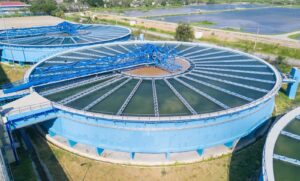
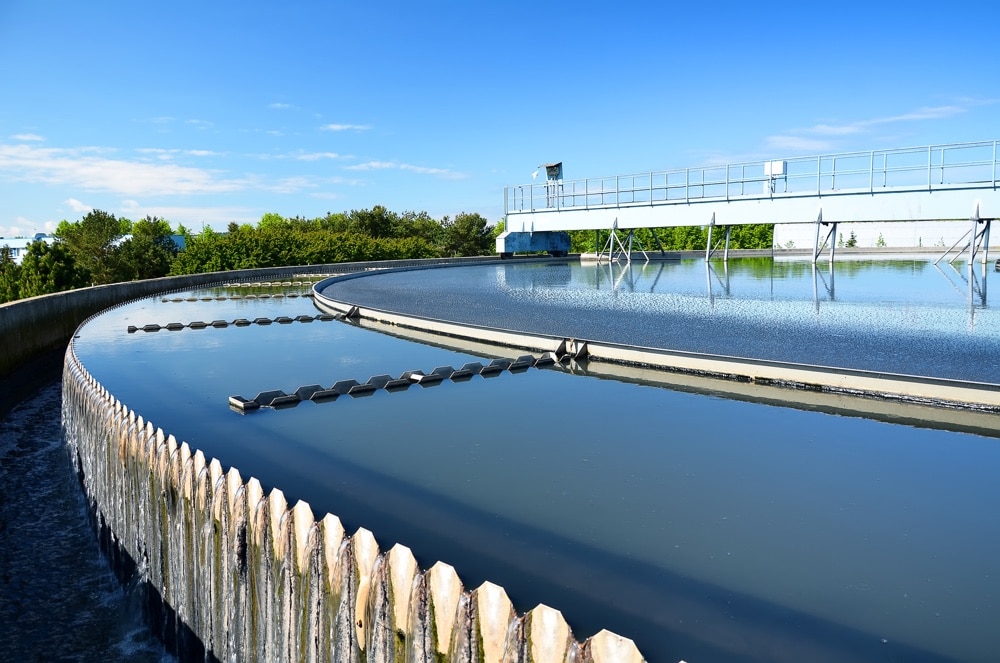
a view of a modern water treatment plant

The water treatment processes may vary slightly at different water treatment plants, depending on the available technology and the water it needs to process. Still, the basic principles are broadly the same.

1. Coagulation / Flocculation

Coagulation and flocculation remove color, turbidity, algae, and other microorganisms from surface waters. Liquid aluminum sulfate (alum) and polymer are added to the untreated water during coagulation. When mixed with the water, this causes the tiny particles of dirt in the water to stick together or coagulate. Next, groups of dirt particles stick together to form larger, heavier particles called flocs which are easier to remove by settling or filtration.

2. Sedimentation

The flocculated water then flows to the following primary unit of the water purification process, called sedimentation. The sedimentation process aims to remove suspended solids (particles) that are denser (heavier) than water and reduce the particulate load on the filters.

As the water and the floc particles progress through the treatment process, they move into sedimentation basins where the water moves slowly, causing the heavy floc particles to settle to the bottom. Floc which collects on the bottom of the basin is called sludge and is piped to drying lagoons.

This sedimentation process removes almost ninety percent of the solids in the water. The more transparent water on the surface is collected in the launder tubes that direct the water to the filter gallery to remove the remaining ten percent of solids.

3. Water filtration process

Water flows through filters of varying compositions (sand, gravel, and charcoal) and pore sizes to remove dissolved particles, such as dust, parasites, bacteria, viruses, and chemicals in the water filtration process. Filtration collects the suspended impurities in water and enhances the effectiveness of disinfection.

4. Disinfection

After the water has been filtered, a disinfectant (for example, chlorine, chloramine) may be added to kill any remaining parasites, bacteria, and viruses and protect the water from germs when piped to homes businesses. Chlorine is used because it is a very effective disinfectant, and residual concentrations can be maintained to guard against possible biological contamination in the water distribution system.

5. Sludge Drying

Sludge drying is transforming sludge into valuable products or green fuel. It significantly reduces the volume and weight of the sludge so that it is easier to recover.

6. Fluoridation

Water fluoridation is the controlled addition of fluoride to a public water supply to reduce tooth decay. Fluoridated water contains fluoride at a level that is effective for preventing cavities.

7. Water Process Laboratory

The water treatment plant has a process laboratory to ensure that the water cleaning process is optimized and that the water is safe to drink.


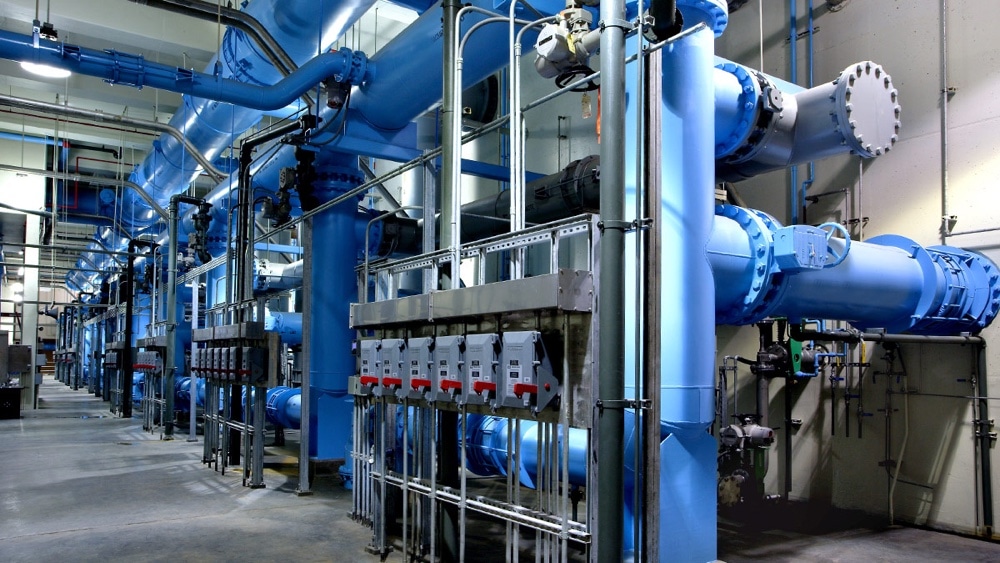
Inside a water treatment plant

Desalination, also called desalting, removes dissolved salts from seawater and, in some cases, from the brackish (slightly salty) waters of inland seas, highly mineralized groundwaters (e.g., geothermal brines), and municipal wastewaters. This process renders such otherwise unusable waters fit for human consumption, irrigation, industrial applications, and other purposes. One by-product of desalination is salt.

Water recycling is converting wastewater into water that can be reused for other purposes. The water recycling process is straightforward and utilizes basic physical, biological, and chemical principles to remove contaminants from water. Reclaiming water for reuse applications instead of freshwater supplies can be a water-saving measure.

Water processing companies offer chemical and equipment solutions to companies to manage and optimize their water resources and process challenges across various industries. Water processing companies support organizations looking to address water consumption, improve efficiency, lower costs, improve social responsibility, and explore water reuse opportunities.

The water cycle process, also called the hydrologic cycle, involves the continuous water circulation in the Earth-atmosphere system. Of the many processes involved in the water cycle, the most important are evaporation, transpiration, condensation, precipitation, and runoff. Although the total amount of water within the cycle remains typically constant, its distribution among the various processes is continually changing.

Three factors have primarily driven the development and implementation of water treatment technologies:

  • The discovery of new rarer contaminants
  • The promulgation of new water quality standards
  • Cost

But now, we see a dramatic change in the water industry’s approach to water treatment. Water utilities have seriously considered alternative treatment technologies to the traditional filtration/chlorination treatment approach.

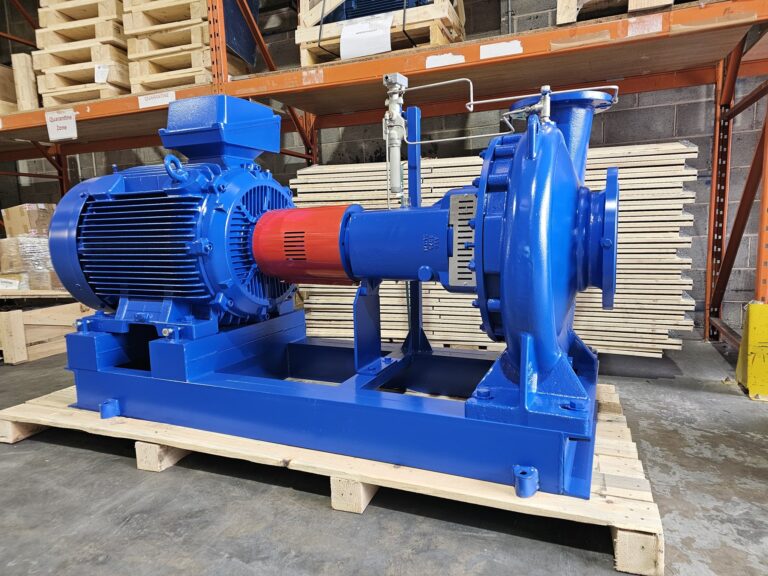
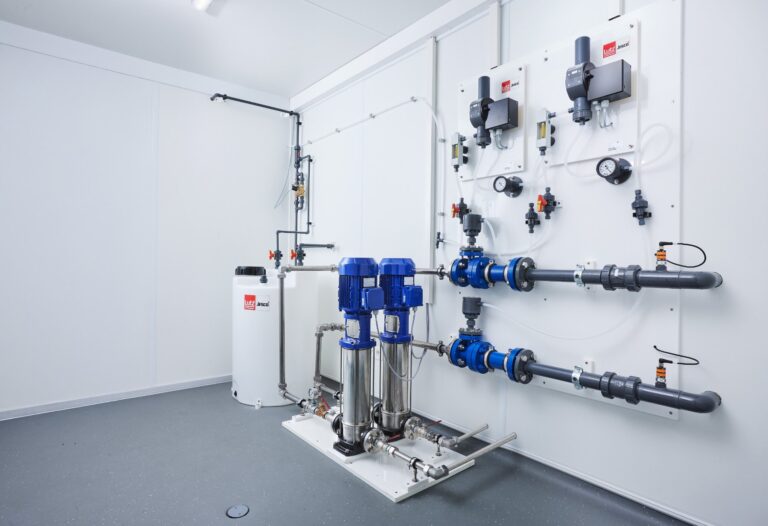
Large centrifugal and split case pumps move raw and clean water, submersible pumps sit in intakes and wells, and dosing pumps add coagulant, chlorine and pH correction in millilitres per minute. Since pumping is the largest energy item in most water utilities, efficiency and speed control decide the operating cost. More in Pumps and Pumping Systems.

Magnetic and ultrasonic flow meters measure abstraction, treatment steps, district metering areas and delivery. Continuous measurement across zones is what turns a leakage figure from a yearly estimate into something an operator can act on this week. More in Flow Control and Measurement.

Radar, ultrasonic and hydrostatic sensors follow levels in intakes, clarifiers, filter beds and clean water reservoirs, and they trigger pump starts, backwash cycles and overflow alarms. Foam, condensation and turbulence are the usual sources of a false reading. More in Level Control and Measurement.

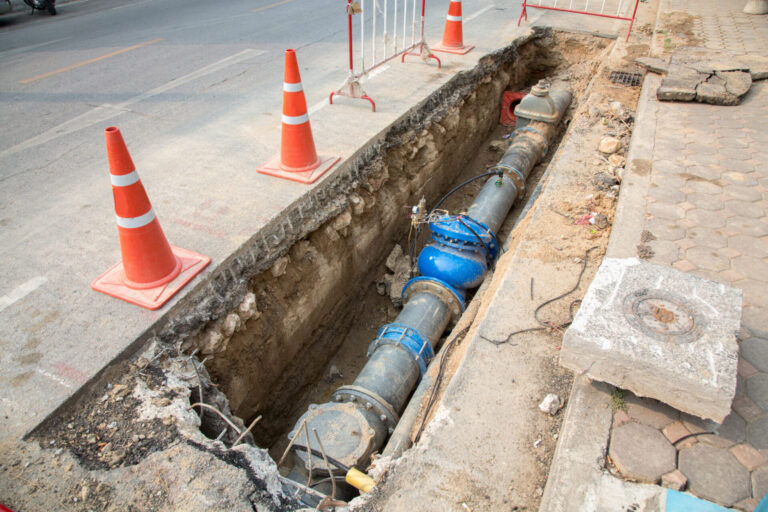
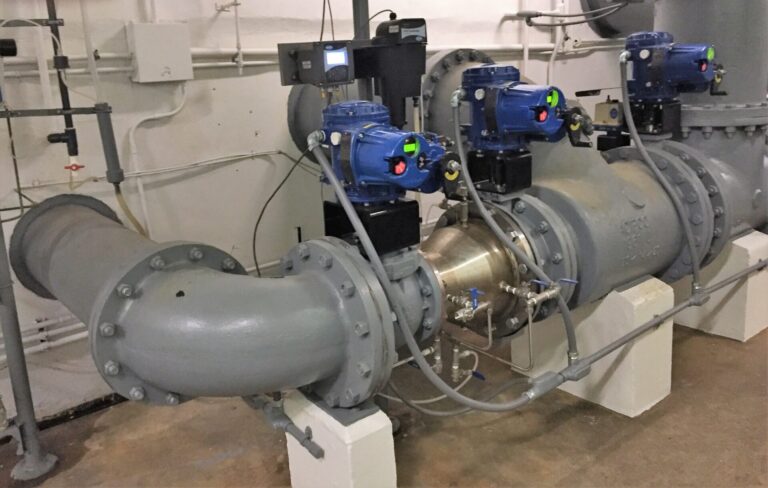
Butterfly and gate valves isolate sections, control valves regulate pressure across the network, and non return valves protect pumps against surge. Pressure management is one of the cheapest ways to cut both leakage and pipe bursts. More in Process and Control Valves.

Sand and activated carbon filters carry the classic treatment train, while ultrafiltration, nanofiltration and reverse osmosis remove particles, micro-organisms and dissolved contaminants where the source demands it. Backwash strategy and membrane fouling determine the running cost. More in Fluid Filtration Systems.

Online analysers follow turbidity, chlorine residual, pH, conductivity and increasingly specific contaminants at the works and in the network. Continuous data shortens the response time when something changes from days to minutes. More in Process Gas and Liquid Analytical Systems.

Three ways on from here

Water Processing equipmentProduct types and the manufacturers that build them.Water Processing videosSee the equipment run before you shortlist.Water Processing eventsWhere the industry meets this year.