




Material Characterisation for Fuel Cells and Electrolysers
The development of fuel cells, electrolysers and other energy technologies places increasing demands on the materials used within these systems. Polymer membranes, for example, play an important role in separating gases or ions while supporting the required electrochemical processes.
Understanding how such materials behave under different operating conditions requires reliable material characterisation. Permeability testing is one of the methods used to determine how gases or vapours pass through a membrane. For meaningful results, however, the test conditions need to be carefully controlled.
Reproducing Operating Conditions
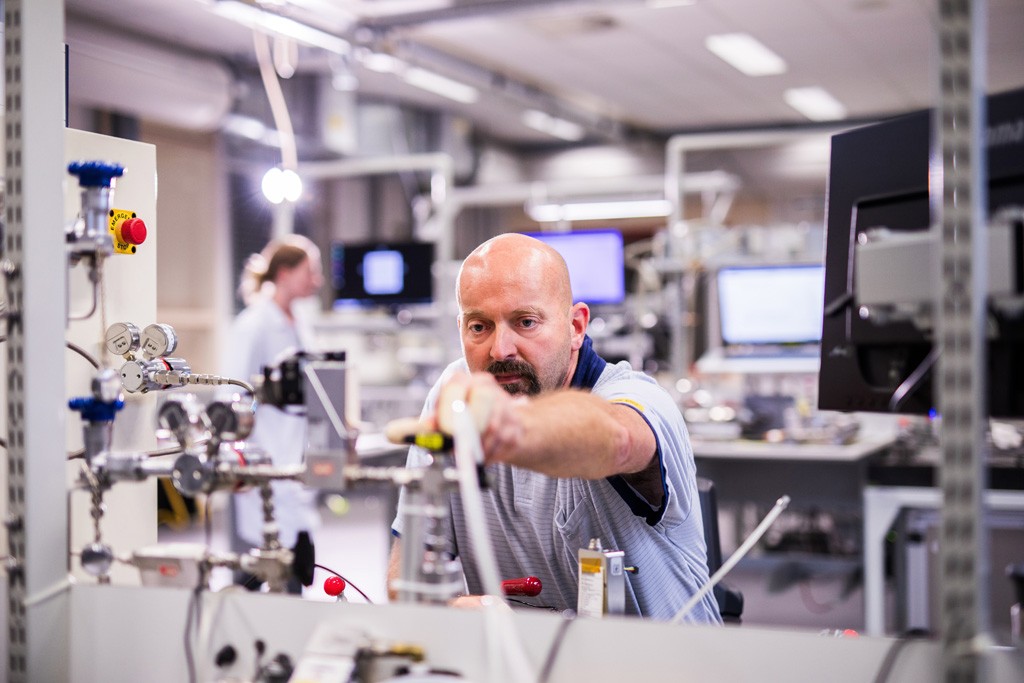
A membrane may behave differently depending on factors such as gas composition, flow, pressure, temperature and humidity. This makes it important for laboratory test systems to generate stable and reproducible conditions, particularly when different materials or membrane configurations are being compared.
Humidity can be especially significant in membrane testing. Instead of testing only with dry gases, researchers may need to expose a sample to a gas mixture with a precisely controlled moisture content to better represent its intended operating environment.
Generating these mixtures consistently requires coordinated control of several process parameters. Gas and liquid flows need to be accurately regulated, while pressure and temperature must remain stable. At the same time, the system must prevent unwanted condensation, as this could influence both the test conditions and the resulting measurements.
Generating Controlled Humidified Gas Mixtures
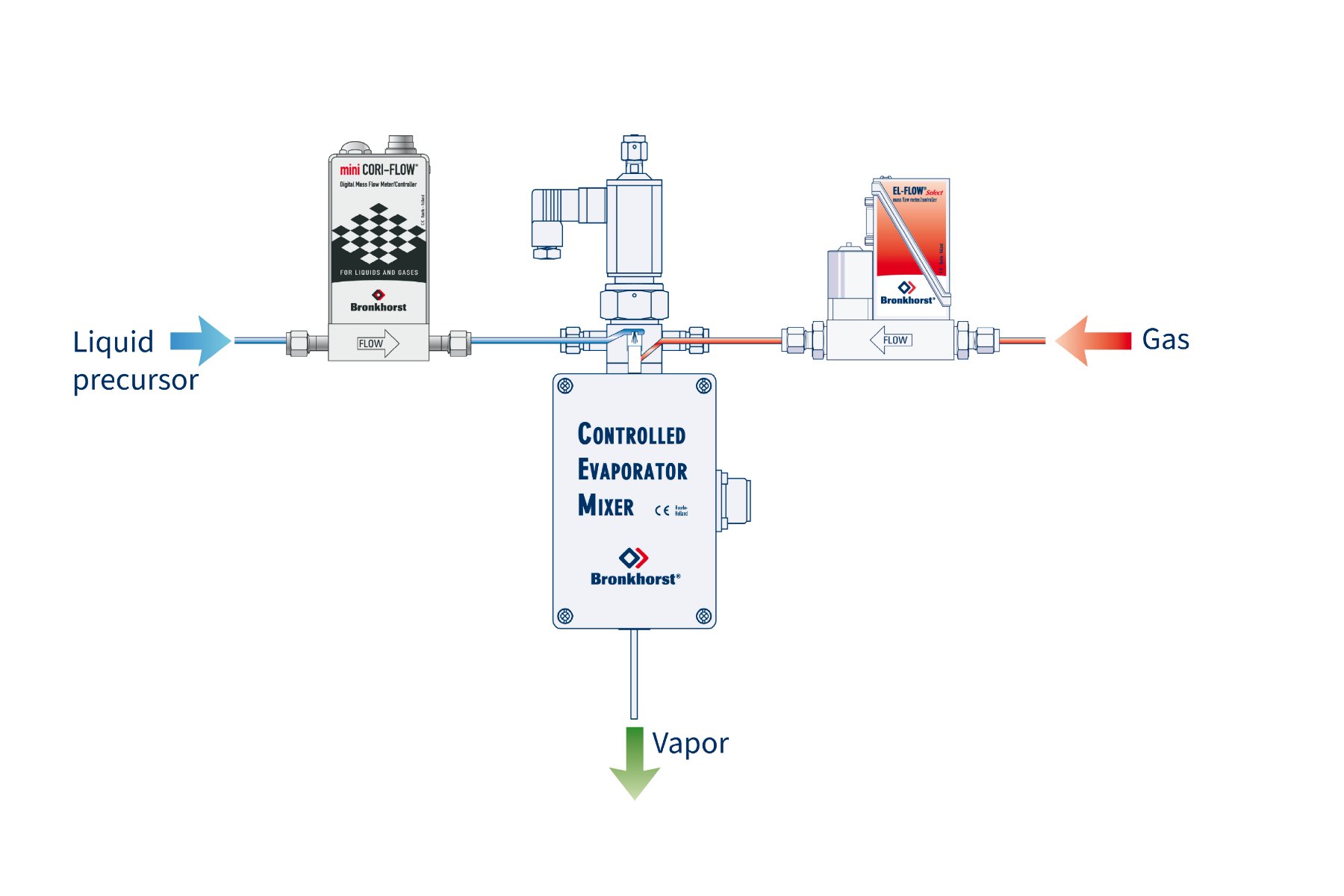
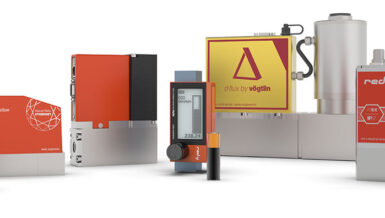
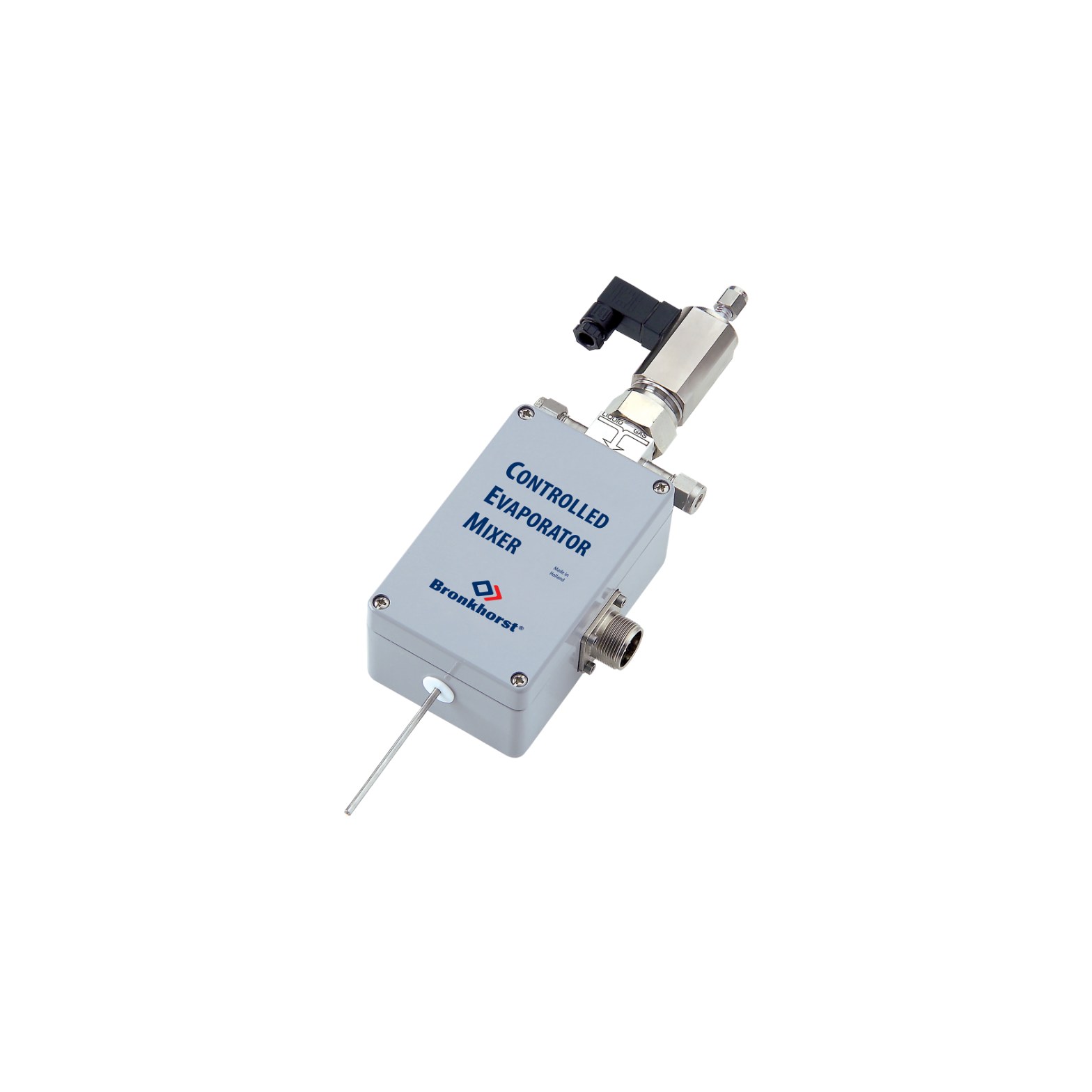
One approach is to generate the required humidity by introducing a precisely controlled amount of liquid into a carrier gas and evaporating it. Bronkhorst uses its Controlled Evaporation and Mixing (CEM) technology for this purpose, combining controlled gas and liquid flows with evaporation and mixing. This makes it possible to generate customised humidified gas mixtures under controlled conditions.
By adjusting the individual flows, researchers can define the required gas composition and moisture level for a particular test protocol. Such a setup can be combined with pressure control and appropriate thermal management to maintain stable conditions throughout the experiment.
Thermal management is particularly important because temperature differences within the system can cause condensation. Preventing this helps ensure that the vapour concentration reaching the test sample remains consistent.
Reproducibility over Longer Test Periods
Material characterisation is not only about reaching the required conditions, but also about maintaining them. Permeability tests may run for extended periods, making long-term stability an important part of the measurement setup.
Stable control of gas flow, liquid flow, pressure and humidity helps reduce variations caused by the test system itself. As a result, differences observed between measurements can be attributed more confidently to the material under investigation rather than to changing process conditions.
This reproducibility is particularly valuable when comparing membrane materials, studying ageing effects or evaluating performance under different operating conditions.
A Flexible Approach to Material Research
Because research requirements vary considerably, permeability test systems also benefit from a modular design. Different gases, humidity levels, pressures and flow ranges may be required as research progresses from initial material screening to more application-specific testing.
Using separate but coordinated instruments for gas flow, liquid flow, pressure control and evaporation allows the test configuration to be adapted to different materials and protocols. Bronkhorst software tools additionally support repeatable test procedures and the systematic variation of experimental conditions.
For research institutes and laboratories working on membranes and other functional materials, accurately generating and maintaining these conditions is an important part of obtaining reliable data. Ultimately, better control of the test environment provides a stronger basis for understanding material behaviour and evaluating its suitability for future energy applications.