


Sustainability Across the Product Lifecycle
It is about the decisions we make from the raw materials and how we manufacture, to the energy we consume and how our products enable customers to adopt new technologies and processes.
Neil HannaySenior R&D Engineer at Titan Enterprises
For Titan Enterprises, sustainability sits firmly within the focus of reducing the environmental impact of its own operations, while also considering the wider lifecycle and industrial use of its products. As a specialist manufacturer of liquid flow measurement equipment, Titan prioritises how its technology, materials, manufacturing processes and engineering expertise can contribute to more sustainable outcomes throughout the lifecycle of its products and the applications in which they are used.
This approach is reflected in Titan’s Environmental Policy, which identifies reducing waste, energy consumption and transportation, reviewing product design and investigating alternative materials as key areas for continuous improvement.
“Environmental responsibility has to be approached as a long-term engineering challenge,” says Neil Hannay, Senior R&D Engineer at Titan Enterprises.
Reducing Environmental Impact at Source
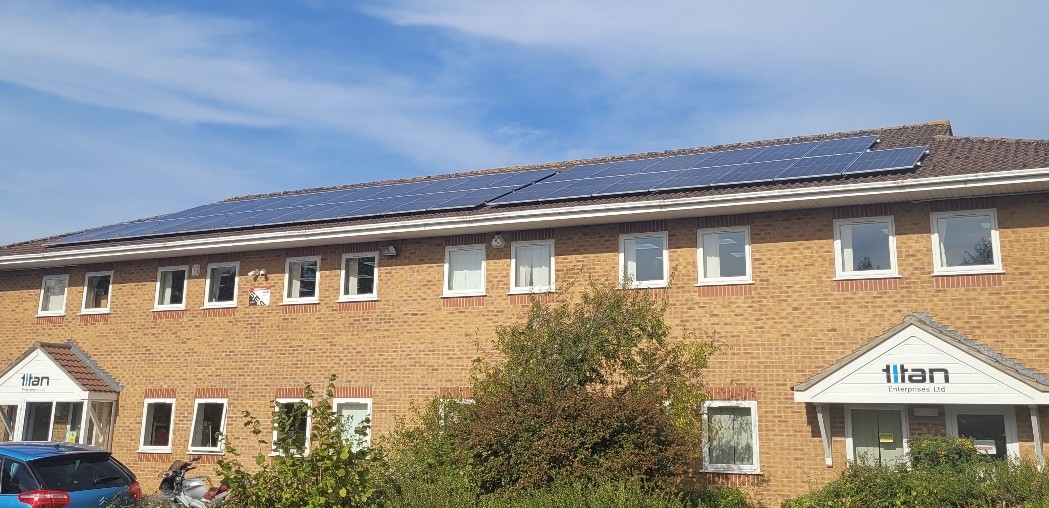
Energy consumption has been a key area of focus for Titan, a milestone being the installation of two solar panel arrays at its UK manufacturing facility in 2024, helping to generate renewable electricity and offset approximately six tonnes of CO₂ annually.
Alongside renewable energy generation, Titan is improving energy efficiency within its facility, from upgrading lighting and reviewing manufacturing processes to identifying opportunities to reduce consumption.
Waste reduction is another area where practical changes can deliver tangible benefits. Moving from printed technical documentation to QR-code-based digital information, as well as replacing traditional packaging materials with recyclable cardboard and biodegradable fillers, has reduced paper use and improved access to technical data.
Titan is also investigating opportunities to recycle old or rejected electronic PCBs generated through R&D and production, extending the focus on resource efficiency beyond the manufacturing process itself.
Engineering for a Changing Materials Landscape
Product development is another important component of Titan’s sustainability strategy. The company is actively investigating alternative materials to reduce reliance on substances of increasing environmental concern, while still meeting the demanding performance, regulatory and durability requirements of flow measurement applications.
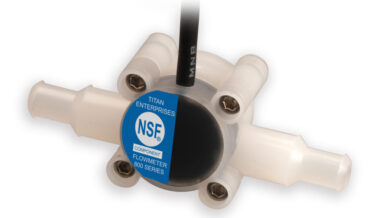
This includes ongoing evaluation of PFAS-free materials for its turbine flowmeter range as regulatory scrutiny of fluorinated substances increases. Titan is currently testing alternative materials to assess their chemical resistance, dimensional stability, longevity and flow performance within the complete flowmeter design.
Supporting Customers in the Transition to More Sustainable Applications
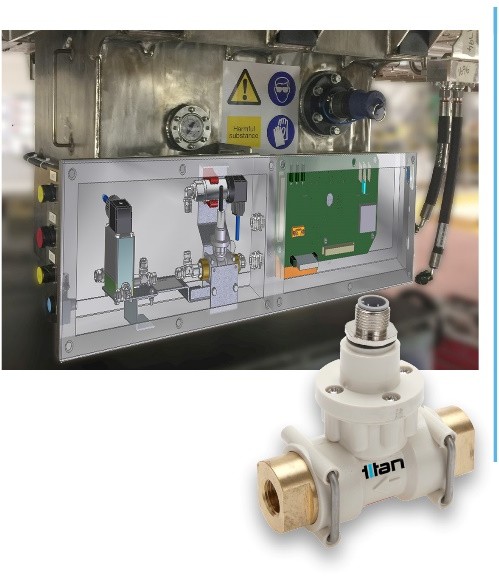
Titan’s sustainability approach also extends to the applications where its flowmeters operate.
A case in point is the company’s work with Grinsty Rail, whose vehicle-mounted de-icing systems moved towards a more environmentally friendly, biodegradable de-icing fluid.
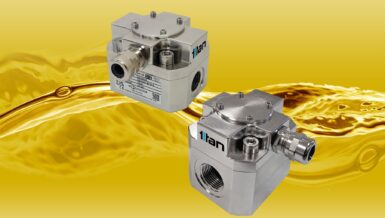
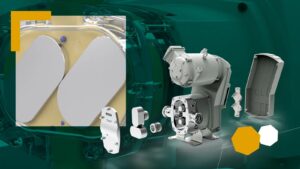
The change in fluid formulation created an engineering challenge. The alternative fluid had different physical characteristics, including higher viscosity and a colour that affected the operation of the existing optical flow sensors used in the system. Titan worked with Grinsty Rail to identify a suitable alternative, with their OG2 oval gear flowmeter selected to provide reliable measurement of the new fluid.
The case demonstrates how adopting a more environmentally responsible fluid can create secondary technical challenges – and how flow measurement technology can play an enabling role in the transition to more sustainable products and processes.
Sustainability Through Precision
The ability to accurately control and measure liquid volumes is itself an important part of resource efficiency. Whether dosing chemicals, lubricants, cleaning agents or other process fluids, precise flow measurement can help minimise over-dosing, reduce waste and ensure that processes operate consistently.
Titan’s development of increasingly capable low-flow technologies, including ultrasonic measurement below 2 ml/min, is opening opportunities where precise control of small liquid volumes is critical.
Building Sustainability into the Supply Chain
It enables us to investigate different materials and manufacturing approaches while maintaining the quality and reliability our customers expect.
Jeremy ThorneOperations Manager at Titan Enterprises
Alongside product innovation, Titan is strengthening relationships with UK-based suppliers, while diversifying its supply chain and exploring alternative materials to enhance resilience and reduce environmental impact.
“Working closely with our suppliers gives us much greater visibility of what is possible,” says Jeremy Thorne, Operations Manager at Titan Enterprises.
A Long-Term Approach to Sustainable Growth
Titan recognises that there is no single change that will make manufacturing sustainable.
Instead, the company is taking a cumulative approach – combining:
- Renewable Energy
- Waste Reduction
- Responsible Material Selection
- Supply Chain Development
- Product Longevity
- Engineering Innovation
This also reflects the company’s wider commitment to continuous environmental improvement under its Environmental Policy.
As Titan looks towards the future, sustainability will remain closely linked to its investment in R&D and its relationships with OEMs and end users. From helping customers measure alternative, environmentally responsible fluids to developing flowmeters using new materials and technologies, the company sees precision flow measurement as an important part of the wider engineering response to environmental challenges.
“Our objective is not to treat sustainability as a separate initiative,” concludes Neil Hannay. “We want it to become part of how we think about design engineering, manufacturing and supporting our customers. By making considered improvements across the business, we can reduce our own environmental impact while helping customers develop more efficient and sustainable systems.”
For more information, visit www.flowmeters.co.uk.