
Market
Food Processing
Food processing depends on fluid handling technology to move, measure and control liquid and viscous products without compromising hygiene or product quality. Pumps, valves, flow meters, level sensors, heat exchangers and filtration systems handle everything from milk, chocolate and edible oils to sauces, starches and plant-based proteins — under strict food-grade, CIP and hygienic design requirements that shape every equipment choice.
All articles in this market
Food Processing — page 10 of 24


Promoted videos
Food Processing in action

Ask the Expert
Ask a food processing expert — free
Engineers and product specialists who answer technical questions from readers. The answer comes back to you by e-mail; when we publish it, other readers benefit too.
 Natalie Waldecker
VEGA Grieshaber KG
Natalie Waldecker
VEGA Grieshaber KG
Natalie Waldecker, Portfolio Manager Food and Pharma, knows the challenges of the demanding industries inside out. With her broad application knowledge, she…
Ask a question Francisco Hernandez
HRS Heat Exchangers
Francisco Hernandez
HRS Heat Exchangers
Francisco graduated as an industrial technical engineer at the Universidad Politécnica de Cartagena (Murcia, Spain) in 1993, and joined HRS in 1998.…
Ask a question Dominik Hegen
HERMETIC-Pumpen GmbH
Dominik Hegen
HERMETIC-Pumpen GmbH
A pump is more than just rotary equipment. It is the promise to solve a pumping task safely and reliably. In his…
Ask a question Trevor Forster
Titan Enterprises Ltd
Trevor Forster
Titan Enterprises Ltd
Trevor Forster is Managing Director of the internationally respected flowmeter company - Titan Enterprises Ltd. His experience in fluid handling dates back…
Ask a questionSubscribe to our E-newsletters
Join 36,000+ engineers, plant managers and technical buyers who follow powder and bulk solids technology with us. Free, twice a week.
Questions and answers
Frequently asked about food processing
What is the food processing industry?
The food processing industry converts raw agricultural products into the foods that reach retailers, food service and consumers. It covers dairy, meat and fish, bakery and confectionery, edible oils and fats, sugar and starches, sauces and ready meals, plant-based proteins and pet food.
Almost every one of those steps is a fluid handling process. Milk, chocolate, syrups, doughs, purees, brines and cleaning agents all have to be transported, measured, dosed, heated, cooled and filtered without damaging the product or compromising food safety.
The industry is usually divided into two broad groups:
- Primary processing: turning raw materials into ingredients — milling, pressing, refining, milk reception and separation.
- Secondary processing: turning ingredients into finished products — mixing, cooking, emulsifying, filling and packaging.
Food processing technology
Fluid handling equipment in food production is built around one requirement that other industries do not share to the same degree: everything must be cleanable. Hygienic design standards such as EHEDG, 3-A and FDA-compliant materials determine surface finish, seal choice, dead-leg-free pipe routing and whether a system can be cleaned in place at all.
Typical equipment includes positive displacement and centrifugal pumps for gentle product transfer, hygienic butterfly and seat valves, plate and tubular heat exchangers for pasteurisation, homogenisers and high-shear mixers, membrane filtration, and CIP skids that circulate caustic and acid at controlled temperature and flow.
Because many food products are viscous, shear-sensitive or contain particulates, pump and valve selection is rarely a question of flow and pressure alone. Product integrity usually decides the design.
Water treatment in the food industry
Water is an ingredient, a cleaning medium and a heat transfer fluid in almost every food plant, and each role carries its own quality requirement. Process water that touches the product must meet drinking water standards or better, while boiler and cooling water needs conditioning to prevent scaling and corrosion.
At the other end of the plant, food effluent is high in organic load, fats, oils and grease. Treatment usually combines screening and dissolved air flotation with anaerobic or aerobic biological stages, increasingly with heat and biogas recovery.
Water reuse has become both a cost and a licence-to-operate issue. Reverse osmosis and membrane bioreactors allow producers to recover a large share of their effluent for cleaning and utility duty.
Food industry news
Fluid Handling Pro follows the fluid handling side of food production: pumps, valves, flow meters, level and pressure instrumentation, heat exchangers, mixers and filtration systems, together with the case studies that show how they perform in dairies, chocolate plants, sugar mills, meat processing lines and plant-based facilities.
You will find product launches, application stories, white papers and expert opinion from the manufacturers supplying this market, updated throughout the week. Browse the latest food processing articles on this page, or subscribe to the e-newsletter to receive a selection by email.
Fluid control in the food industry
Control in a food plant means holding a recipe, a temperature and a flow within tolerance while the same equipment is cleaned several times a day. Hygienic control valves, seat and butterfly valves with clean-in-place capability, and mix-proof valve manifolds keep product, water and cleaning media strictly separated.
Dosing of ingredients, additives and cleaning chemicals is handled by metering pumps and mass flow controllers, usually under automatic recipe control. Batch accuracy affects both product consistency and cost: over-dosing an expensive ingredient by one percent across a year is a measurable loss.
Traceability and data logging belong to the same conversation, because food safety audits ask for evidence rather than intentions.
Level measurement in the food industry
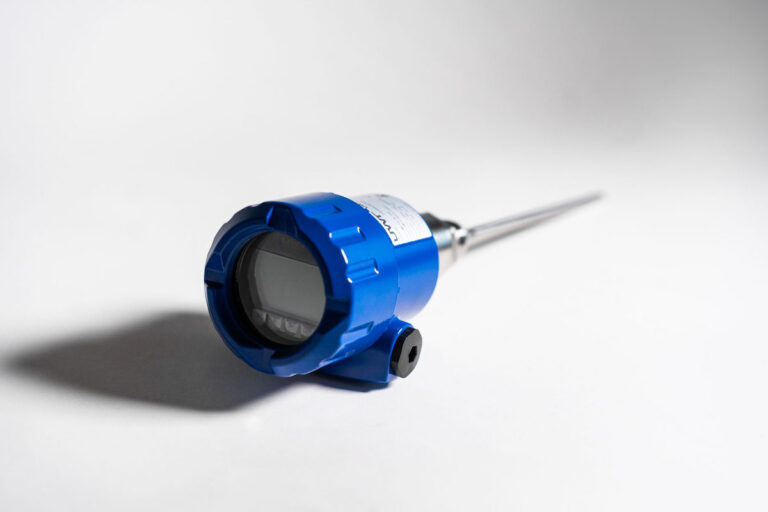
Level measurement in food production has to work in tanks and silos that are cleaned aggressively, filled with foam, or holding sticky and viscous products. Radar and guided wave radar are the most common choices for liquids, while capacitive and vibrating fork sensors handle point level detection.
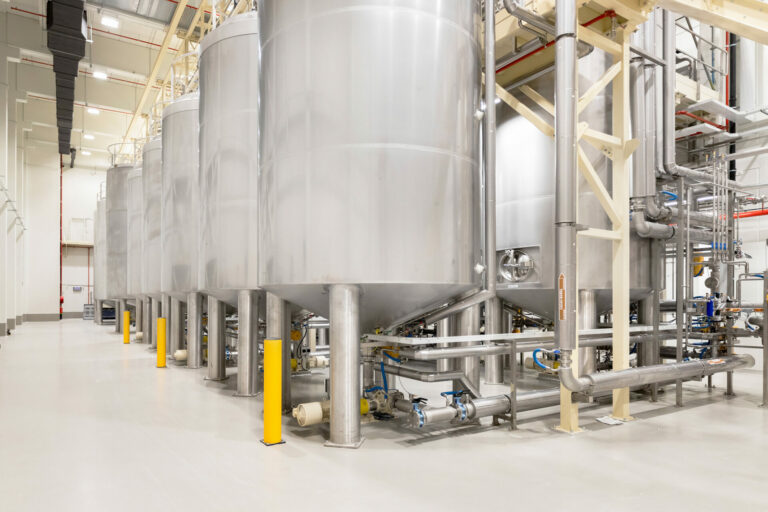
Hygienic process connections, flush-mounted diaphragms and materials that survive caustic CIP cycles matter as much as the measuring principle itself. Applications run from milk silos and syrup tanks to CIP chemical storage, buffer tanks between process stages, and level control in evaporators and crystallisers.
Flow measurement in the food industry
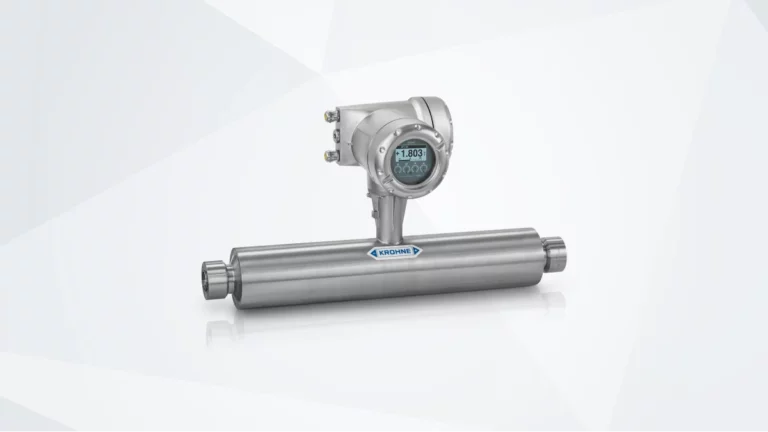
Flow meters in food plants measure product, water, cleaning media and utilities, and often form the basis for billing, recipe control and yield calculation. Electromagnetic flow meters are the workhorse for conductive liquids such as milk and juice, while Coriolis meters add mass flow and density, which makes them valuable for dosing, blending and concentration control.
Ultrasonic and oval gear meters cover non-conductive and viscous products such as oils, syrups and chocolate. All are available in hygienic versions with the surface finish and process connections required for clean-in-place, and many now provide diagnostics that flag build-up or incomplete cleaning before it reaches the product.
Temperature control in the food industry
Heat is what makes food safe and what most often damages it. Pasteurisation, sterilisation, cooking, evaporation, cooling and freezing all depend on holding a product at a defined temperature for a defined time, with as little thermal load as possible.
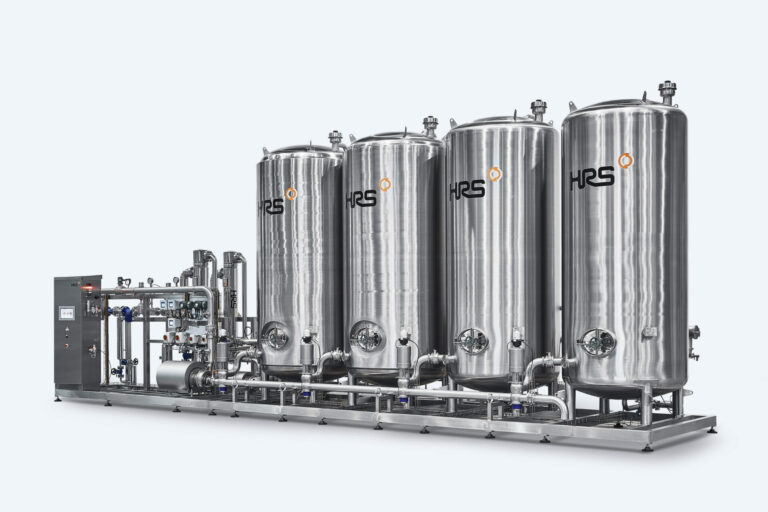
Plate, tubular and scraped surface heat exchangers each suit different products: plates for low viscosity liquids, tubes for products with particulates, scraped surface for very viscous or crystallising media. Accurate temperature measurement protects both food safety and product quality, and heat recovery between the heating and cooling stages remains one of the largest efficiency gains available in a food plant.
Which pumps are used in food processing?
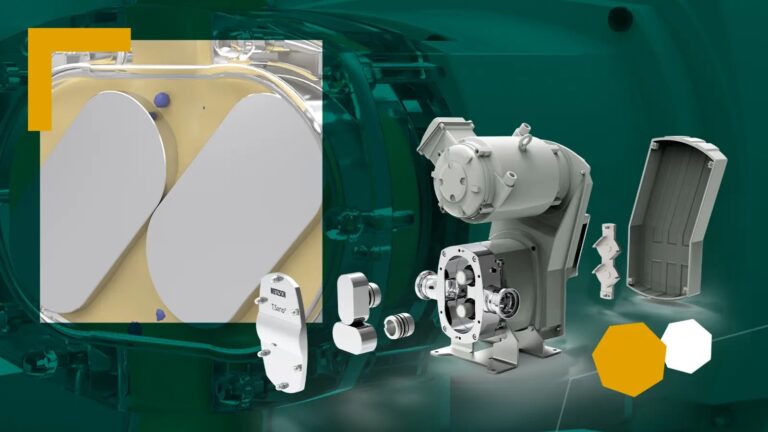
Hygienic centrifugal pumps move water, milk and thin liquids, while lobe, circumferential piston, twin screw and progressing cavity pumps handle sauces, doughs, fillings and products with particulates. Gentle handling, drainability and a cleanable seal design usually weigh heavier than pure efficiency. More in Pumps and Pumping Systems.
Which valves are used in a food plant?
Mix-proof double seat valves keep product and cleaning fluid apart in a shared manifold, hygienic butterfly and single seat valves handle routing, and aseptic diaphragm valves protect sterile sections. Seat material, dead space and the ability to be cleaned in place decide what is allowed on the line. More in Process and Control Valves.
How is pressure measured in food production?
Flush diaphragm pressure transmitters avoid dead space and product build-up, and they guard homogenisers, fillers and heat exchangers. Differential pressure across a filter or a membrane is often the first sign of fouling, well before the flow drops. More in Pressure Control and Measurement.
How is filtration used in the food industry?
Membrane filtration concentrates milk, whey and juices, removes bacteria without heat and recovers ingredients that used to be lost. Process water and CIP fluids are filtered as well, which cuts both intake and discharge. More in Fluid Filtration Systems.
Where is mixing technology used in food processing?
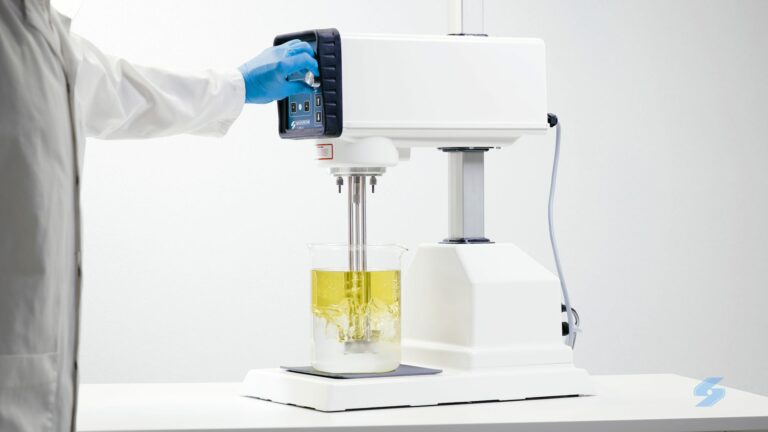
Mixers and inline dispersers bring powders into liquid, blend recipes to a consistent standard and keep emulsions and suspensions stable. Shear is the balance to strike: enough to disperse, not so much that texture or protein structure suffers. More in Fluid Mixing.
How is product quality measured inline in food plants?
Inline analysers follow fat, dry matter, sugar, conductivity and turbidity so that a batch can be corrected while it runs instead of after a lab result. The same measurements separate product from water at every CIP changeover, which reduces product loss. More in Process Gas and Liquid Analytical Systems.
How do I find an equipment manufacturer for food processing?
Use the Manufacturers Directory A–Z or the Equipment Guide. Partner profiles carry direct contact details; other listings link to the company website.
Can I ask a technical question before I buy?
Yes. Ask the Expert puts your question to a field expert active in Food Processing. The answer comes back to you by e-mail; when we publish it, other readers benefit too.