







The popularity of low alcohol and alcohol-free (AF) beers and ciders has increased massively in recent years, driven by health and social considerations. Many of these drinks are produced in a similar way to conventional beers and ciders, so the equipment required, such as heat exchangers, remains the same and the same factors must be considered during the selection process.

A market measured in billions of servings
IWSR forecasts that global consumption of no-alcohol analogue drinks (including no-alcohol beer, wine, ready-to-drink products, and spirits) will grow 36% by volume between 2024 and 2029, ‘reaching over 18 billion servings of no-alcohol analogues’.1
Market Research Future goes further, suggesting that the global market for low alcohol beer will be worth US$36.22 billion by 2035, with a compound annual growth rate (CAGR) of 6.12%.2 This trend builds on the growth seen in the previous decade, with Brewers of Europe stating that consumption of low and no-alcohol beer across the continent rose from 3.5% of the total beer market in 2012 to just over 6% by 2021.3
No-alcohol analogues like no-alcohol beer and wine are an increasingly popular way for drinkers to moderate their alcohol intake. By mimicking the taste and appearance of alcoholic beverages, drinkers who want to moderate can participate fully in occasions without feeling left out.
Susie Goldspink, Head of No & Low Alcohol at IWSR
Overcoming production challenges

Accounting for 93% of Europe’s low and no-alcohol beverage market in terms of value, beer is the most popular beverage in this growing sector. However, traditionally it has been difficult for producers to make high-quality low and no-alcohol beer alternatives. That is now changing, with brewers following two main approaches, both of which have their pros and cons. The first is to restrict alcohol formation during fermentation, and the second is to remove the alcohol after the beer has been produced.
Restricting the production of alcohol during fermentation either involves stopping the process prematurely, or using a specific strain of yeast (particularly those which are maltose-negative) to limit fermentation. In the past, a lack of commercial availability, together with knowledge gaps, have proved challenging. Over the last few years, however, there have been some major breakthroughs in overcoming the flavour and aroma weaknesses of biological methods.
The most common physical method of removing alcohol is dealcoholisation through distillation, either using vacuum evaporation, or reverse osmosis via a membrane. The technology associated with membranes has advanced significantly in recent years, but the technique is still expensive and therefore is mostly used by larger breweries. Vacuum distillation and evaporation require tight temperature control to maintain quality, but often provide the best result when a brewery is trying to replicate the taste of an existing standard beer.
As well as the technical aspects, historically, quality factors associated with low and no-alcohol beers, such as taste, mouth feel and shelf life, have also proved challenging as many are directly or indirectly dependent on the ethanol itself. This means that the best alcohol-free beers are often specifically formulated as yeast, hops and sweeteners can all be used in the recipe to compensate for the lack of alcohol.
The role of heat exchangers
The increasing availability of better yeast strains means that it is now possible to produce better tasting and higher quality low and no-alcohol beers using standard equipment. However, it is generally recognised that the recipe design, process control and packaging management of low and no-alcohol beers are even more important than with traditional products.
That means that temperature control is crucial at several key stages. For example, maintaining higher mash temperatures (>72°C) and reducing mash time will lower beta-amylase activity and fermentation (and therefore alcohol level in the final product). After boiling, the wort must be cooled rapidly to prevent off flavours caused by the production of dimethyl sulphide (DMS) – typically achieved by reducing temperatures from ~95°C to ~12°C. Both plate and tubular heat exchangers can be used here, but tubular heat exchangers often have a larger capacity and can therefore chill the wort more quickly.
Where vacuum distillation is used to remove alcohol, specific temperature regimes are essential to prevent the formation of undesirable off flavours. Evaporation systems based on heat exchangers, such as the corrugated tube HRS K Series, are ideal given the low viscosity and fouling potential of most beers. Using chilled water or other coolants can also cool fermented beer prior to maturation or bottling. Again, heat exchangers are ideal for this, offering high levels of temperature control together with continuous processing.
As many low and no-alcohol beers lack the typical microbial deterrents found in regular beer – as well as lacking the preservative effects of alcohol – pasteurisation is even more important. In particular, the use of High-Temperature, Short-Time (HTST) pasteurisation techniques will help to preserve the refreshing taste which is so distinctive to many such products.
Not only does pasteurisation ensure microbial stability and extend shelf life, but in most cases it also helps to preserve the taste of the product over time. Either integrated heat exchangers, such as the HRS MI Series of multitube corrugated tube technology, or integrated systems – like the HRS Thermblock Series – are ideal for this stage of production.
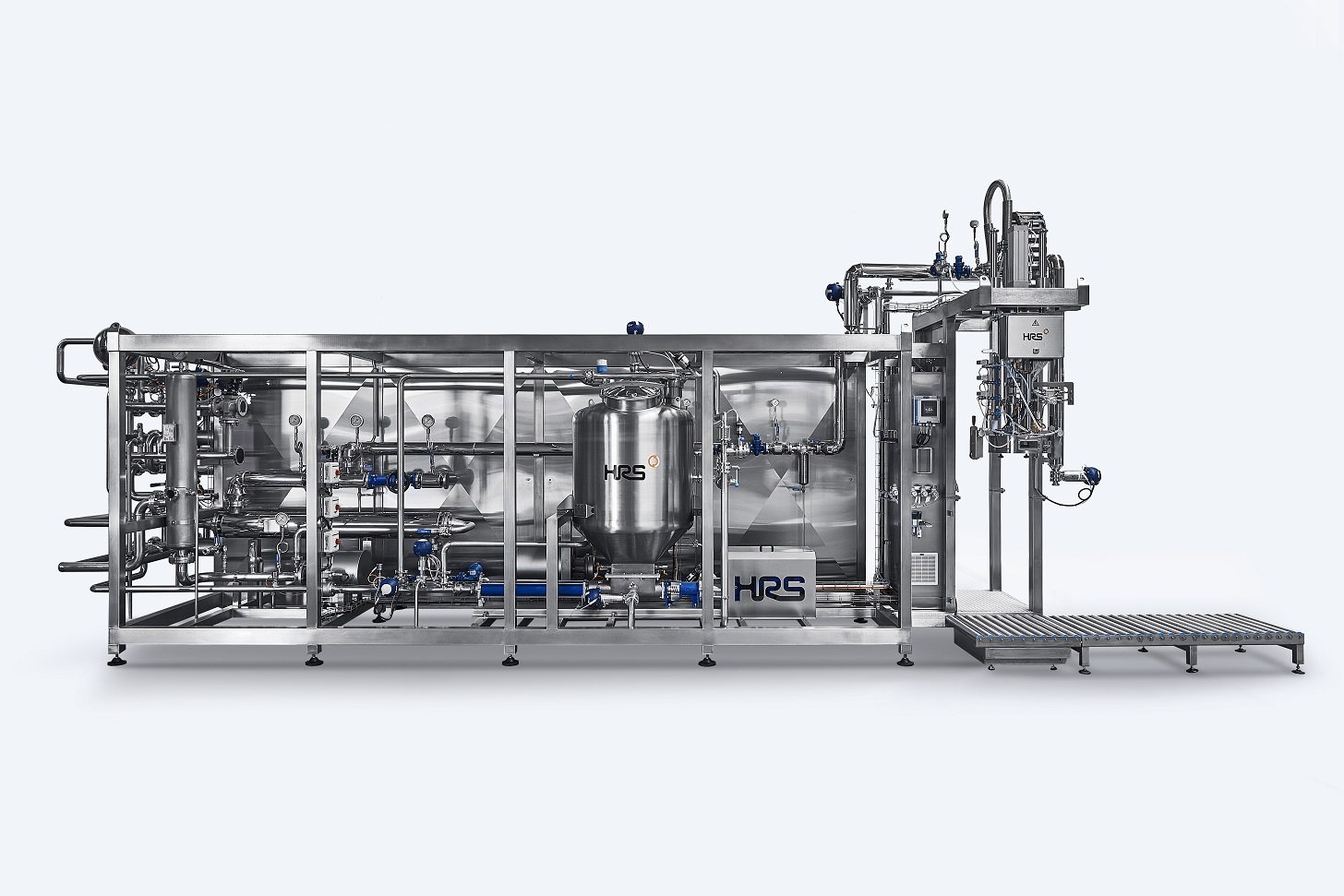
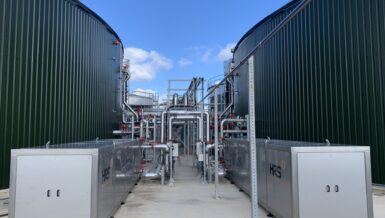
Heat exchangers can also play an important role in treating the waste products of brewing. Anaerobic digestion (AD) is a popular way of treating the wastewater and slurry from breweries as they often have a high concentration of yeast and sugars, making them an ideal feedstock. Heat exchangers have many uses in AD including digester heating, pasteurisation so that the resulting digestate can be sold as a valuable biofertiliser, and evaporation to reduce the water content of digestate.
Energy recovery and energy efficiency
Many stages of the brewing process also offer excellent opportunities to recover heat (also known as heat regeneration), helping brewers increase energy efficiency while saving money and boosting their green credentials at the same time.
For example, the warmed water (or other cooling medium) produced after the wort has been cooled often has a temperature of around 80°C, making it ideal for pre-heating the steeped wort before boiling, and reducing the overall energy inputs required for the boiling process. Later in the process, evaporation using heat exchangers is also an energy efficient method for reducing the water content of spent grains, which can then be used as animal feed or bioenergy feedstock.
Recapturing and reusing heat from other sources (such as surplus heat from cooling operations or spare boiler capacity) can be an effective way of increasing capacity or adding a new production process without the need for major new heating or energy infrastructure. Depending on the application, HRS Heat Exchangers’ equipment has been shown to recover as much as 50 per cent of previously wasted heat, which can then be used for water, space or process heating, waste treatment or other thermal applications.

About the author
Matt Hale is Global Business Development Director at HRS Heat Exchangers. To discuss the numerous ways that heat exchangers can be used in conventional and low and no-alcohol brewing, as well as discover the projects that HRS Heat Exchangers have undertaken around the world, contact HRS today.
About HRS Heat Exchangers
Established in 1981, HRS Heat Exchangers has operated globally at the forefront of thermal technology for more than 40 years. HRS offers innovative and effective heat transfer solutions. Its energy efficient products and systems are used in a wide variety of process industries, including food and beverage, pharmaceutical, environmental, and industrial applications.
As part of the EIL Group (Exchanger Industries Limited), HRS specialises in challenging applications. HRS Heat Exchangers designs and manufactures an extensive range of corrugated tube and scraped surface heat exchangers, as well as turnkey systems. All products are compliant with relevant local design and industry standards. To support the global business, HRS has a network of offices throughout the world: Australia, Canada, UK, Spain, USA, Malaysia, and India; with manufacturing plants in India, Spain, and Canada.
References
- IWSR – No-alcohol and functional drinks both booming but for different reasons
- Market Research Future – Low Alcohol Beer Market
- World Brewing Alliance – A sobering look at beer’s new trend