




How scientific findings open up new possibilities for energy-efficient terminal sterilization in the pharmaceutical industry
Sterilization Among the Most Energy-Intensive Steps in Pharmaceutical Production
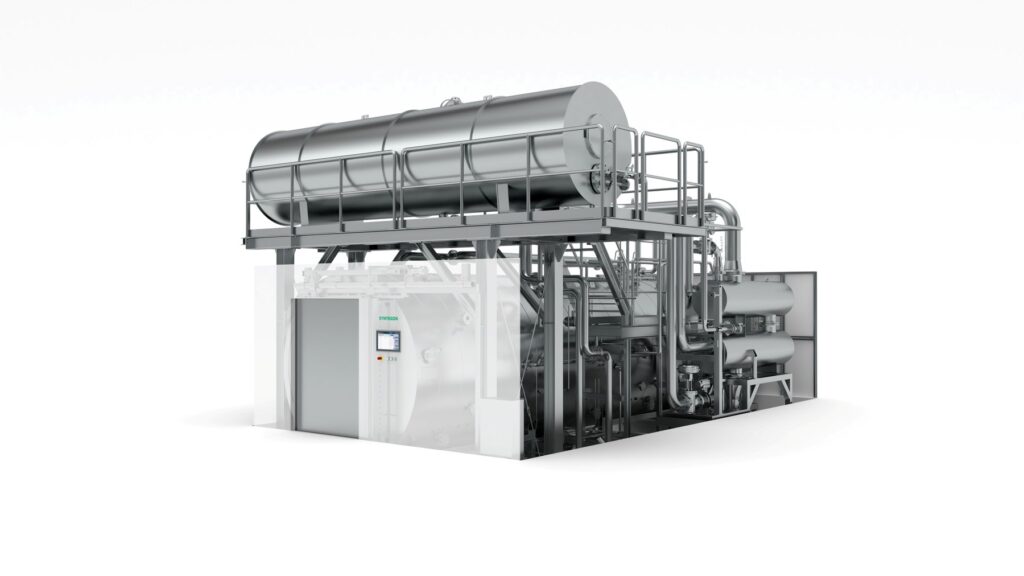
Sterilization processes are among the most energy-intensive steps in pharmaceutical production. The hot-water shower method is used, among other things, for the terminal sterilization of liquid pharmaceuticals in bottles, bags, or blow-fill-seal products, which are typically continuously showered with water at 121 °C to ensure the required sterility. It requires large volumes of process water to be heated, continuously circulated, and then cooled again. At the same time, however, energy efficiency requirements are increasing. Sustainability goals, as well as high energy and utility costs, are putting pressure on pharmaceutical manufacturers to continuously improve their processes – without compromising product safety or regulatory compliance.
Accordingly, many optimization measures have so far focused on system technology, such as more efficient steam generation or heat recovery. Yet a significant portion of savings potential lies in the sterilization process itself. After all, the efficiency of a cycle depends largely on how heat is transferred to the products and on the physical processes occurring inside the sterilization chamber. It is precisely this understanding of the process that opens up new opportunities to optimize energy consumption and sterilization quality in collaboration with customers.
Process Understanding as Scientific Foundation
To further develop sterilization processes in a targeted manner, however, it is necessary to understand the physical mechanisms that determine their energy requirements and performance. In practice, these processes have often been designed based on practical experiments and conservative safety margins. While this approach ensures robust processes, it often results in systems being operated with higher water volumes, longer processing times, or greater energy consumption than is needed.
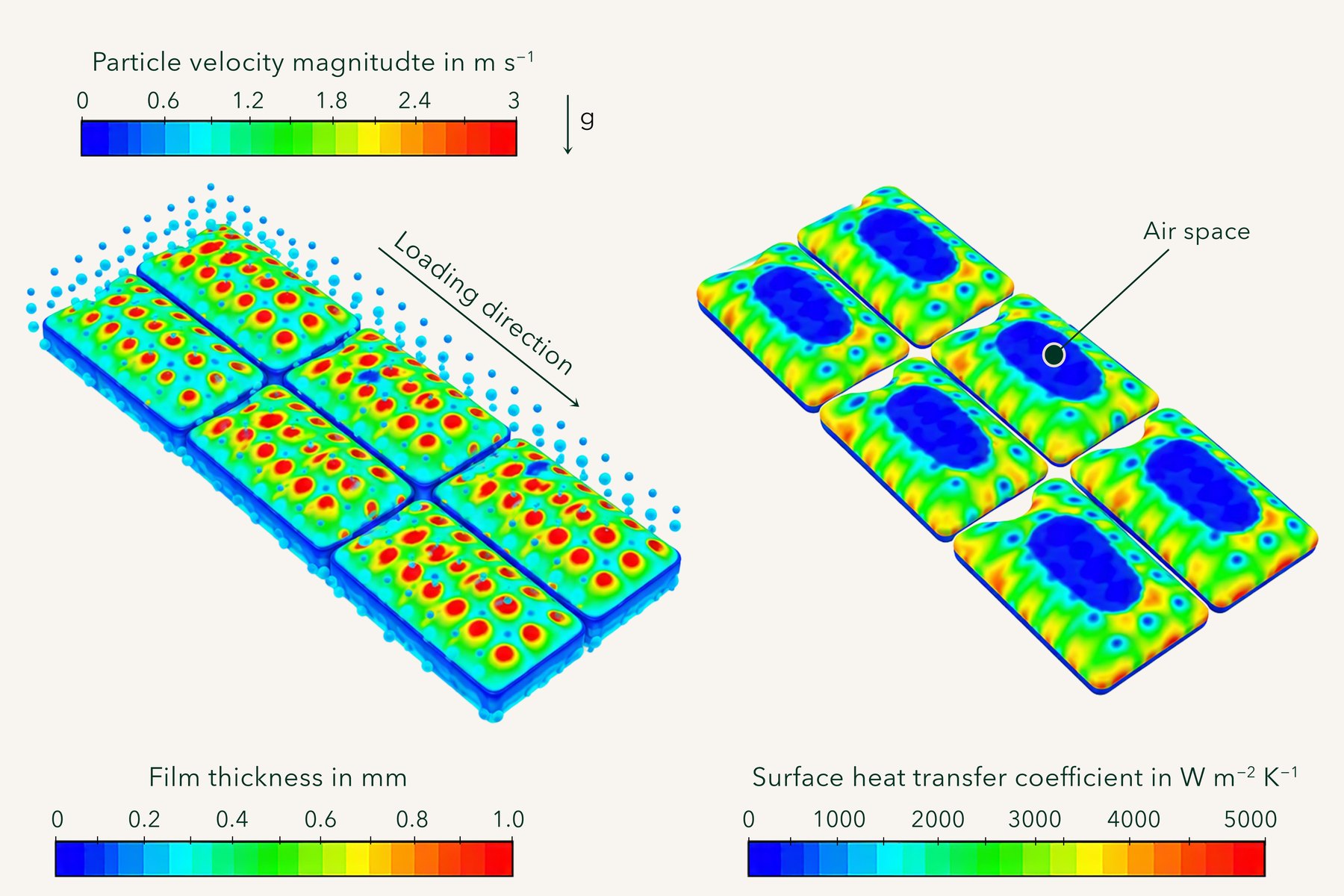
Against this background, a doctoral thesis at Graz University of Technology, conducted in collaboration with the Syntegon subsidiary SBM, focuses on the comprehensive analysis of heat and flow processes within a hot-water sterilizer. Computational Fluid Dynamics (CFD) were combined with extensive laboratory and industrial tests and experimentally validated. The resulting process model reveals physical relationships that were previously only partially understood and lays the foundation for the further development of energy-efficient sterilization processes.
Uniform Showering: The Key to Energy Efficiency
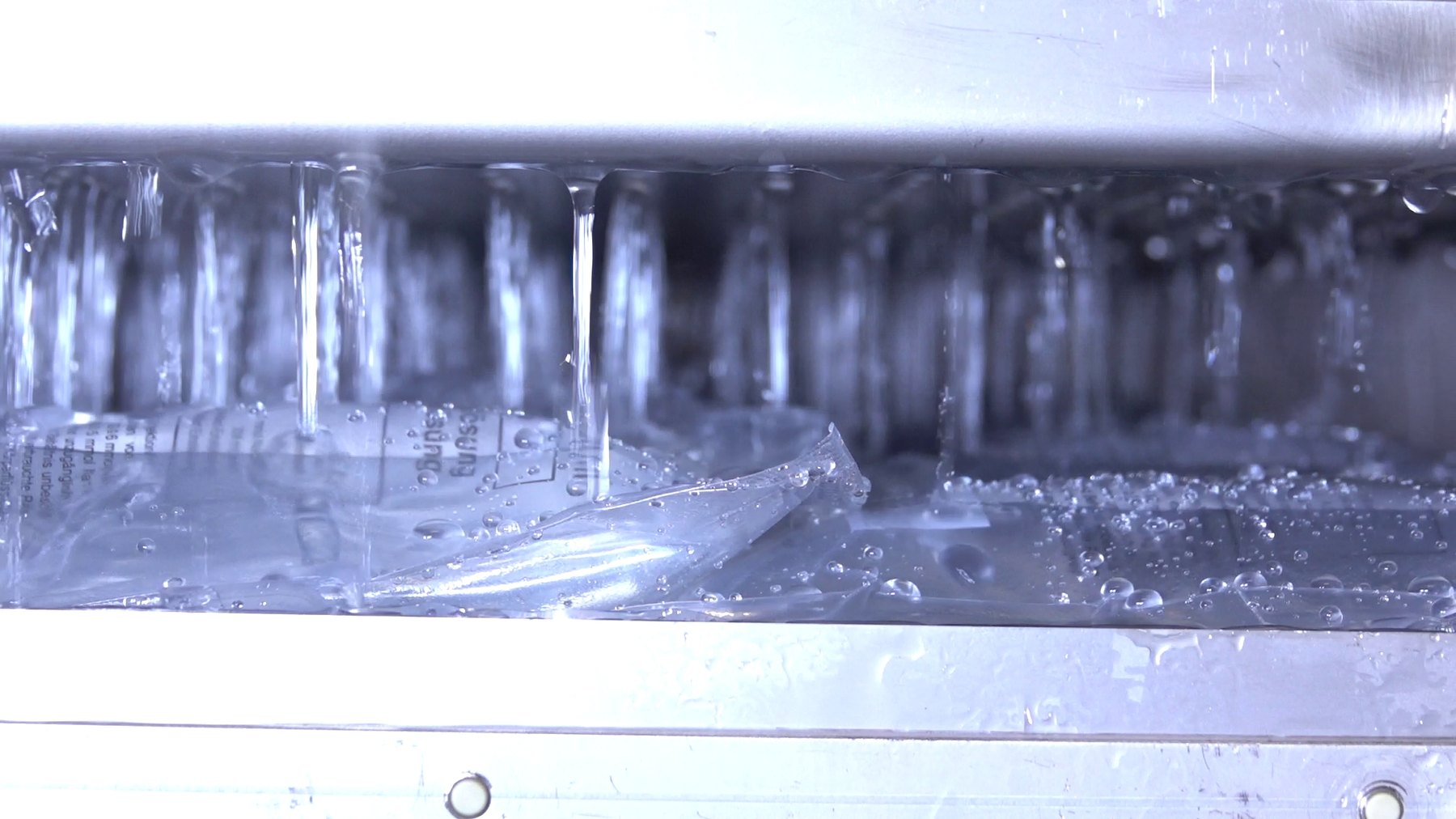
The simulations not only provided new insights into the energy consumption of a hot-water sterilizer; they also revealed which factors actually determine the quality of sterilization. The focus is on the shower process, because the uniformity of a product’s sterilization depends on how the process water is distributed within the sterilization chamber and how the products are arranged in their trays.
This poses a particular challenge when there are a large number of trays containing vials, ampoules, or bags. To ensure that all products achieve the required sterilization effect, they must be exposed to temperature profiles that are as uniform as possible. The water must reach each layer without accumulating excessively beneath the products. Especially with flexible bags, overlapping can lead to localized impairment of heat transfer. The simulations made it possible to identify areas where products heat up or cool down particularly slowly. These temperature differences have a direct impact on sterilization uniformity.
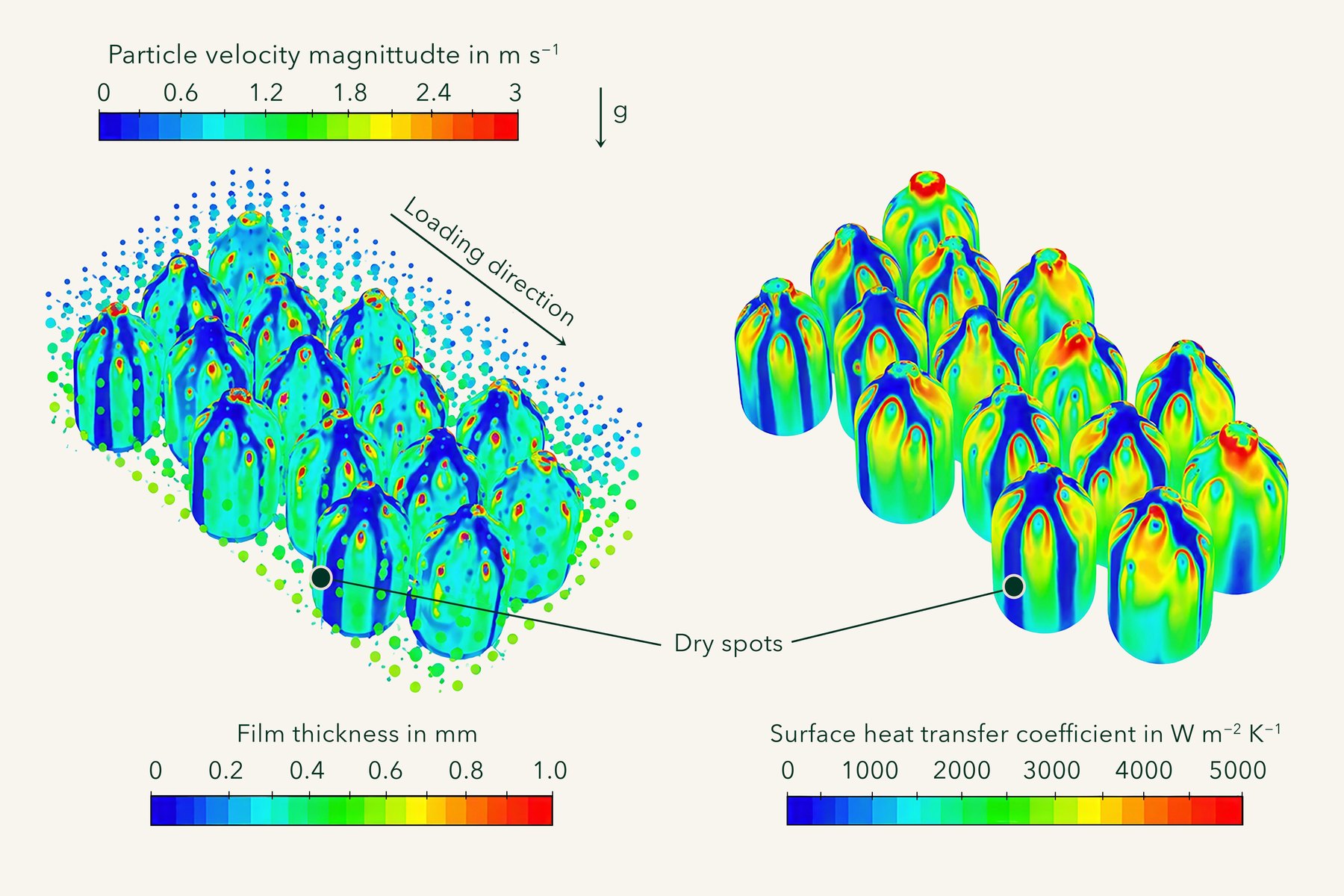
The investigations show that the design of the distribution and product trays plays a particularly crucial role in this process. While product trays securely hold and position the containers, distribution trays ensure that the process water is distributed evenly across each layer. Their geometry influences how uniformly the products are showered and, consequently, how they heat up. Furthermore, the research demonstrated that uniform water distribution correlates directly with a more homogeneous sterilization effect. This makes clear: It is not the use of as much process water as possible that ensures a safe process, but rather homogeneous heat transfer achieved through intelligent water management and a well-coordinated process design.
Less Process Water, Less Energy Consumption
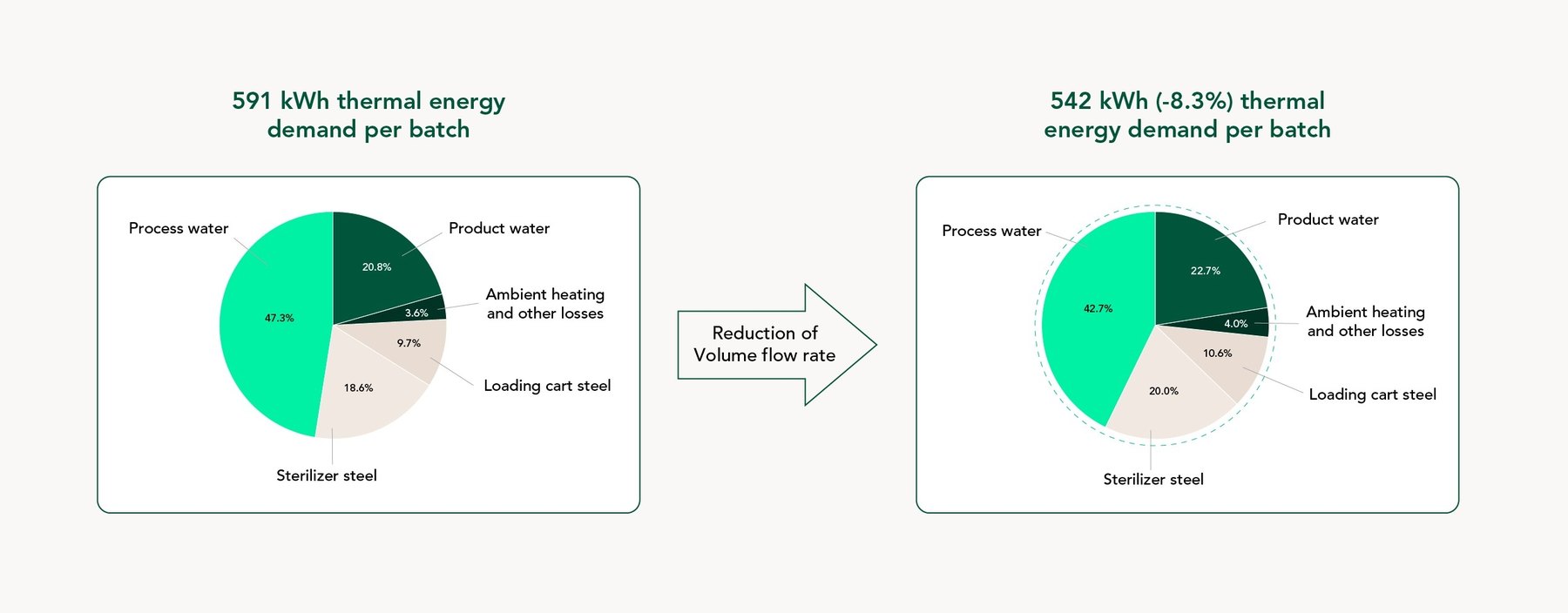
Tests on sterilizers revealed that a high flow rate does not automatically lead to better sterilization performance. Hot-water sterilizers are often operated with large volumes of water to maintain safety margins. However, a higher flow rate primarily increases the amount of process water that must be circulated, heated, and cooled again – and therefore offers significant savings potential. While the product itself accounts for only a small portion of the total volume, a large part of the energy consumption is attributable to the process water. The latter often makes up more than 40 percent of the water volume and must be temperature-controlled during every sterilization cycle. Every liter that does not need to be unnecessarily heated or cooled reduces energy consumption.
The findings show that an optimized water flow can reduce the volume flow rate without compromising sterilization quality. As a result, less water needs to be circulated, the energy consumption of the pumps decreases, and the heating and cooling phases can be shortened. Based on the models developed, savings of up to 23 percent in electrical energy and approximately 8 percent in thermal energy per sterilization cycle were achieved compared to previous Syntegon autoclaves (study of year 2025). Particularly in systems running numerous batches per day, these effects add up to a significant reduction in energy consumption, operating costs, and CO2eq emissions.
Understanding the Process Creates Room for Action
In addition to water flow, there are other levers for improving energy efficiency – for example, through optimized loading, adjusted process parameters, or data-driven design of new cycles. However, scientific analyses reveal one thing above all: Energy efficiency cannot be achieved through individual measures alone, but rather through a thorough understanding of the entire sterilization process. Especially in a regulated environment, where process changes must be qualified and validated, this provides a solid foundation for decision-making.
The findings from the dissertation are directly incorporated into consulting services, process development, and equipment design. As a lifecycle partner, Syntegon supports manufacturers throughout the entire equipment lifecycle – from selecting suitable sterilization technologies to process development to qualification, validation, and the optimization of existing equipment. The experts combine scientific methods with practical experience to develop solutions in collaboration with customers that address energy efficiency, product quality as well as regulatory requirements.
About the Author

Dr. techn. Elias Hashemian Nik
Product Management Process Excellence & Sustainable Solutions
SBM Schoeller-Bleckmann Medizintechnik, a Syntegon company
Dr. techn. Elias Hashemian Nik is product manager for sterilization at Schoeller-Bleckmann Medizintechnik (SBM), a Syntegon company. As part of his doctoral research at Graz University of Technology, he focused on the energy-efficient optimization of hot-water sterilization processes. His work combines modern simulation methods with experimental research and contributes to the scientifically sound advancement of sterilization processes.