





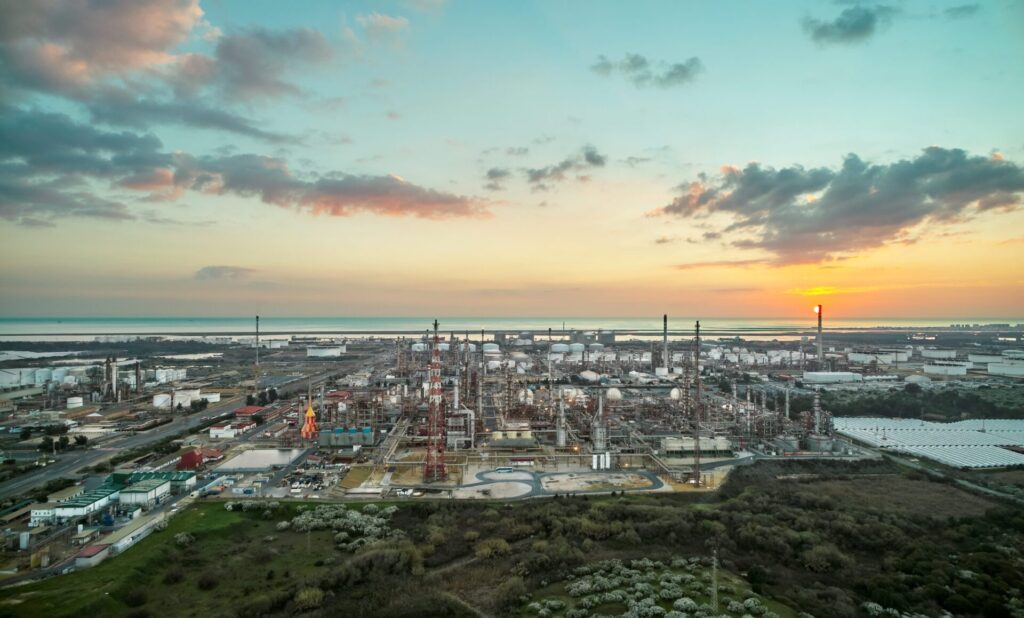
The Onuba H2 project, located at the La Rábida Energy Park in Huelva, is set to become the largest electrolyzer plant in Southern Europe. With an initial electrolysis capacity of 300 MW and the option to expand by an additional 100 MW, the facility is expected to produce 45,000 tonnes of green hydrogen. As the industrial anchor for the Andalusian Green Hydrogen Valley, Onuba H2 will play a pivotal role in decarbonizing the transport and industrial sectors, establishing the first major green hydrogen maritime corridor between Southern and Northern Europe.
Alfa Laval will supply state-of-the-art heat transfer equipment to Moeve for the electrolyzer plant in Onuba H2 including balance of plant cooling, electrolyzer cooling, and gas cooling. Altogether, the scope consists of 60 Alfa Laval heat exchangers.
These advanced cooling solutions are critical for maintaining optimal operating conditions within the electrolyzer, ensuring efficiency, reliability, and safety in the large-scale renewable hydrogen production.
“We are honored to contribute our expertise and technology to the Onuba H2 project, which stands at the forefront of Europe’s energy transition,” said Thomas Møller, President Energy Division, Alfa Laval. “Our heat transfer solutions are designed to support the ambitious goals of decarbonizing industry and transport, while advancing Europe’s energy security.”
The Andalusian Green Hydrogen Valley is the most ambitious renewable hydrogen project in Spain and one of the most significant in Europe. With a planned total electrolysis capacity of 2 GW and an annual production target of 300,000 tonnes of renewable hydrogen, the initiative is backed by over €3 billion investment. The project will also support the production of 2G biofuels and derivative products such as green ammonia and methanol, further aiding the decarbonization of heavy transport and industry.
The European Commission has recognized the Andalusian Green Hydrogen Valley as a Project of Common Interest (PCI), underscoring its strategic importance for the entire European Union. This recognition facilitates access to public grants and subsidies, accelerating the ecological transition and enhancing Europe’s energy security.
Renewable hydrogen is a decisive energy vector for achieving the CO₂ emission reduction targets set by the European Union. By enabling the decarbonization of sectors that are difficult to electrify, such as heavy transport and intensive industry, the Onuba H2 project will make a substantial contribution to Europe’s climate goals and energy independence.
Andalusia’s unique combination of abundant renewable resources, robust infrastructure, and strategic location positions it as a global leader in green hydrogen production. The Onuba H2 project exemplifies the region’s potential to drive the energy transition, not only in Spain but across Europe.