





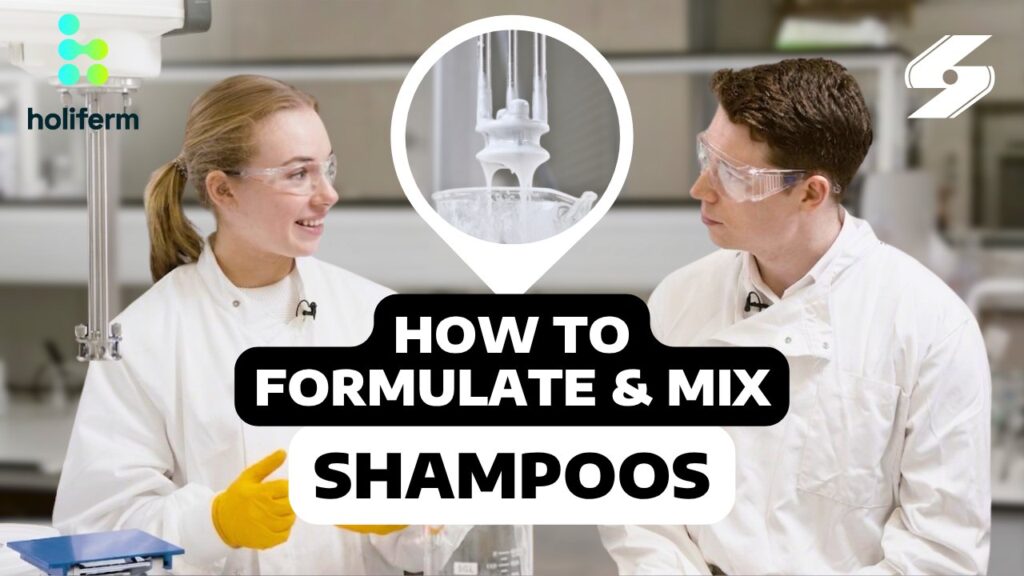
- New Collaboration VideoSilverson Machines and Holiferm show how to formulate and manufacture a sulphate-free shampoo.
- Three StepsHydrating the gum, adding the surfactants and the final touches, all with a Silverson Laboratory mixer.
- Minutes Instead of HoursAccording to Holiferm, the high shear mixer hydrates the gum in minutes rather than hours and gives a homogeneous formulation.
Replicating Traditional Shampoos with Sulphate-Free, Natural Ingredients
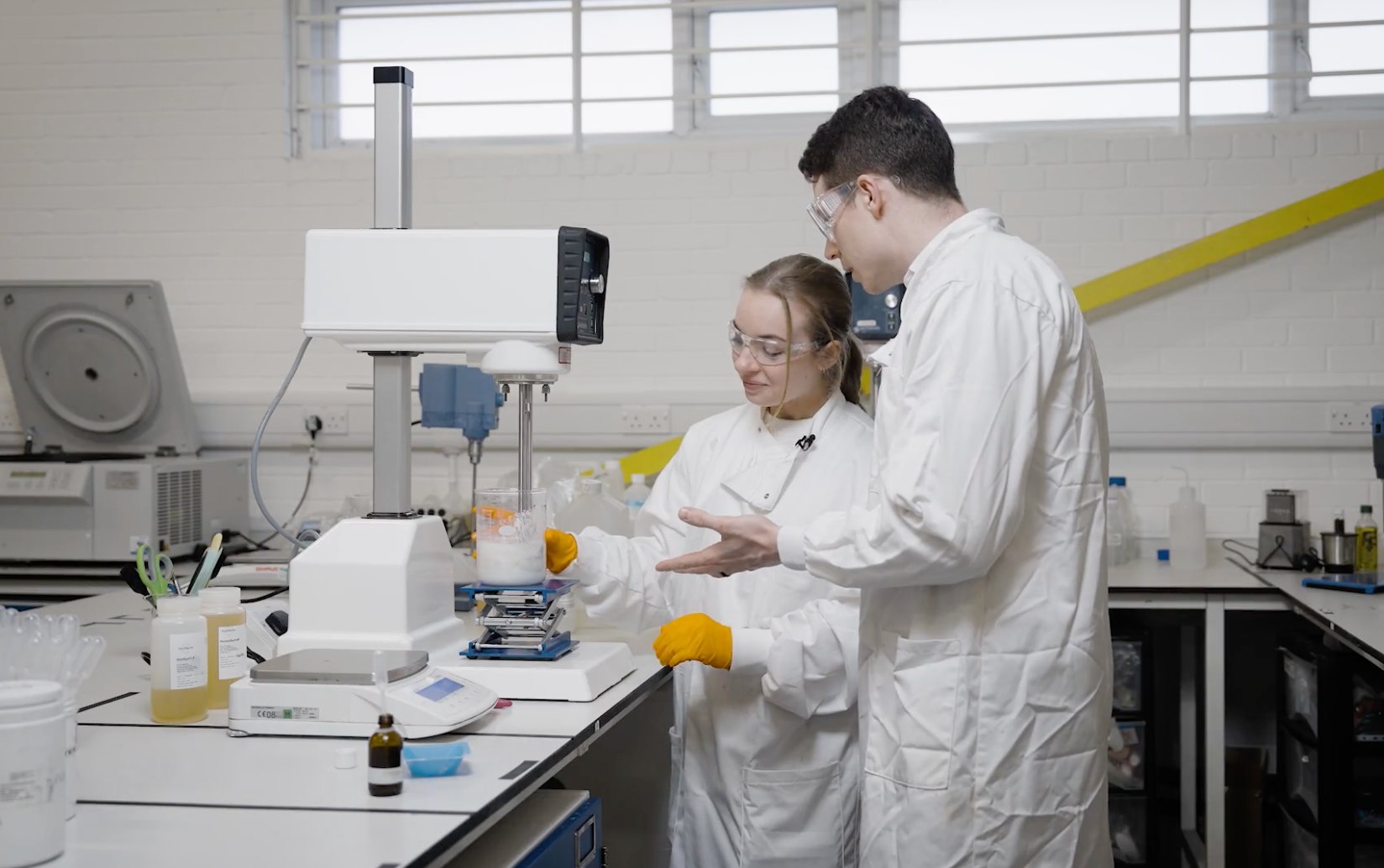
In advance of changing regulations, many shampoo manufacturers are adapting and changing their formulations. One of the challenges arising from these ‘hard stops’ of traditional shampoo ingredients, like sulphates, is replicating the consistency, appearance and functionality of shampoos expected by consumers using sulphate-free, natural ingredients – that is where Holiferm and Silverson Machines come in.
Holiferm’s Formulation for ‘The Shampoo’
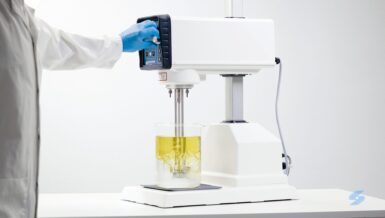
Holiferm, based in Manchester, UK, develop and manufacture sustainable, natural biosurfactants to replace traditional surfactants. In the video, Holiferm Formulation Scientist Clarissa Clark talks through her formulation for ‘The Shampoo’ a pearlescent, ultra-mild, 100% natural shampoo, which replicated a ‘traditional’ shampoo in rheology, appearance and foaming properties. She achieves these results with a combination of simple, clean ingredients and the right equipment to put them all together. In this case, demonstrating the formulation using a Silverson Laboratory mixer, in 3 simple steps.
Step 1: Hydrating the Gum
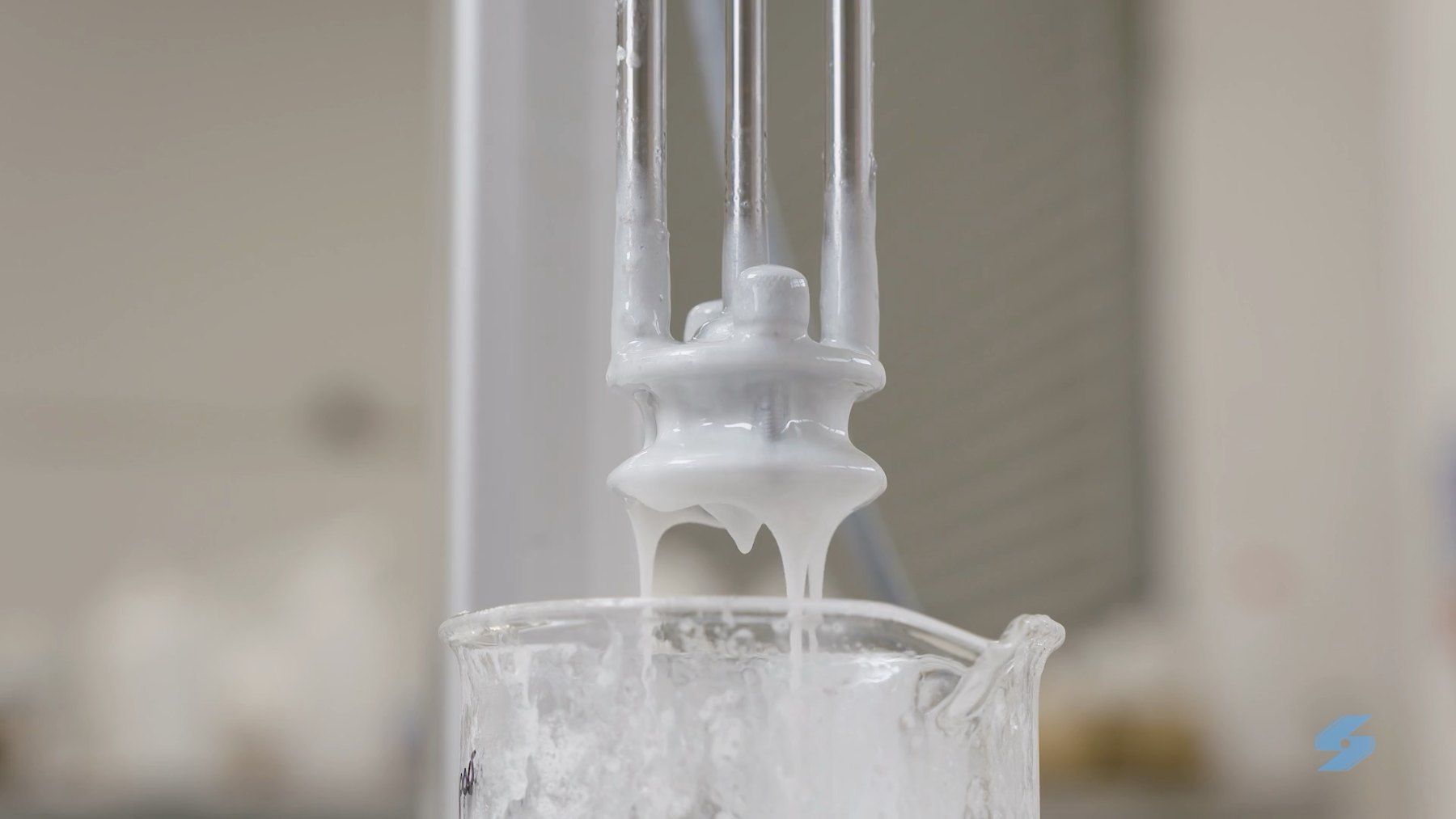
To move away from traditional sulphate-based chassis, but maintain the thick, gel-like rheology of a shampoo, natural gums such as Xanthan, Guar, CMC or Carrageenan can be used instead. The challenge here lies with hydrating the gums correctly and efficiently. As gums are commonly supplied in powder form, they tend to agglomerate when added to water. If agglomerates remain in the mix this will affect the look and feel of the product and can cause issues later in the manufacturing process. To avoid this Clarissa explains that “Silverson is the best way [to do that]. It saves us time, it saves us effort and it gives us a homogeneous formulation at the end”.
Through high speed rotation, the Silverson mixer’s rotor generates a robust suction force, drawing both powder and liquid into the workhead. Centrifugal force then propels the materials outward, subjecting them to intense mechanical and hydraulic shear within the stator’s perforations. The result is an agglomerate-free solution within minutes.
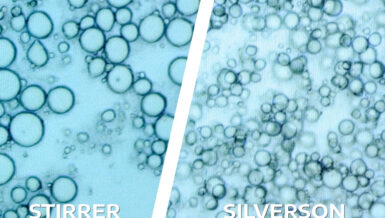
For ‘The Shampoo’ CMC is hydrated along with the humectant (Glycerin), which is used to help keep hair hydrated and soft, and 60% water. The ingredients are mixed with the Silverson Laboratory mixer to ensure complete hydration. Using the Silverson in place of a stirrer or agitator, which moves the liquid and powder around in the vessel, rather than actually hydrating it, Clarissa explains “is the difference between mixing for several hours or just mixing for several minutes [with the Silverson]”.
Step 2: Adding the Surfactants
Once the gum is hydrated and a smooth gel has been achieved the next step is to incorporate the sulphate-free surfactants.
The surfactant is the cleansing component of the shampoo. In ‘The Shampoo’ Clarissa uses Decyl Glucoside, an APG (mild, plant-based derived surfactant) which makes up 10% of the formulation. This surfactant helps to create a fast, rich lather, without irritating sensitive scalps.
Other surfactants in the formulation include GLT (Sodium Lauroyl Glutamate) used for its foaming properties and the Holiferm Holisurf LF, a lactonic sophorolipid. The LF contributes to degreasing and foaming as well as providing antibiofilm properties and health benefits for the scalp.
All the surfactants are added to the gel phase, but because of the varying viscosities the two phases remain separate. When high shear energy is introduced into the mixture the phases become uniform as the droplet sizes are reduced. This results in a traditional shampoo-like rheology mix ready for the final aesthetic additions.
Step 3: The Final Touches
It’s quite common, especially with a shampoo formulation, high viscosity, when you add quite a fine powder to it, it’s really, really difficult to get that powder in with any sort of conventional mixing methods
James CardusSilverson Machines
The final step is to incorporate the natural preservative, which is essential to keep the product safe and prevent it from spoiling in warm, humid atmospheres like bathrooms, because of the high water content. As well as acting as a preservative, Phenethyl Alcohol, as used in ‘The Shampoo’ also contributes to the fragrance component of the shampoo formulation.
Finally, to achieve a shimmery, pearlescent look commonly associated with traditional shampoos, a clay powder, in this case Mica, is added. As demonstrated in the video when Clarissa tries to stir the light powder into the viscous mix it immediately forms lumps.
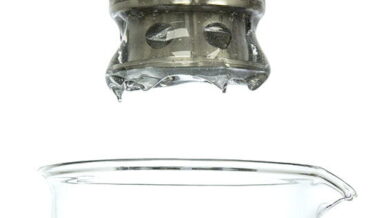
The lumpy mixture is put under the Silverson laboratory mixer for a final time, running at a low speed to limit air entrapment. The Mica is immediately incorporated and the pearlescent properties become visible. When the rotor/stator workhead is lifted from the beaker the shampoo is complete. “We’ve got a lovely, pearlescent, sulphate-free, well incorporated shampoo” says Clarissa.
FAQ – compiled by the Fluid Handling Pro editors
What replaces sulphates as a thickener in a sulphate-free shampoo?
According to the article, natural gums such as Xanthan, Guar, CMC or Carrageenan can be used to maintain the thick, gel-like rheology of a shampoo. In ‘The Shampoo’, CMC is hydrated together with Glycerin and 60% water.
Why is a high shear mixer used to hydrate gums?
Gums are commonly supplied in powder form and tend to agglomerate when added to water. The rotor/stator workhead draws powder and liquid in and subjects them to intense mechanical and hydraulic shear, which according to Silverson gives an agglomerate-free solution within minutes.
Which surfactants are used in 'The Shampoo'?
Decyl Glucoside, which makes up 10% of the formulation, Sodium Lauroyl Glutamate (GLT) and Holiferm Holisurf LF, a lactonic sophorolipid.
Editor’s summary, FAQ and links by the Fluid Handling Pro editors. The article text is by Silverson Machines.
The Result
With the right formulation, supported by the right mixing equipment, manufacturing natural, sulphate-free shampoos can be quick and simple.
To find out more about Holiferm, please visit their website: https://holiferm.com
If you would like to trial a Silverson mixer for yourself, or discuss your formulation, please contact: [email protected], or visit the Silverson website to see the video: www.silverson.com