





Consumers around the world are now well aware of the benefits of eating fresh fruit and vegetables, and over the last two decades, juices and smoothies have become a convenient and tasty way of boosting uptake. The past few years may have seen declining sales in some local markets (mostly tied to concerns about inflation and the cost of living), but the global market continues to grow, with Canada, Spain, Germany, Mexico and Poland among the countries seeing the biggest increase in juice consumption2.
State of the global market
Worldwide, juices have the highest purchase penetration among soft drinks, with 57% of consumers purchasing juices, juice drinks and smoothies in the past year. Nearly two-thirds of these consumers drink juice weekly. South Africa, Nigeria and Finland led in purchasing juices during this period2. New products and brands continue to be developed and launched by both large multinationals and local specialist producers, with functional claims and nutritional ‘shots’ among the latest developments. Mordor Intelligence predicts that the global smoothie market will reach US$25.21 billion by 2031 (compared to US$16.65 bn today)3.
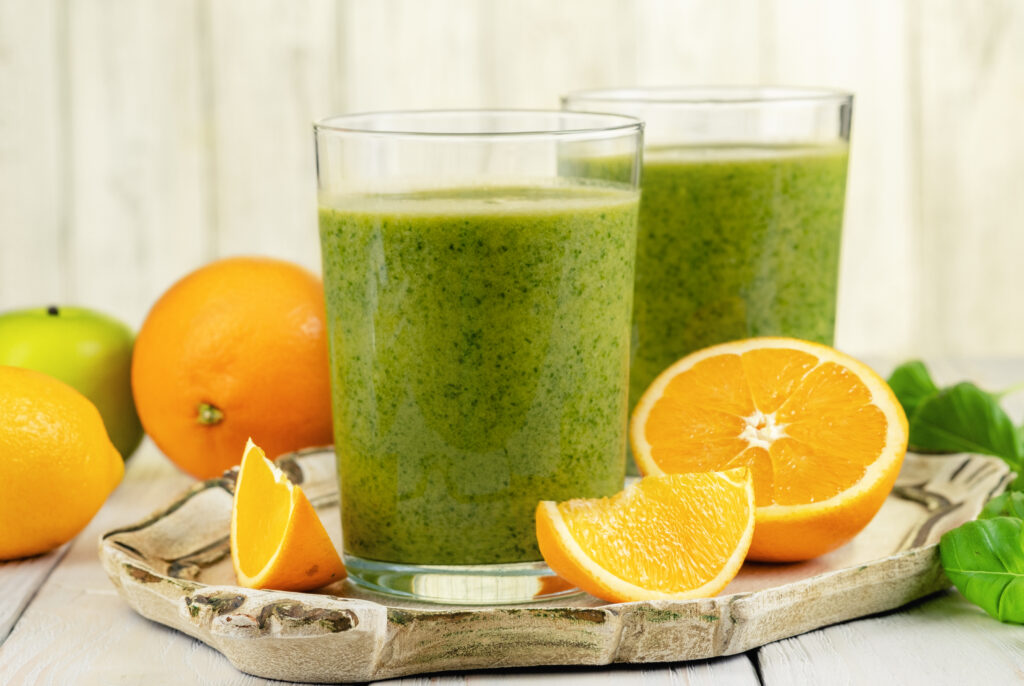
Within this market, ‘fruit-based smoothies hold a 55.72% market share, leveraging established supply chains and consumer familiarity. Plant-based smoothies are growing rapidly, with a 9.65% CAGR projected through 2031 while vegetable-based smoothies present opportunities for differentiation with functional positioning and unique flavours3.’
Limitations of HPP
Over the last 20 years, high-pressure processing (HPP) has been adopted by some manufacturers in an attempt to extend the shelf life of their products while retaining their taste, colour, and nutritional value (in particular vitamin C content). However, the effectiveness of this approach varies with product. For example, studies have shown that while the technique may improve the perception of orange juices, it can have a negative effect in the case of apple juices4.
While the aim of both thermal and pressure pasteurisation is to reduce the number of harmful bacteria and enzymes present, other studies5 have also suggested that pressure-treated smoothies lose more compounds and nutrients (such as phenols and carotenoids) during storage than heat-treated ones.

Not only that, but a more recent study1 has shown that ‘processing smoothies with high heat could also make polyphenols easier for the gut microbiome to absorb.’ In their work, the researchers found that both pressure- and heat-treatment increased the amounts of polyphenolic compounds available for absorption in the gut, compared with an untreated control. They also found that the heat-treated smoothie had twice the amount of available polyphenolic compounds as the pressure-treated one – suggesting that, contrary to popular belief, traditional heat-based pasteurisation can actually improve some aspects of product nutrition.
Manufacturer considerations
With this in mind, what should manufacturers look for when choosing pasteurisation equipment and systems?
The best products utilise high quality (often organic) fruit and vegetables and are often supplied in premium or eco-friendly packaging. At the same time, the premium juice, smoothie and shots market is becoming increasingly saturated. Therefore, manufacturers need to be as efficient as possible in their production to maximise profits. They also need to choose equipment which preserves the physical characteristics of their product to reduce wastage.
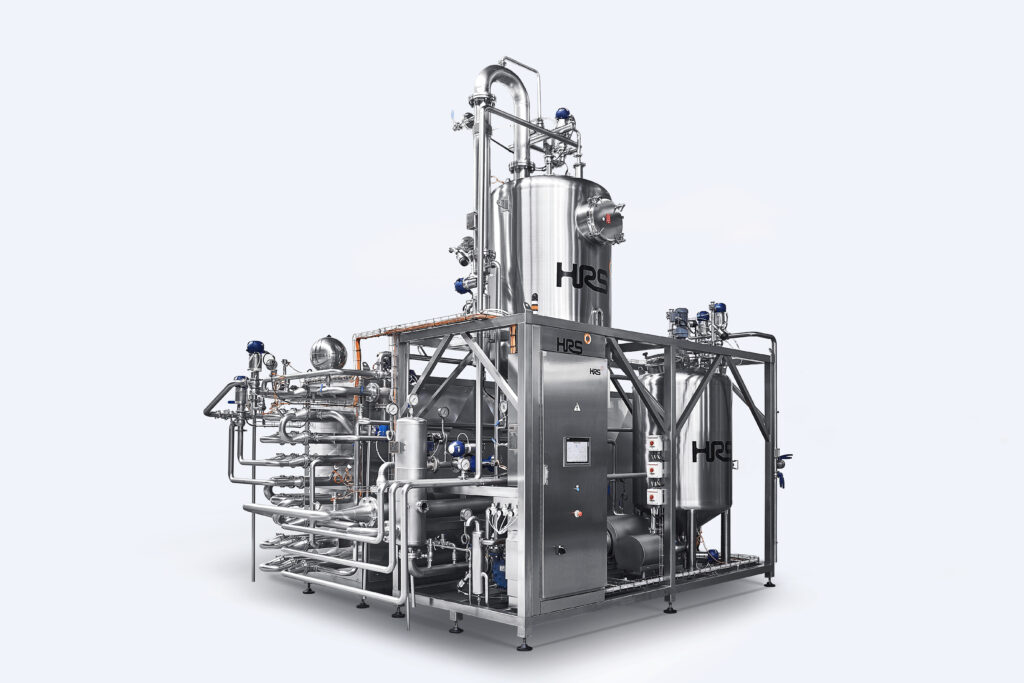
Many fruit and vegetable products need to be handled delicately in order to avoid splitting or shearing, while careful temperature control is also required to avoid the creation of undesirable flavours. It is also often necessary to process high viscosity products without fouling, or to preserve any particles in the product without damaging them. Corrugated tube heat exchangers or scraped surface heat exchangers are ideal for pasteurising high-quality juices and smoothies without damaging product integrity.
For the simplest fluids, corrugated multi-tube designs such as the HRS MI Series and the HRS MR Series are suitable. As materials become more viscous or complex, the range moves through corrugated tube-in-tube or annular space designs such as the HRS DTA or HRS AS Series respectively. For the most viscous or delicate materials then scraped surface heat exchangers such as the HRS R Series or HRS Unicus Series are ideal.


By Antonio Guillermo Jara Ponce, Sales Manager Europe, HRS Heat Exchangers
1 Pasteurizing Fruit Smoothies Could Improve Digestion of Beneficial Polyphenols at https://www.newswise.com/articles/pasteurizing-fruit-smoothies-could-improve-digestion-of-beneficial-polyphenols/
2 https://www.innovamarketinsights.com/trends/juice-trends/
3 https://www.mordorintelligence.com/industry-reports/smoothies-market
4 Q. Song et al. (2023) Sensory quality and consumer perception of high pressure processed orange juice and apple juice at https://www.sciencedirect.com/science/article/pii/S0023643822012385
5 Škegro, M. et al (2021) Chemometric Comparison of High-Pressure Processing and Thermal Pasteurization: The Nutritive, Sensory, and Microbial Quality of Smoothies at https://pmc.ncbi.nlm.nih.gov/articles/PMC8224750/