



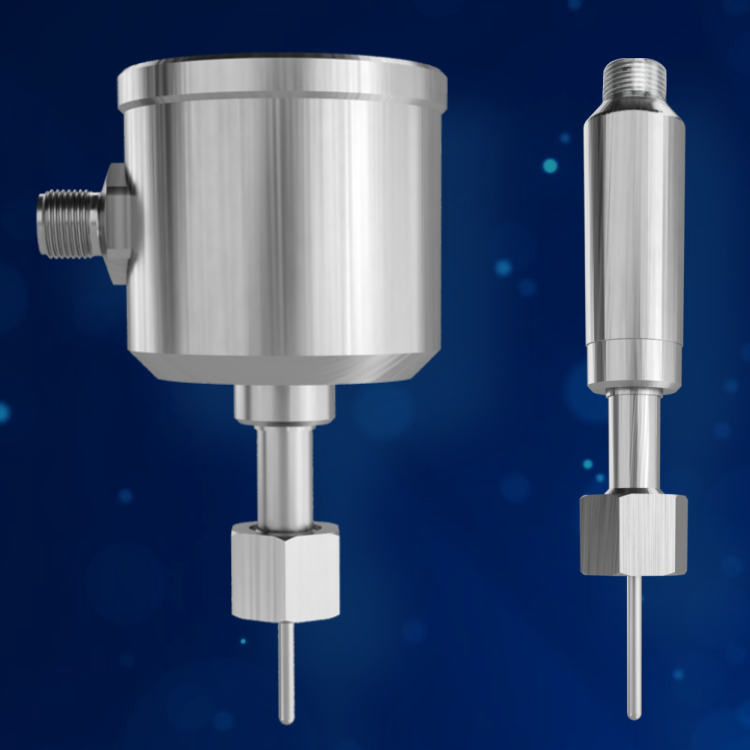
Hygienic temperature sensors are among the most fundamental measuring instruments for monitoring and controlling production processes or CIP/SIP processes in food and beverage manufacturing. Anderson-Negele TS series temperature sensors ensure efficient processes and sustainable quality in many applications with maximum precision, durability and short response times.
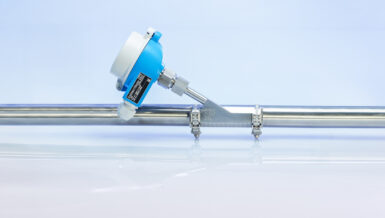
In standard applications, temperature sensors are installed in a pipe or tank using open process adaptation so that the sensor tip comes into direct contact with the product – from a hygiene perspective, this is not a problem if the sensor is installed correctly, the process runs correctly and CIP/SIP cleaning is carried out correctly.
But what happens when a sensor needs to be removed for testing or recalibration? First, the process must be stopped and the tank emptied to prevent any medium from escaping – which inevitably results in a loss of production.
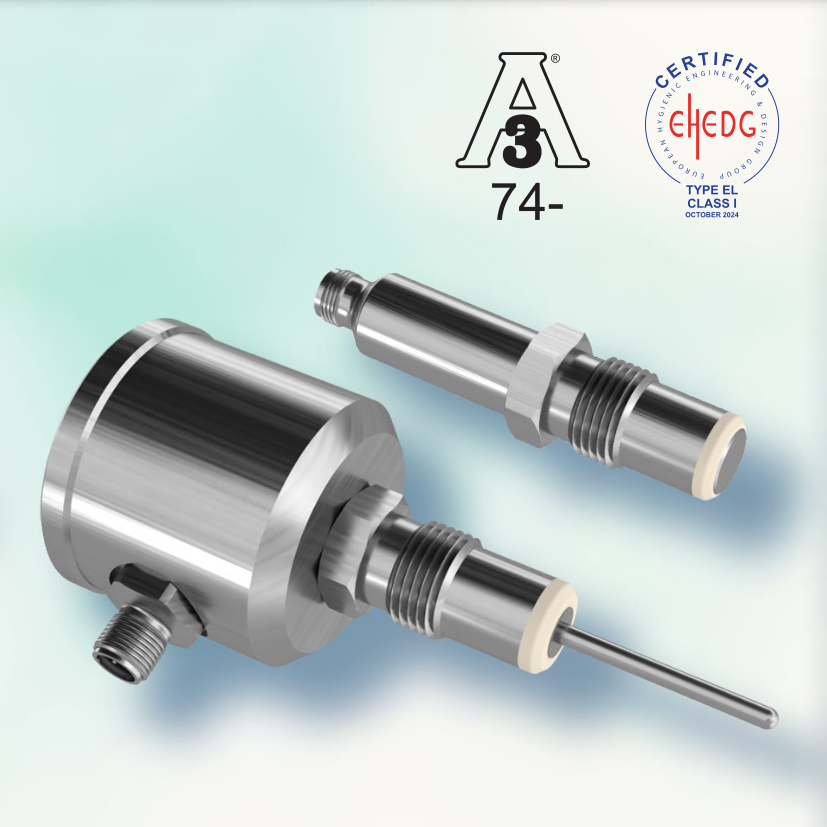
In addition, when reinstalling the sensor, care must be taken to ensure correct installation, e.g. the correct torque for screw connections, or replacement and correct seating of the seals for clamp connections, so that all hygiene requirements can be reliably met. Specialist personnel must meticulously adhere to the current installation regulations of 3-A or EHEDG and carry them out precisely. Ideally, to avoid contamination, they should also carry out a cleaning process after installation for safety reasons.
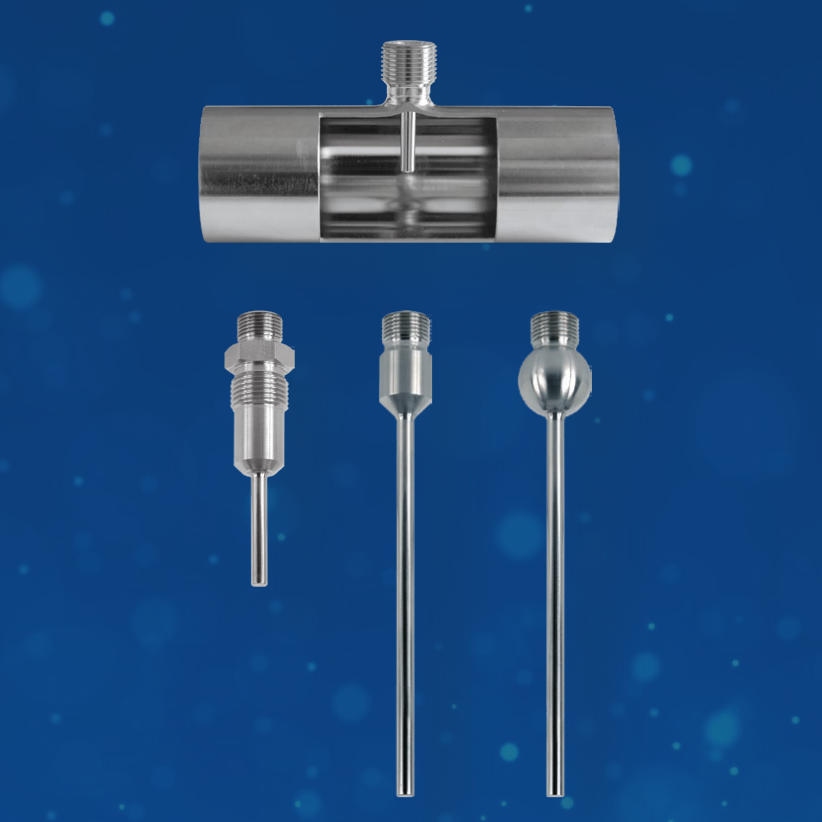
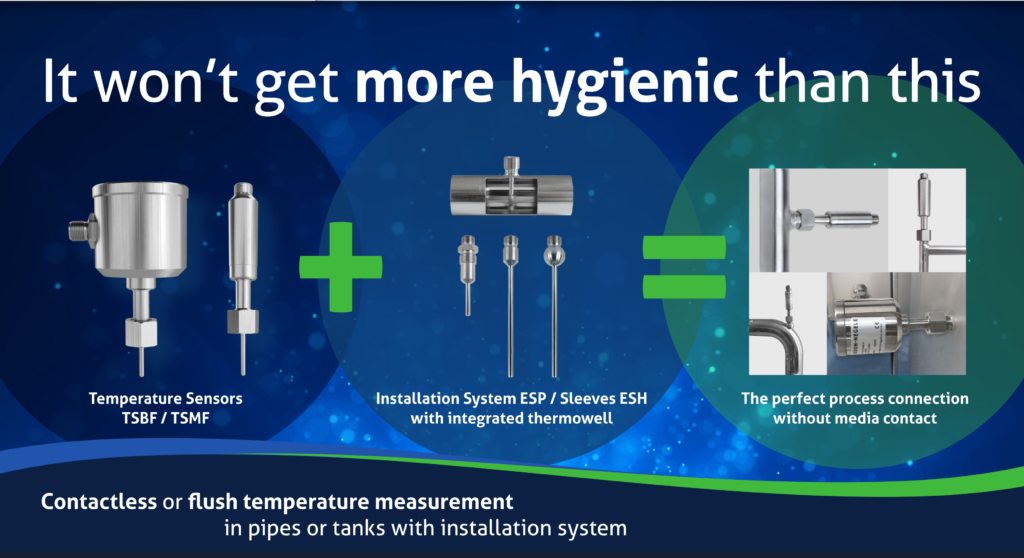
It won’t get any more hygienic than this: built-in systems with thermowell
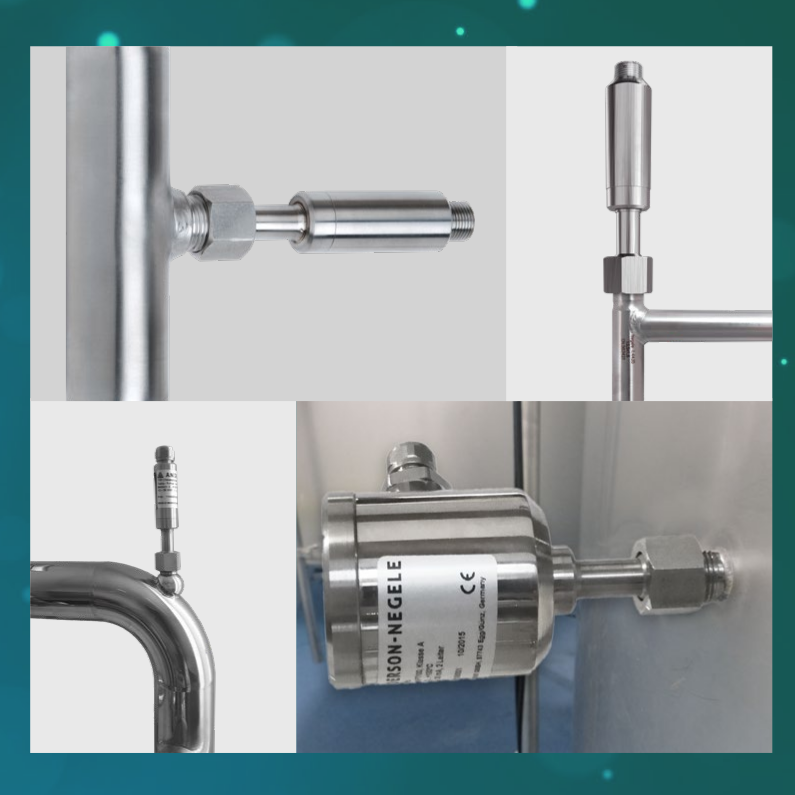
In practice, temperature sensors are regularly removed and reinstalled. To ensure maximum safety, Anderson-Negele offers an installation system with a thermowell, which simply and completely eliminates the limitations described above. The thermowell is an integral part of a pipe section or a permanently welded or screwed-in element of the process or tank. Even when the sensor is removed, the tank or pipe remains closed and aseptic.
Temperature measurement with maximum performance
When combining a TS series temperature sensor with an ESP / ESH thermowell installation system, the sensor tip of the temperature sensor is never in contact with the medium. Nevertheless, the sensors achieve technical performance that meets all food and beverage process requirements: response times of t 90 ≤ 2.2 s and t 50 ≤ 0.8 s mean fast detection even of rapidly changing temperatures. The choice between Pt100 and Pt1000 sensors offers an accuracy class of up to ±0.08 K / ±0.3 Ω at 100 °C. The process temperature range extends from -200 to 400 °C. Thanks to the five-stage configuration, each sensor can be individually adapted to any conceivable process requirement.
The 3-A and EHEDG-compliant PEEK solution as an alternative
If you do not want to or cannot implement this thermowell solution, Anderson-Negele offers another alternative with hygiene certification. With a process connection made of PEEK, the CLEANadapt threaded adapter system can also be used as a hygienically safe installation method. In this case, in addition to a sensor version with a measuring rod with a maximum length of 2,000 mm, a completely flush-mounted sensor is even possible, which allows installation in containers with agitators or pipe systems with pig cleaning.
You can now explore in detail online how easy it is to optimise your processes. Anderson-Negele is also happy to offer video presentations for its various installation solutions. You can find appointment request forms and further information on the website.