



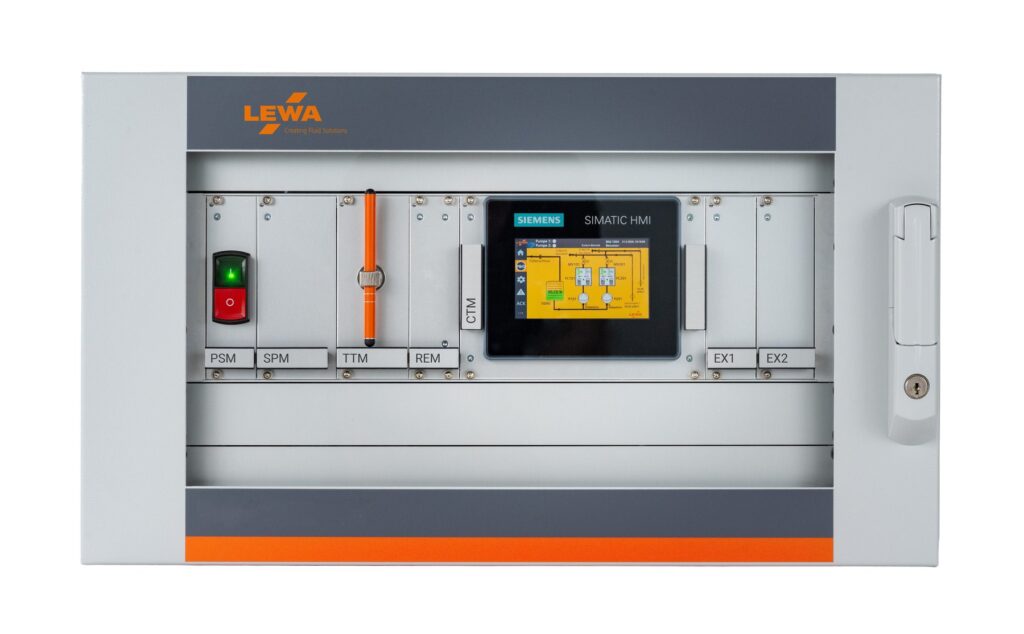
LEWA’s new Odor Control Module (OCM) is the seventh generation of the company’s odorization control technology, combining modular automation, intuitive operation, and precise flow-dependent dosing for safe, reliable gas odorization.
Safety-Critical Gas Odorization from a Single Source
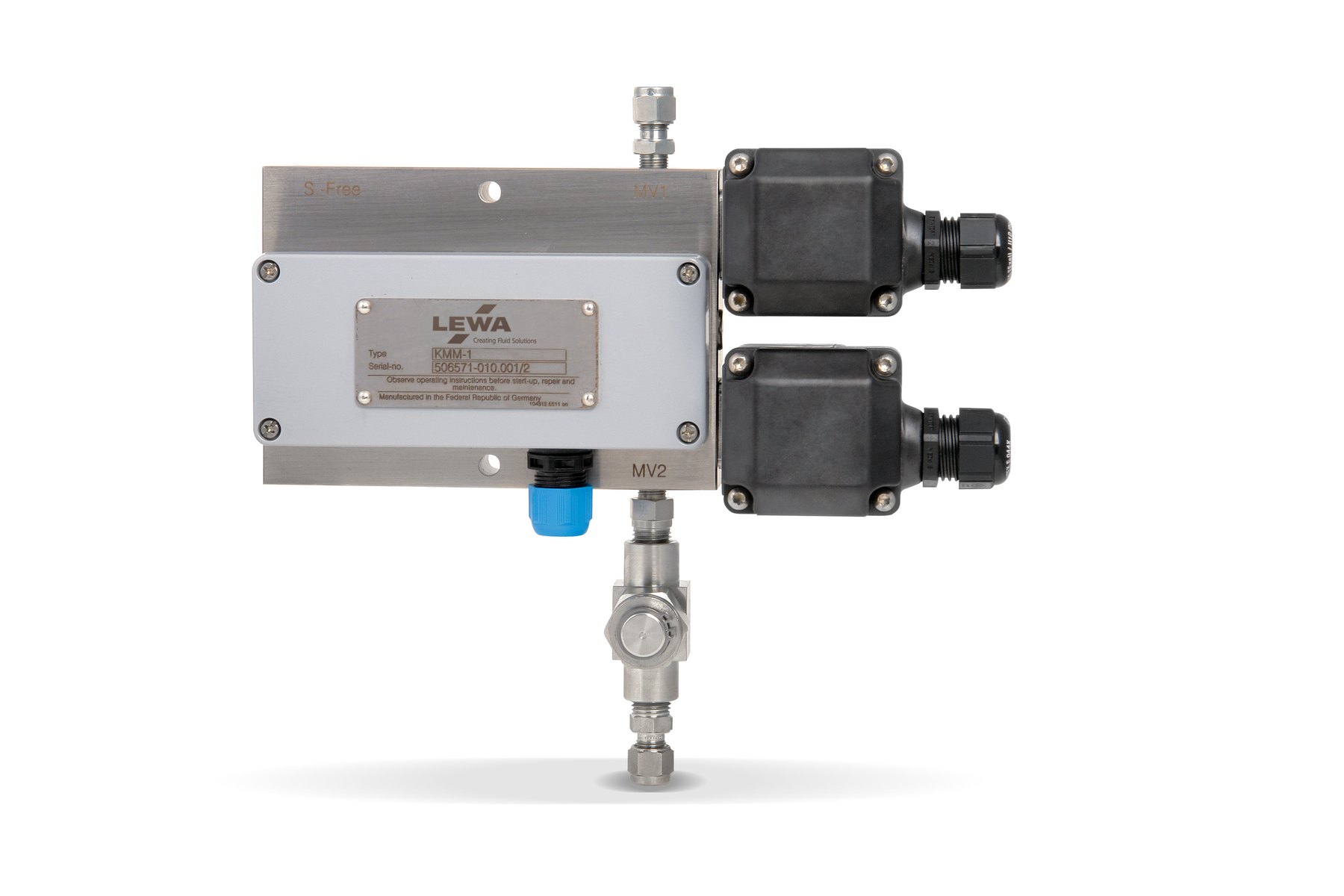
Gas odorization is a safety-critical process that requires accurate, dependable control to ensure gas leaks can be detected quickly. The new OCM has been developed specifically for these demanding applications and forms part of LEWA‘s fully integrated odorization solution, where all critical components, from the diaphragm metering pump and low-flow measurement to the odorization nozzle and control system, are engineered to work seamlessly together. By developing and integrating these core technologies in-house, LEWA provides customers with a single-source solution that ensures system compatibility, simplifies project execution and commissioning, and delivers a single point of responsibility for long-term performance, service, and support.
An Open, Modular Automation Platform
At the heart of the OCM is an open, modular automation platform based on industry-standard PLC and HMI technology. The system provides precise, gas-flow-dependent control of odorant dosing, helping operators achieve safe, reproducible odorization while meeting today’s operational and regulatory requirements.
Designed for both new installations and retrofit projects, the OCM can control up to two independent odorization lines from a single platform, reducing engineering effort, cost, and installation complexity. It is also backward compatible with existing LEWA 19-inch systems, simplifying modernization projects and protecting previous investments. Its modular hardware architecture allows systems to be configured for a wide range of applications while enabling straightforward future expansion.
Graphical HMI Display for Intuitive Operation
A key feature is the new graphical Human Machine Interface (HMI) display, which provides operators with an intuitive process flow diagram, plain-language status and alarm messages, guided parameter setup, and role-based user access. This visualization makes even complex odorization processes easy to understand, giving operators an immediate overview of system status, improving operational transparency, reducing training requirements, and minimizing the risk of human error.
Improved Serviceability and Investment Protection
The modular design also improves serviceability. Plug-in, front-access hardware modules enable rapid replacement and maintenance, reducing downtime and allowing many service tasks to be completed without specialist PLC expertise.
Built on widely available industrial-standard components, the OCM provides long-term hardware availability and investment protection while supporting modern communication interfaces, including Profinet and Modbus RTU. The platform is designed to meet current and emerging regulatory requirements, including compliance with CE, EMC, RoHS, ATEX, relevant DVGW regulations, and the Cyber Resilience Act (CRA).
Applications from Gas Distribution to New Installations
The OCM is suitable for:
- Gas Distribution Networks
- Transfer and Pressure Regulation Stations
- Redundant Odorization Systems
- Modernization Projects
- New Installationswith advanced automation requirements
It provides a scalable platform that supports the complete lifecycle of an odorization system, from planning and commissioning through operation, maintenance, and future expansion.
Learn More About the LEWA OCM
More information about the LEWA OCM can be found here: