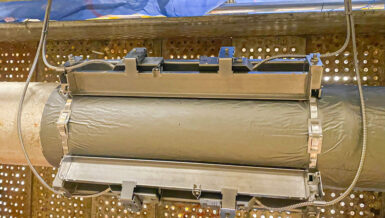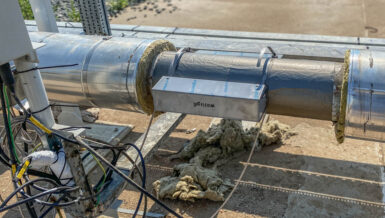




While ERT functions by measuring and mapping the relative electrical conductive properties of the constituent parts of a fluid or compound, the obvious question to ask is how can electrical tomography function in the absence of any measurable change or contrast to electrical resistance of a substance under observation? The answer is electrical capacitance tomography (ECT).
ERT and ECT Working in Harmony
Previous discussions have even covered the synergistic abilities of ERT and ECT to work in harmony to monitor multiphase flows in any fluid-solid-gas combination from bipartite to a quadripartite complexes where differences of electrical resistance or capacitance are comparatively large.
However, the purpose of this article is to examine ECT more closely and assess its ability to monitor a two-phase flow of liquid and vaporous nitrogen whose capacitance properties are so comparatively small and yet are still distinguishable and detectable through ECT.
How ECT Measures Capacitance With Non-Intrusive Sensors
ECT functions by measuring changes in electrical capacitance and is obviously very closely linked to electrical permittivity. As most readers may already know, electrical capacitance (permittivity) is the ability of a substance to store an electrical charge. ECT is all about measuring the contrasting capacitance properties of the constituent phases under observation. Just as in the case of ERT, raw capacitance contrast data obtained from ECT sensors is interpreted by ITS software to render a tomogram, an instantaneous dynamic image or spatial representation of the substances or phases being monitored, along with other relevant data. An important and key operational difference between ERT and ECT is the non-intrusive nature of ECT sensors which do not come into contact with what is being monitored and sit on the outside of a vessel or conduit.
From Powders and Gases to Scientific Extremes
Unsurprisingly therefore, ECT is highly conducive to monitoring powders and gases which are mostly non-conductive which obviously invalidates ERT as a monitoring option. While ECT’s ability to monitor gases and powders has found a natural home within the FMCG, food, and pharmaceutical manufacturing sectors, it is interesting to look at academic research activity to see ECT pushed to scientific and technological extremes rarely found in everyday industrial settings.
Monitoring a Two-Phase Flow of Liquid and Vaporous Nitrogen
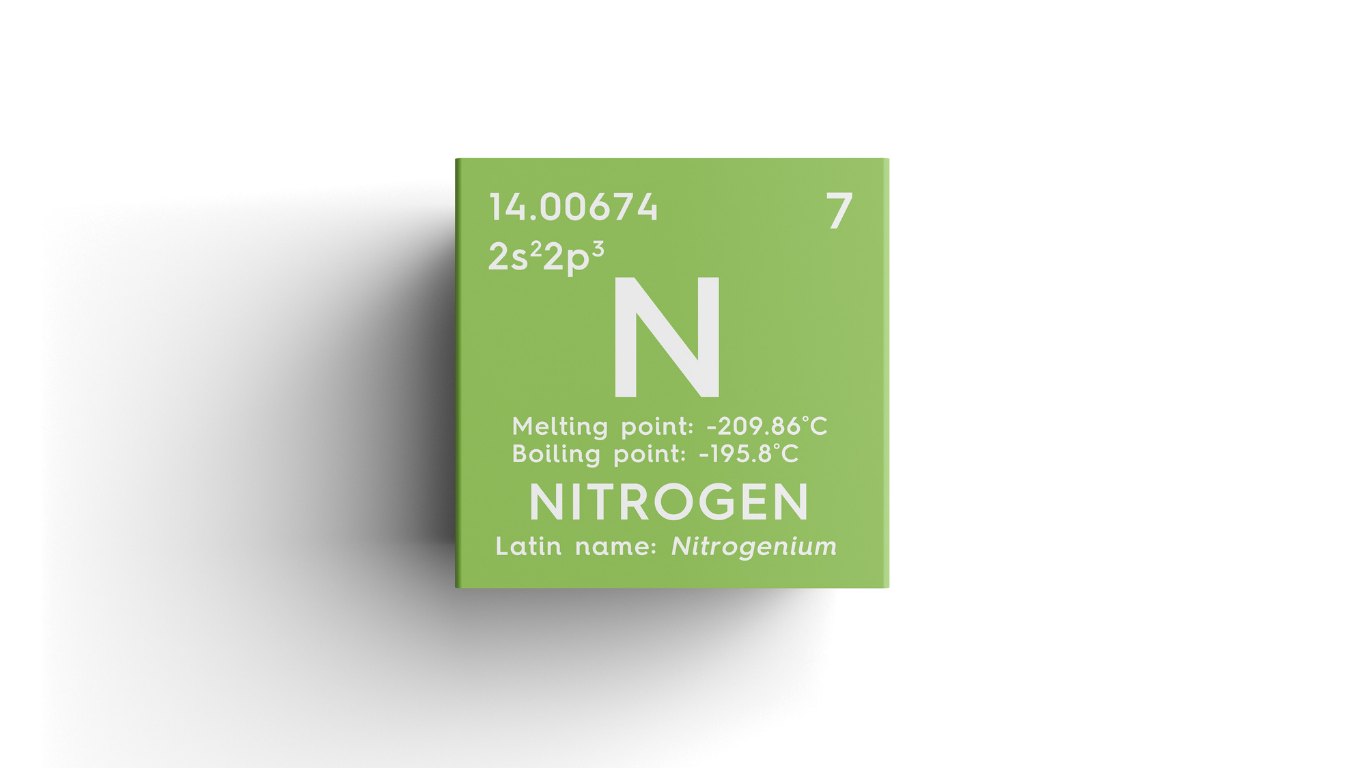
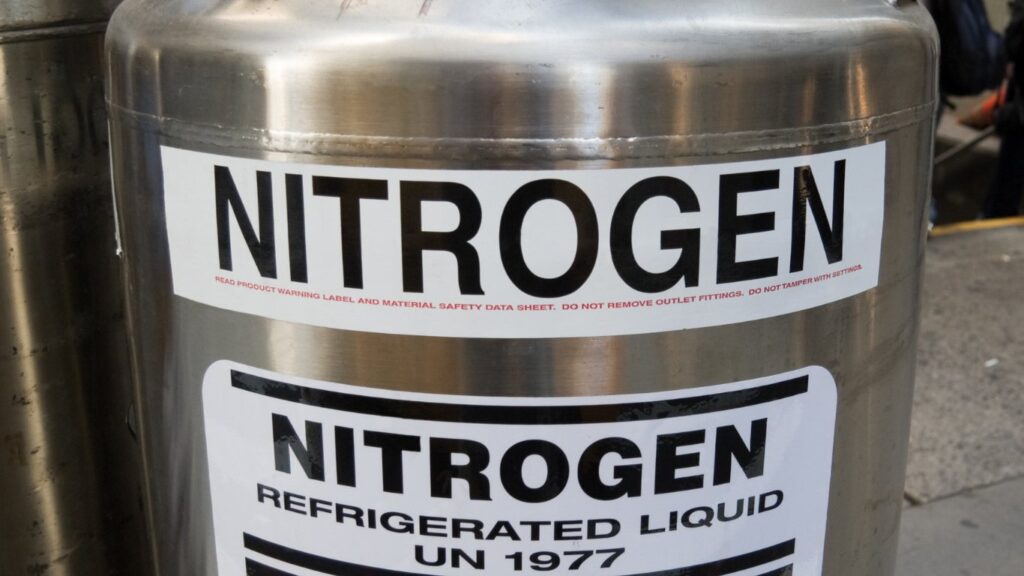
A 2017 paper looked at a cryogenic application, examining ECT’s ability to monitor a two-phase flow consisting of liquid and vaporous nitrogen (LN2-VN2). ECT was used to map the phase distribution of nitrogen in its liquid and vaporous form, as well as being able to determine the void fraction. ECT provided powerful instantaneous insights into the nitrogen’s “flow, heat and mass transfer characteristics” and demonstrated acceptable accuracy even though the difference in capacitance between the two states of nitrogen was so small.
Alongside its accuracy and cross-sectional view, the paper’s authors felt stated that ECT had a significant advantage over other technologies due to the non-invasive nature of its sensors. The sensors of other technologies interfered with the flow of the nitrogen in certain instances.
A Ringing Endorsement for ECT
The paper’s authors also provided a ringing endorsement of ECT stating: “the advantages of easy-to-use, fast, safe and inexpensive, thus it has been widely studied and applied to the phase distribution measurements in the fields of the oil industry, energy industry and chemical industry.”
Find Out More About ECT and Electrical Tomography
For more information about ECT and electrical tomography, please contact the ITS team: [email protected]