




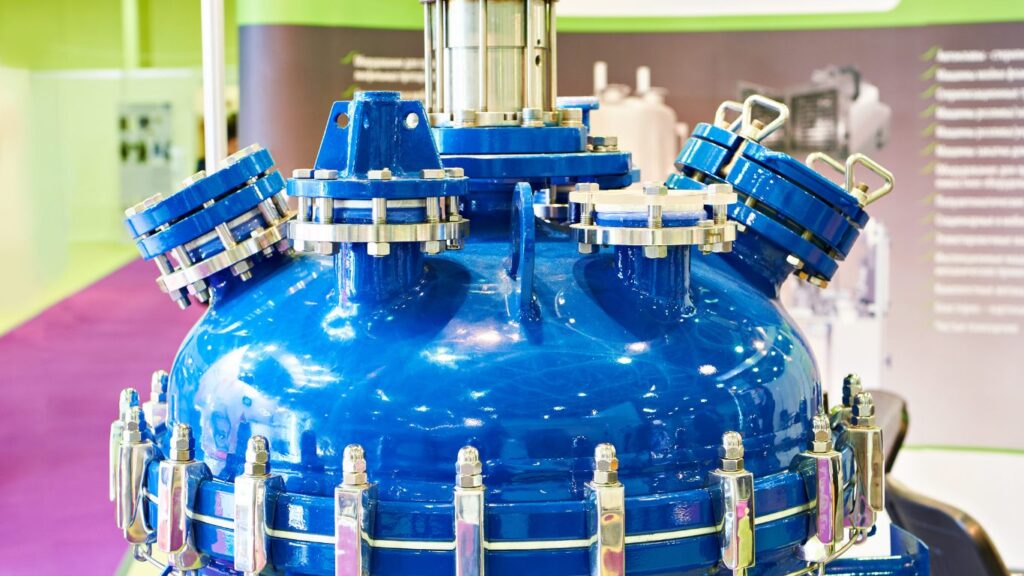
While multiphase reactors cover a broad range of set-ups, the three most common reactor configurations include the following: trickle bed reactor (TBR), bubble column reactor (BCR), and fluisided bed reactors (FBR). These three varieties of multiphase reactor will provide the main focus of this article.
The omnipresence of multiphase reactors is matched by electrical tomography’s versatility, a technology whose vast repertoire of monitoring applications has successfully included the instantaneous scrutiny of the chemical transformations that take place within a multiphase reactor in real-time.
Whether it be electrical resistance tomography (ERT) or electrical capacitance tomography (ECT), electrical tomography has attracted many advocates within the chemical engineering fraternity through the non-invasive sensory input and instantaneous rendering of cross-sectional dynamic imaging of fluidised chemical transformations as they happen in real-time. Electrical tomography has also proven to be highly proficient at monitoring multiphase reactors, irrespective of the opacity of the reactor’s walls.
While some observers point to ERT’s limitations when the resistance properties of a particular gas, liquid, or solid phase renders ERT ineffective, it can also be argued that this is a strength. ERT can be combined with ECT to create a dual modality system to be able to monitor the constituent conductivity or capacitance of practically any multiphase flow contained within a reactor.
Trickle Bed Reactors (TBR)
Widely used in the petroleum, chemical manufacturing, and pharmaceutical industries; TBRs involve a stationary solid catalyst over which liquid and gas phases flow concurrently and interact. The value of a TBR lies in its potential for high throughput without requiring mechanical agitation.
Despite its relative simplicity, TBRs can be affected by liquid holdup – a phenomena where either too much or too little liquid greatly affects a TBR’s efficiency. ERT’s ability to monitor the distribution of a TBR’s liquid holdup was the purpose behind a 2019 paper from the Indian Institute of Technology in Dehli.
The Dehli research demonstrated ERT’s efficacy and effectiveness in monitoring liquid holdup in real-time and can lead to improvements in TBR design and efficiency. As the paper’s authors stated, regarding ERT’s quantitative and qualitative TBR insights, “These validated measurements are not only important to improve the understanding of underlying flow processes in a TBR, but also to provide reliable experimental data for development and verification of CFD models.”
Fluidised Bed Reactors (FBR)
As its name suggests, a fluidised bed reactor (FBR) involves a solid catalyst acquiring fluidic properties when a gas or liquid is passed through the solid at velocities high enough to make the solid behave like a fluid. Commonly found in petrochemical, energy production, water treatment, and materials processing; FBRs offer a range operational advantages, especially high productivity. However, creating an operational situation where a solid behaves in a fluidised manner comes at a comparatively high operating cost. This is inevitable as the constant high-speed pumping makes onerous demands on equipment resulting in wear and tear from pumping solids. It is within this context that electrical tomography can be used to seek out process efficiencies and cost savings through reduced operational costs.
This 2014 paper from Poland provides an interesting overview of the use of electrical capacitance tomography (ECT) to monitor the multiphase dynamics of an FBR. While ECT is the focus of this paper, it does suggest a future role for dual modality systems by combining ECT with ERT which has become an option for many of Industrial Tomography System’s (ITS) clients especially from academic and research institutions. As alluded to earlier in this article, the perceived weakness of electrical tomography is actually a strength through the use of dual modality systems.
The standalone utility of ERT to monitor an FBR was the topic of this Canadian paper where ERT’s accuracy in determining phase holdup was ratified by pressure transducers. Using pressure to ratify ERT’s accuracy will be referenced in connection with bubble column reactors (BCR).
Bubble Column Reactor (BCR)
A bubble column reactor (BCR) is yet another variation on the multiphase reactor theme and is used in a similar range of industries already discussed in relation to the other multiphase reactors; including environmental engineering, biochemical, petrochemical, and chemical industries.
ERT has shown good results in being able to detect parameters like phase distribution, especially gas dispersion (which can be rendered in 2D or 3D), flow regime identification, and gas holdup – the volume of gas within the reactor.
There is a body of academic research where ERT’s monitoring of BCRs has been successfully validated by other measurement technologies. These include high speed video cameras used to monitor the internal flow dynamics as demonstrated in a paper from 2023. Aside from obtaining excellent agreement, ERT has a demonstrable advantage by being able to work despite a bubble column’s opacity.
An earlier paper from 2010 demonstrated ERT’s excellent agreement with bubble column data acquired from pressure transmitter methods to measure gas hold-ups. Overall the study demonstrated showed “that ERT is a very powerful tool for diagnosing the ‘inside’ flow behaviour of gas–liquid–solid three phase bubble column.”
For more information about electrical tomography’s multiphase reactor monitoring capabilities, please contact [email protected]