








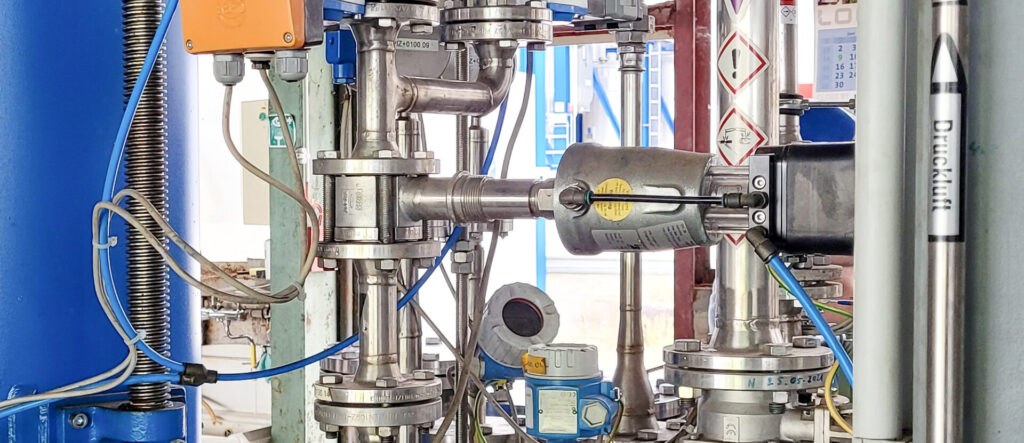
“Because Chemistry Matters” is the slogan of Chemiewerk Bad Köstritz (CWK). The manufacturer of speciality inorganic chemicals from Thuringia looks back on a history spanning more than 195 years, beginning with the opening of the Heinrichshall salt works in 1831. Today, CWK is a medium-sized chemical company with a historically developed specialisation in sulphur compounds, among other things. Thiosulphates are one such group of compounds, and CWK is one of only a few suppliers worldwide capable of supplying customers on a commercial scale. For many years, the company has relied on sliding gate valves from Schubert & Salzer in its production processes.
Thiosulphates – versatile sulphur compounds
Thiosulphates are chemical compounds consisting of sulphur, oxygen and a positively charged counter-ion such as sodium or potassium. They are used, for example, as “anti-chlorine” agents in sewage and exhaust gas treatment, as valuable fertiliser additives, as important reducing agents in the chemical industry and have a long and significant history as fixing salts in analogue photography.
Dipl.-Ing. (FH) Marcus Nöthlich, Operations Engineer in the Sulphur Compounds Division at CWK, describes the production of sodium thiosulphate as a two-stage batch process: first, caustic soda and sulphur are reacted exothermically in a cooled stirred tank reactor to form sodium polysulphide solution. This solution is then charged stoichiometrically (in the exact quantitative ratio) into a reaction vessel together with caustic soda, water and a sodium thiosulphate mother liquor. In the second process step, liquid sulphur dioxide (SO₂) is introduced into this mixture. Precise flow control is achieved using a type 8043 sliding gate valve from Schubert & Salzer. The liquid SO₂ expands in the reaction vessel and becomes gaseous. Under continuous agitation, the gaseous SO₂ reacts exothermically with the other raw materials, with controlled cooling, to form sodium thiosulphate solution.
Sliding gate valves – safe handling of toxic SO₂
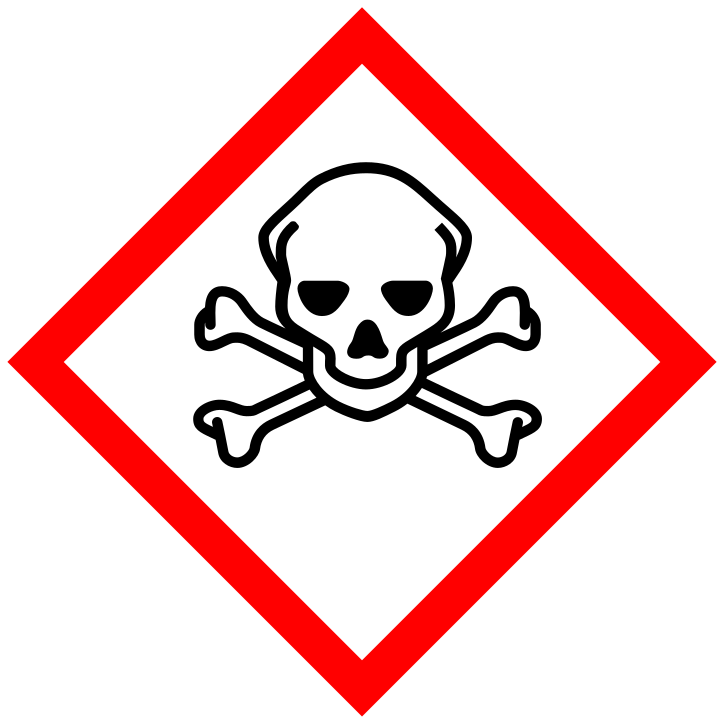
One particularly critical aspect of this process is the handling of sulphur dioxide. “This chemical is hazardous and highly toxic,” explains Marcus Nöthlich. “Because we store and process it in very large quantities, our plant is subject to major accident prevention regulations. Continuous monitoring of the ambient air for its exact SO₂ concentration is essential. Even the smallest leaks in the system trigger an alarm from the installed gas sensors within seconds. Just a few breaths can cause severe respiratory distress. At higher concentrations, there is an acute danger to life.”
For this reason, the tightness and reliability of the valves used to control sulphur dioxide are of central importance to CWK. With the wafer-type sliding gate valves from Schubert & Salzer, the company has found a solution that more than meets these demanding requirements. For this application, the flange connections are designed with tongue-and-groove sealing in accordance with DIN EN 1092-1. External tightness at the valve spindle is ensured by an additional metal bellows seal alongside the packing. The complete valve fulfils the requirements of the Technical Instructions on Air Quality Control (“TA-Luft”) in accordance with ISO 15848-1.
Maximum service life and control quality
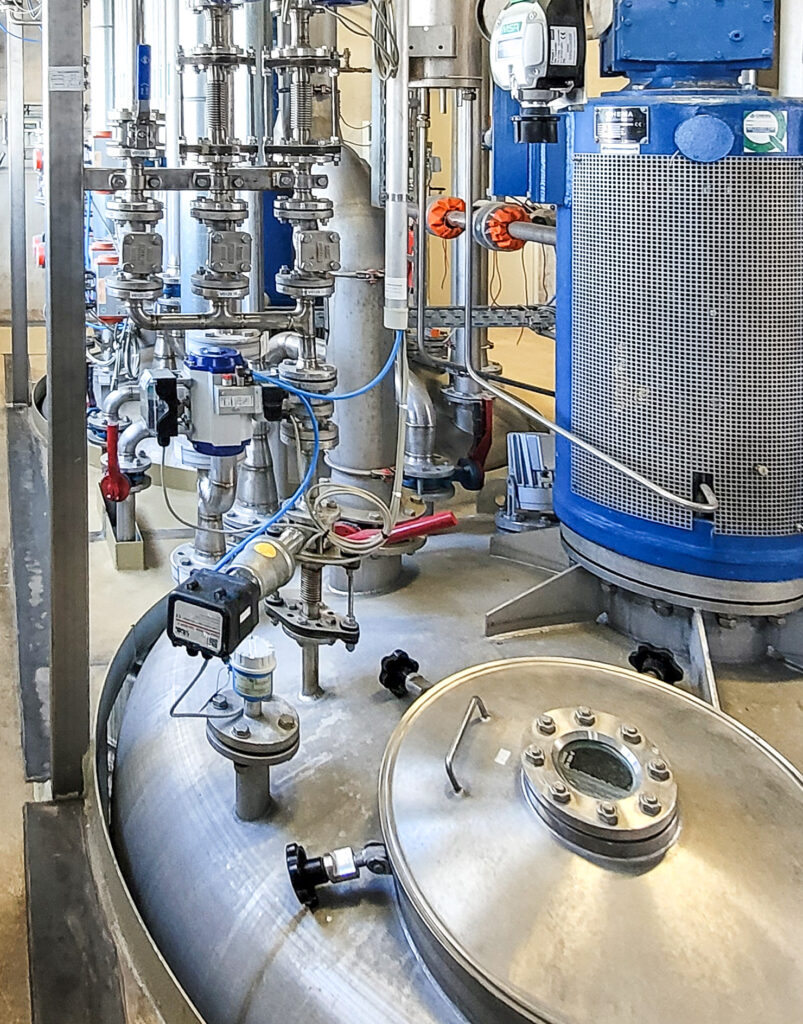
“In addition to their outstanding tightness, we were especially impressed by the reliability of the sliding gate valves,” explains Marcus Nöthlich. “The valves we used previously had to be completely replaced twice a year due to wear. That causes costs, downtime and, because of the SO₂ residues in the pipework, represents a safety risk for our technicians along with additional effort. With the sliding gate valves, however, we only replace individual wear parts even after several years of operation. Thanks to practical training provided by Schubert & Salzer here at the chemical plant, our technicians can even carry out this maintenance work themselves without any problems.”
These exceptionally long service lives are made possible by the underlying operating principle of the sliding gate valve: two slotted sealing discs arranged perpendicular to the direction of flow slide against each other, thereby varying the flow cross-section. By design, the valve stroke is extremely short – depending on the nominal size, only 6–9 mm. As a result, the packing and metal bellows in sliding gate valves are subjected to significantly lower mechanical stress, leading to reduced wear and longer service life.
In addition to increased service life, the use of sliding gate valves has also significantly improved control quality. “To adjust the pH value of our thiosulphate solution, we inject gaseous SO₂ after the liquid SO₂ stage. The high control spread of the sliding gate valve used for this process enables us to regulate the mass flows precisely and manufacture a product that meets both our own quality standards and those of our customers,” explains Marcus Nöthlich.
Wide range of applications for sliding gate valves
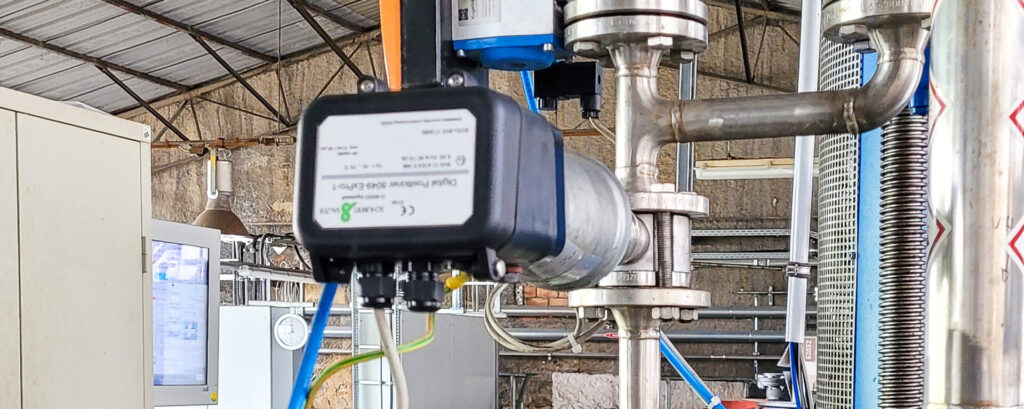
As a result of these and similar experiences, sliding gate valves have long been an integral part of the various processes and systems at Chemiewerk Bad Köstritz. They help to increase operational safety, improve precision and reduce maintenance costs. “Whether for controlling sulphur dioxide, steam or other liquid or gaseous media – the sliding gate valves from Schubert & Salzer have proven themselves exceptionally well in our plant. So all one can say is: chemistry matters here,” concludes Marcus Nöthlich.
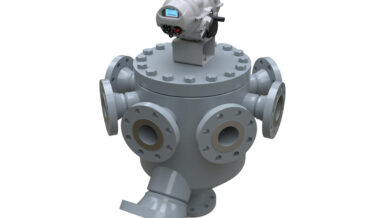
Sliding gate valves control and shut off liquid, vaporous and gaseous media precisely, quickly and economically.
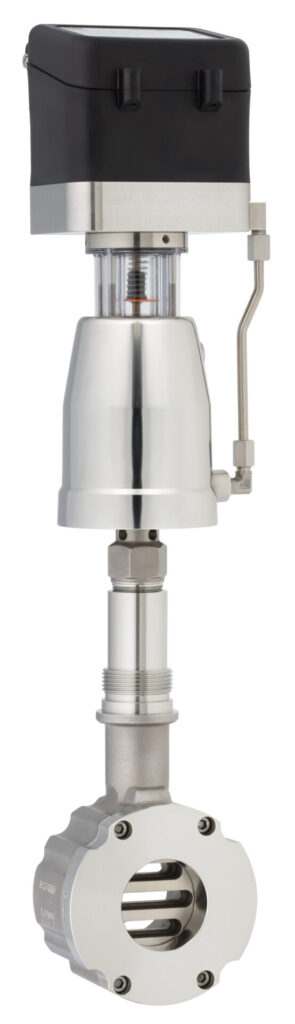
A sealing disc fixed perpendicular to the flow direction in the body has a certain number of transverse slots. A movable sealing disc with the same slot arrangement is pushed vertically against it, which changes the flow cross-section. The existing pressure difference presses the movable disc against the fixed disc.
Sulphur dioxide
- Description: colourless, toxic gas with a pungent odour
- Melting point: -75.5 °C
- Boiling point: -10.1 °C
- Molecular weight: 64.06 g/mol
- Application: sulphur dioxide is used, among other things, in the manufacture of chemicals and as a preservative, antioxidant and disinfectant in the food industry.