




Market

Hydrogen Processing

Hydrogen and green fuels are moving from pilot projects to industrial scale, and fluid handling technology decides how safely and efficiently that happens. Electrolysers, compressors, pumps, valves, flow meters and heat exchangers handle water feed, potassium hydroxide, cooling circuits and high-purity hydrogen — alongside ammonia, methanol and other hydrogen carriers — under demanding pressure, purity and leak-tightness requirements.

Browse by market

Latest Hydrogen Processing news

Alfa Laval Technology Provider for Electrolyzer Cooling in One of Europe’s Largest Renewable Hydrogen Projects

September 4, 2026
Alfa Laval, a global leader in heat transfer, separation, and fluid handling, is proud to announce its selection as the...
Read more

The Road Ahead – Is Decentralisation the Key to Unlocking Hydrogen in Public Transport?

July 17, 2026
Hydrogen is the subject of great excitement and expectation, supporting the move from fossil fuels towards greener energy sources. This...
Read more
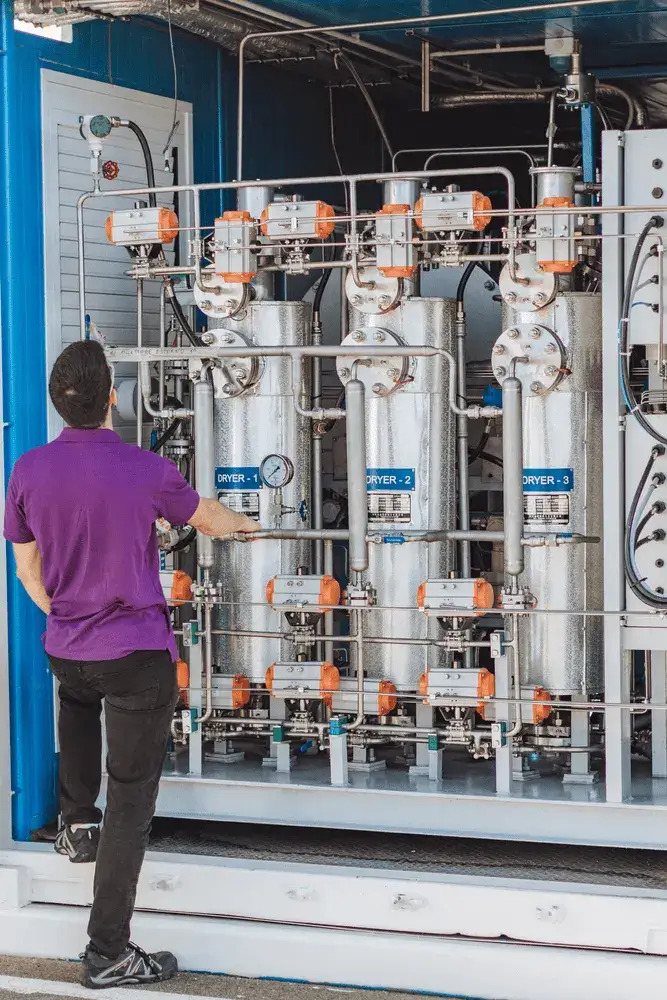
IMI Supplies 2MW Electrolyser to IGAT for Green Hydrogen Production in Italy

July 17, 2026
IMI has supplied a 2MW electrolyser to Industria Gas Tecnici S.p.A., (IGAT) marking the company’s entry into green hydrogen production...
Read more
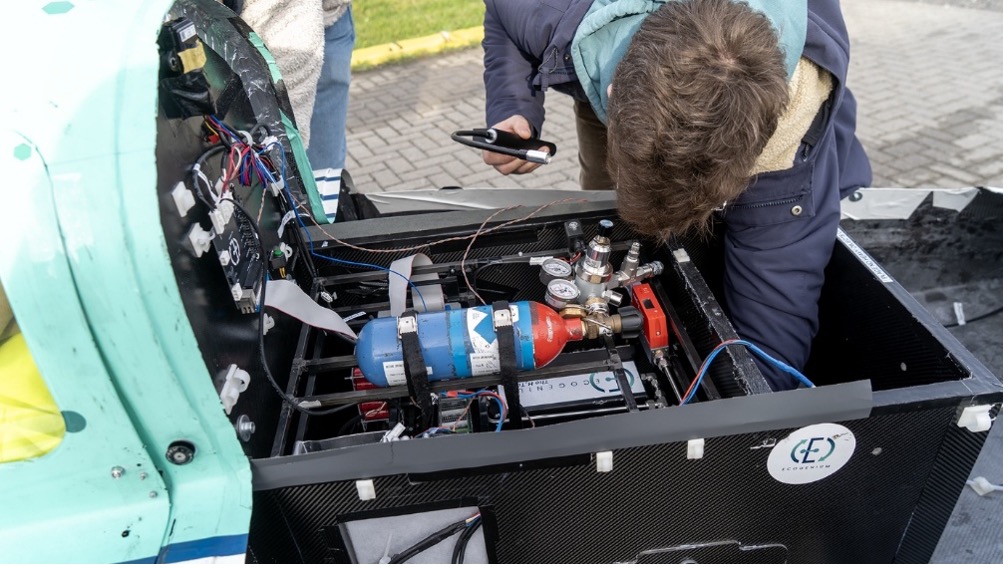
Shell Eco-marathon | Hydrogen Prototype “Hydraix II”

February 17, 2026
2,647 km per kilogram of hydrogen are no coincidence. They are the result of precise measurement technology. At the Shell...
Read more
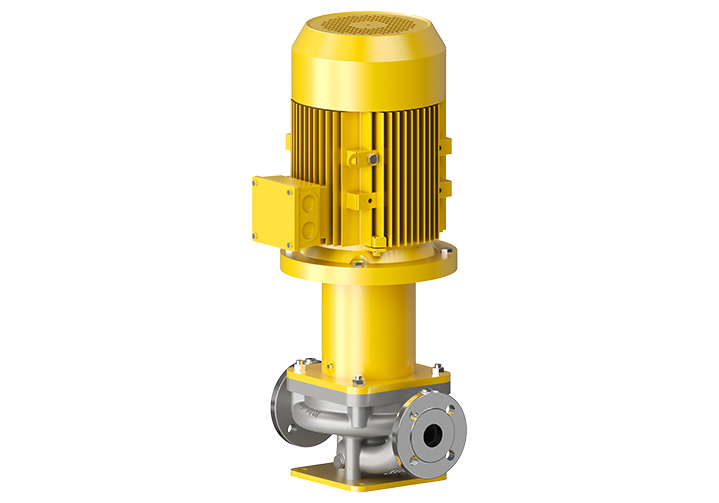
Magnetic Drive Centrifugal Pumps for the Marine Green Fuel Transition

February 6, 2026
The maritime industry is entering a new operational reality. As shipowners and operators adopt alternative fuels and introduce new onboard...
Read more


More Hydrogen Processing articles

Purpose-Built for Hydrogen: Valves That Set the Standard

October 31, 2025
As the global hydrogen market rapidly evolves, the reliability and safety of valve technology are more critical than ever. Habonim...
Read more

GF Brings Corrosion-Free Piping Expertise and Tailored Hydrogen Solutions to Hydrogen Technology Expo 2025

October 7, 2025
From 21 to 23 October 2025, Swiss flow solutions provider GF will showcase its range of products, planning and customizing...
Read more

Safely Controlled: Reliable Valve Technology for Hydrogen Applications

July 2, 2025
With valve solutions from Schubert & Salzer, plant engineering and operating companies are well-armed for the specific challenges of the...
Read more

Generating Hydrogen (H₂) from Electrolysers

June 17, 2025
Accurate measurement of hydrogen output from electrolysers requires drying the gas to a dew point of -10°C or lower, as...
Read more

Nordex Electrolyzers Relies on VEGA Measurement Technology for Green Hydrogen Production 

May 29, 2025
Schiltach / Navarra - Within the context of a current project to equip a 500-kW prototype with instrumentation, technology company...
Read more

HERMETIC Canned Motor Pumps for Ammonia Applications

April 30, 2025
Hermetically sealed, low-maintenance pumps that are suitable for extreme applications and hazardous liquids are the core competence of HERMETIC-Pumpen GmbH....
Read more

An Innovative Project with VEGA Measurement Technology Showed: Heating with Hydrogen Mixtures via Existing Natural Gas Pipelines is Feasible

March 18, 2025
How can excess renewable electricity be stored and used sensibly? One possible answer to this question was provided by the...
Read more

Questions and answers about Hydrogen Processing

The hydrogen industry covers the production, purification, compression, storage and distribution of hydrogen, together with the derived fuels that carry it: ammonia, methanol and synthetic hydrocarbons. It spans everything from grey hydrogen produced by steam methane reforming to green hydrogen made by electrolysis with renewable power.

For fluid handling, hydrogen is an unusually demanding medium. The molecule is the smallest there is, which makes sealing and leak-tightness critical; it embrittles many metals; and most processes run at high pressure, from 30 bar at the electrolyser to 700 bar at a refuelling station.

The value chain is usually split into three parts:

  • Production: electrolysis, reforming, and increasingly the electrolyte and cooling circuits that keep a stack running.
  • Conversion and storage: compression, liquefaction, and conversion into ammonia or methanol for transport.
  • Use: refuelling stations, fuel cells, industrial burners and the replacement of fossil feedstock in chemicals and steel.

An electrolyser plant is above all a fluid handling plant. Demineralised water is fed to the stack, potassium hydroxide or pure water circulates through it, gas and liquid are separated, and the product hydrogen is dried, purified and compressed. Each of those steps needs pumps, valves, heat exchangers and instrumentation selected for the medium rather than borrowed from another industry.

Alkaline and PEM electrolysers place different demands on equipment: caustic-resistant circulation pumps and gaskets for alkaline systems, ultrapure water and metal-free wetted parts for PEM. Cooling is a constant theme, because a large share of the electrical input leaves the stack as heat.

Downstream, diaphragm and ionic compressors, cryogenic pumps and high-pressure valves handle hydrogen up to 700 bar, with materials chosen to resist embrittlement.

Electrolysis consumes roughly nine litres of ultrapure water per kilogram of hydrogen, and the quality of that water directly determines stack life. Feed water is treated by reverse osmosis and electrodeionisation to remove ions, organics and particles that would otherwise poison membranes and electrodes.

Where projects are sited on the coast or in water-scarce regions, desalination is added ahead of the polishing steps, which brings seawater intake, pretreatment and brine handling into scope. Cooling water circuits, condensate recovery and the treatment of caustic blowdown complete the picture.

Water treatment is therefore one of the largest single sources of pumps, membranes, filtration and analytical instrumentation in a hydrogen plant.

Fluid Handling Pro follows the equipment side of the hydrogen economy: pumps and compressors for electrolysers and refuelling, valves rated for hydrogen service, flow and level measurement in electrolyte and gas circuits, heat exchangers for stack cooling, and the filtration and analysis that keep hydrogen at the required purity.

You will find product launches, project announcements, case studies and expert opinion from the manufacturers supplying this market. Browse the latest hydrogen articles on this page, or subscribe to the e-newsletter to receive a selection by email.

Valves in hydrogen service are selected for leak-tightness first. Hydrogen escapes through paths that would hold nitrogen or natural gas without trouble, so bellows-sealed stems, metal seats and certified low fugitive emission designs are common, together with materials that resist embrittlement at pressure.

Control tasks range from electrolyte circulation and stack differential pressure to hydrogen dosing into blending stations and pressure staging in refuelling. Safety instrumented functions play a larger role than in most process industries: fast-acting shut-off, pressure relief and gas detection are part of the control design rather than an afterthought.

Ammonia and methanol plants downstream add their own requirements, from cryogenic transfer valves to high-pressure synthesis loops.

Level measurement in a hydrogen plant is mostly about separators, buffer vessels and electrolyte tanks. Gas-liquid separators downstream of the stack need reliable level control to keep hydrogen and oxygen apart and to protect downstream equipment, often with guided wave radar or differential pressure in caustic-resistant materials.

Storage of demineralised water, potassium hydroxide and, further along the chain, liquid ammonia or methanol brings its own instrumentation: radar for large tanks, point level switches for overfill protection, and interface measurement where two liquids meet. Cryogenic hydrogen storage adds a further layer, with measurement principles that tolerate very low temperatures.

Hydrogen is the hardest common gas to meter: very low density, very high velocity and a tendency to leak past anything mechanical. Thermal mass and Coriolis meters are the usual answer, with Coriolis increasingly used in refuelling because it measures mass directly, which is what the customer is billed for.

Inside the plant, flow measurement covers demineralised water feed, electrolyte circulation, cooling loops and product gas, each with different accuracy and material requirements. Ultrasonic and vortex meters appear in larger pipelines and in blending applications where hydrogen is mixed into natural gas.

Custody transfer and efficiency reporting both depend on this measurement, so accuracy and long-term stability matter more than purchase price.

Electrolysis is only partly efficient, and the remainder leaves the stack as heat. Keeping the stack within its temperature window protects membrane life and efficiency, so cooling circuits, plate heat exchangers and accurate temperature measurement are core equipment rather than utilities.

Recovering that heat is one of the clearest efficiency gains in a hydrogen project: waste heat at 60 to 80 degrees Celsius can feed district heating or a neighbouring process. Further along the chain, compression generates heat that must be removed, liquefaction requires cryogenic cooling, and ammonia and methanol synthesis run strongly exothermic reactions that depend on precise thermal control.