Market

Water Processing

Drinking water and process water reach users through a chain of pumps, valves, meters and filters that has to work without interruption. Fluid handling technology moves raw water, doses coagulants and disinfectants, measures flow and level across the network and keeps pressure stable, while leakage, energy use and water quality are all under growing scrutiny.

Latest in this market

Water Processing news and case studies

All articles in this market
Independent editorial selection — no sales pitches. Sponsored items are marked as such. Submit your news

Promoted videos

Water Processing in action

All videos

What this market covers

Key questions about Water Processing

14 topics explained in the questions at the bottom of this page. Read them

Ask the Expert

Ask a water processing expert — free

Engineers and product specialists who answer technical questions from readers. The answer comes back to you by e-mail; when we publish it, other readers benefit too.

View all experts
Casey WilliamsonGF Casey Williamson is Head of Business Development Microelectronics Global Industries for Georg Fischer. For the last 25 years, he has provided support… Ask a question

Market & Technology Focus

Water Processing, in depth in your inbox

Every Thursday edition takes one market or technology in depth. These are the editions on this market — read them online or get the next one by e-mail.

Subscribe to our E-newsletters

Join 43,000+ engineers, plant managers and technical buyers. Free, twice a week.

What this market covers

Frequently asked about water processing

Water treatment processes

Safe and clean water is vital for everyday life. Water is essential for health and hygiene.

Drinking water sources are subject to contamination and require appropriate treatment to remove disease-causing agents. Public drinking water systems use various water treatment methods to provide safe drinking water for their communities.

Water can be contaminated by
  • Pathogens – disease-causing organisms that include viruses, bacteria, amoebas, and the eggs and larvae of parasitic worms.
  • Harmful chemicals from human activities (industrial wastes, pesticides, fertilizers).
  • Chemicals and minerals from the natural environment include arsenic, common salt, and fluorides. Some non-harmful contaminants may influence the taste, smell, color, or temperature of the water.

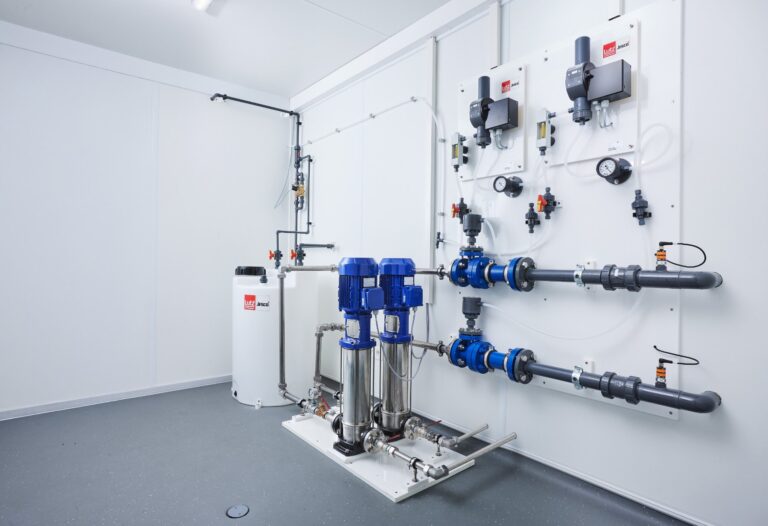
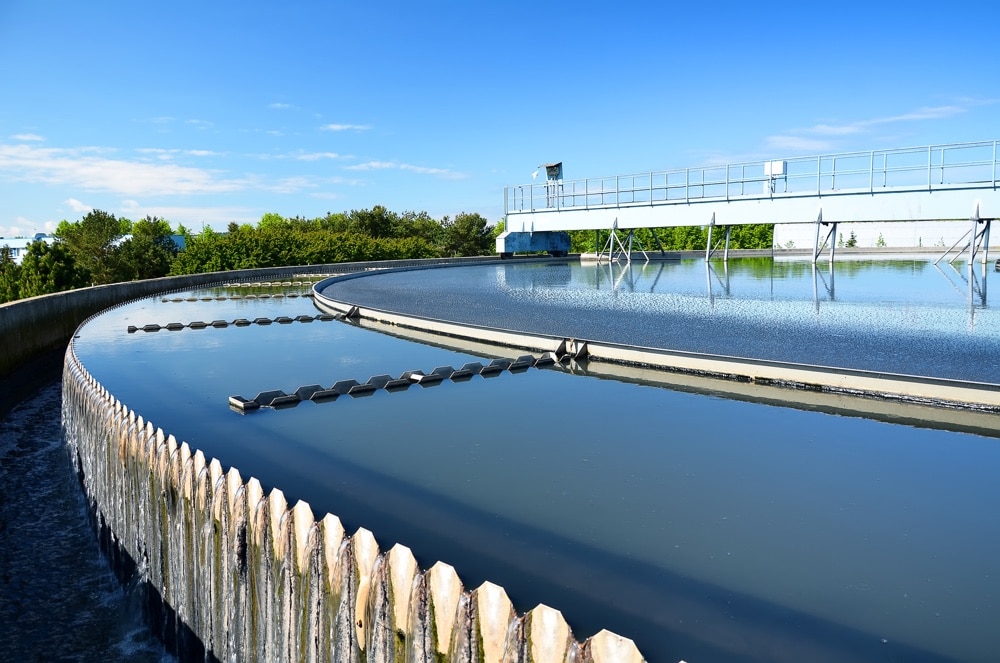
a view of a modern water treatment plant

The water treatment processes may vary slightly at different water treatment plants, depending on the available technology and the water it needs to process. Still, the basic principles are broadly the same.

Standard water treatment steps

1. Coagulation / Flocculation

Coagulation and flocculation remove color, turbidity, algae, and other microorganisms from surface waters. Liquid aluminum sulfate (alum) and polymer are added to the untreated water during coagulation. When mixed with the water, this causes the tiny particles of dirt in the water to stick together or coagulate. Next, groups of dirt particles stick together to form larger, heavier particles called flocs which are easier to remove by settling or filtration.

2. Sedimentation

The flocculated water then flows to the following primary unit of the water purification process, called sedimentation. The sedimentation process aims to remove suspended solids (particles) that are denser (heavier) than water and reduce the particulate load on the filters.

As the water and the floc particles progress through the treatment process, they move into sedimentation basins where the water moves slowly, causing the heavy floc particles to settle to the bottom. Floc which collects on the bottom of the basin is called sludge and is piped to drying lagoons.

This sedimentation process removes almost ninety percent of the solids in the water. The more transparent water on the surface is collected in the launder tubes that direct the water to the filter gallery to remove the remaining ten percent of solids.

3. Water filtration process

Water flows through filters of varying compositions (sand, gravel, and charcoal) and pore sizes to remove dissolved particles, such as dust, parasites, bacteria, viruses, and chemicals in the water filtration process. Filtration collects the suspended impurities in water and enhances the effectiveness of disinfection.

4. Disinfection

After the water has been filtered, a disinfectant (for example, chlorine, chloramine) may be added to kill any remaining parasites, bacteria, and viruses and protect the water from germs when piped to homes businesses. Chlorine is used because it is a very effective disinfectant, and residual concentrations can be maintained to guard against possible biological contamination in the water distribution system.

5. Sludge Drying

Sludge drying is transforming sludge into valuable products or green fuel. It significantly reduces the volume and weight of the sludge so that it is easier to recover.

6. Fluoridation

Water fluoridation is the controlled addition of fluoride to a public water supply to reduce tooth decay. Fluoridated water contains fluoride at a level that is effective for preventing cavities.

7. Water Process Laboratory

The water treatment plant has a process laboratory to ensure that the water cleaning process is optimized and that the water is safe to drink.


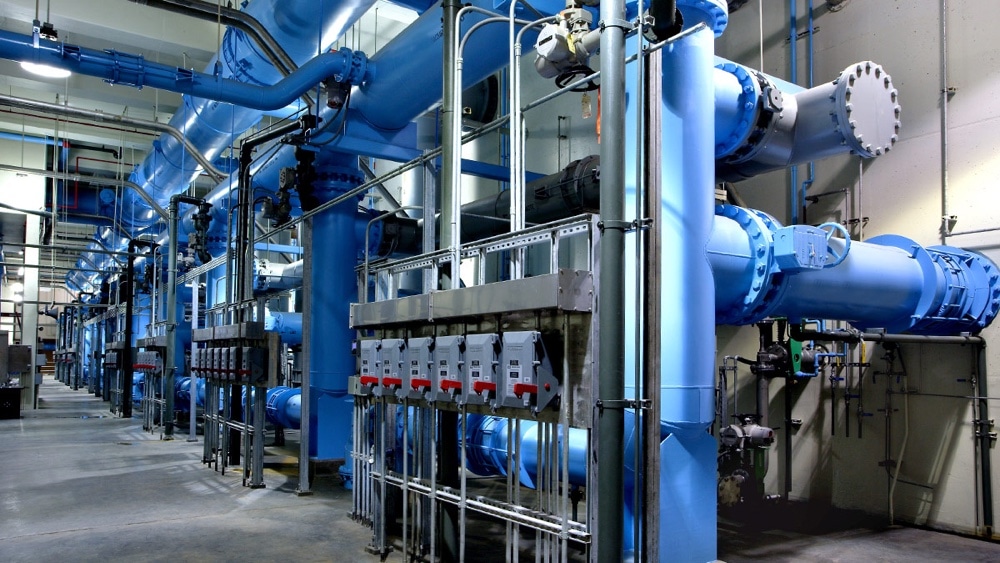
Inside a water treatment plant

Water desalination process

Desalination, also called desalting, removes dissolved salts from seawater and, in some cases, from the brackish (slightly salty) waters of inland seas, highly mineralized groundwaters (e.g., geothermal brines), and municipal wastewaters. This process renders such otherwise unusable waters fit for human consumption, irrigation, industrial applications, and other purposes. One by-product of desalination is salt.

Water recycling process

Water recycling is converting wastewater into water that can be reused for other purposes. The water recycling process is straightforward and utilizes basic physical, biological, and chemical principles to remove contaminants from water. Reclaiming water for reuse applications instead of freshwater supplies can be a water-saving measure.

Water processing companies

Water processing companies offer chemical and equipment solutions to companies to manage and optimize their water resources and process challenges across various industries. Water processing companies support organizations looking to address water consumption, improve efficiency, lower costs, improve social responsibility, and explore water reuse opportunities.

Water cycle processes

The water cycle process, also called the hydrologic cycle, involves the continuous water circulation in the Earth-atmosphere system. Of the many processes involved in the water cycle, the most important are evaporation, transpiration, condensation, precipitation, and runoff. Although the total amount of water within the cycle remains typically constant, its distribution among the various processes is continually changing.

Drinking water treatment process innovations

Three factors have primarily driven the development and implementation of water treatment technologies:

  • The discovery of new rarer contaminants
  • The promulgation of new water quality standards
  • Cost

But now, we see a dramatic change in the water industry's approach to water treatment. Water utilities have seriously considered alternative treatment technologies to the traditional filtration/chlorination treatment approach.

Which pumps are used in water treatment?

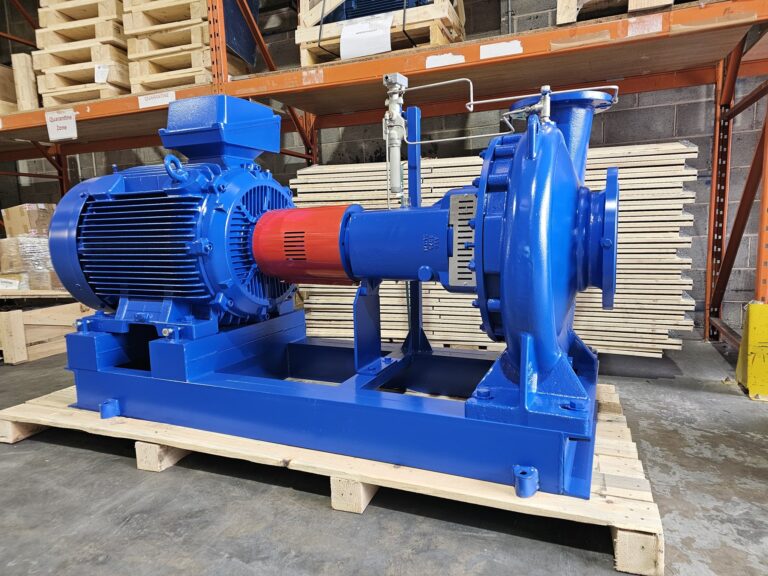
Large centrifugal and split case pumps move raw and clean water, submersible pumps sit in intakes and wells, and dosing pumps add coagulant, chlorine and pH correction in millilitres per minute. Since pumping is the largest energy item in most water utilities, efficiency and speed control decide the operating cost. More in Pumps and Pumping Systems.

How is flow measured in a water network?

Magnetic and ultrasonic flow meters measure abstraction, treatment steps, district metering areas and delivery. Continuous measurement across zones is what turns a leakage figure from a yearly estimate into something an operator can act on this week. More in Flow Control and Measurement.

How is level measured in reservoirs and basins?

Radar, ultrasonic and hydrostatic sensors follow levels in intakes, clarifiers, filter beds and clean water reservoirs, and they trigger pump starts, backwash cycles and overflow alarms. Foam, condensation and turbulence are the usual sources of a false reading. More in Level Control and Measurement.

Which valves are used in water treatment?

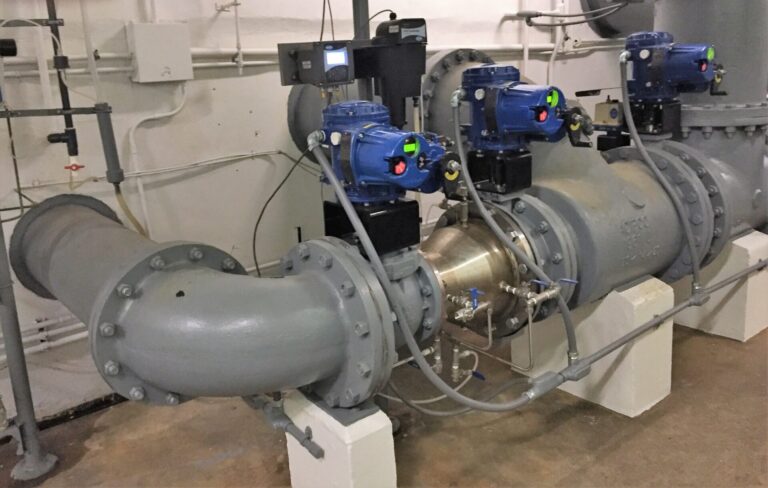
Butterfly and gate valves isolate sections, control valves regulate pressure across the network, and non return valves protect pumps against surge. Pressure management is one of the cheapest ways to cut both leakage and pipe bursts. More in Process and Control Valves.

How is filtration used in drinking water production?

Sand and activated carbon filters carry the classic treatment train, while ultrafiltration, nanofiltration and reverse osmosis remove particles, micro-organisms and dissolved contaminants where the source demands it. Backwash strategy and membrane fouling determine the running cost. More in Fluid Filtration Systems.

How is water quality monitored online?

Online analysers follow turbidity, chlorine residual, pH, conductivity and increasingly specific contaminants at the works and in the network. Continuous data shortens the response time when something changes from days to minutes. More in Process Gas and Liquid Analytical Systems.

How do I find suppliers active in this market?

Use the Manufacturers Directory A-Z, or open a supplier profile from the field experts listed on this page. Partner profiles carry direct contact details; other listings link to the company website.

Can I ask a technical question before I buy?

Yes. Ask the Expert puts your question to a field expert active in Water Processing. The answer comes back to you by e-mail; when we publish it, other readers benefit too.

Want to be the expert readers ask?

Field experts get a byline, a company profile and direct questions from readers. Partner packages add product visibility and a place in the Weekly E-Update.

Become an expert