



Grignard chemistry can be turned from a perceived safety liability into a robust and scalable manufacturing platform when implemented in continuous mode.
Introduction to Grignard Chemistry
Grignard reagents are powerful synthetic building blocks widely used in numerous chemical processes. Discovered in the early 1900s at laboratory scale, these reagents are now produced and consumed on the scale of several thousand tons across multiple industries, including agrochemicals, pharmaceuticals, fragrances, and electronics.
The high reactivity of these organometallic compounds, while highly valued by chemists, also introduces significant operational risks. At industrial level, runaway reactions may occur both during Grignard reagent synthesis and in subsequent downstream transformations.
A major advantage of Grignard reagents lies in their ability to form carbon–carbon (C–C) bonds in a relatively straightforward, cost-effective, and selective manner, without the need for complex catalysts.
Grignard Manufacture and Grignard Use
The Grignard process comprises two main reaction steps:
- Formation of the Grignard ReagentFormation of the organomagnesium compound (the Grignard reagent) by reaction of an organohalide with metallic magnesium.
- Consumption of the Grignard ReagentSubsequent consumption of the Grignard reagent in a nucleophilic addition reaction, a metal–halogen exchange reaction, or an acid–base reaction.
Because of their highly reactive nature, Grignard processes require strictly dry and inert conditions, while tight temperature control is essential to ensure an optimal purity profile. When used in nucleophilic addition reactions, Grignard reagents may be reacted with a wide variety of electrophilic carbon centers. The corresponding metal halide is then released as a salt—typically magnesium chloride—which is essentially insoluble under anhydrous conditions (see Scheme 1). This feature makes Grignard processes highly challenging for continuous reactor technologies that are not designed for handling solids, since such precipitates can impair production efficiency through reactor clogging, sensor fouling, and even equipment abrasion.
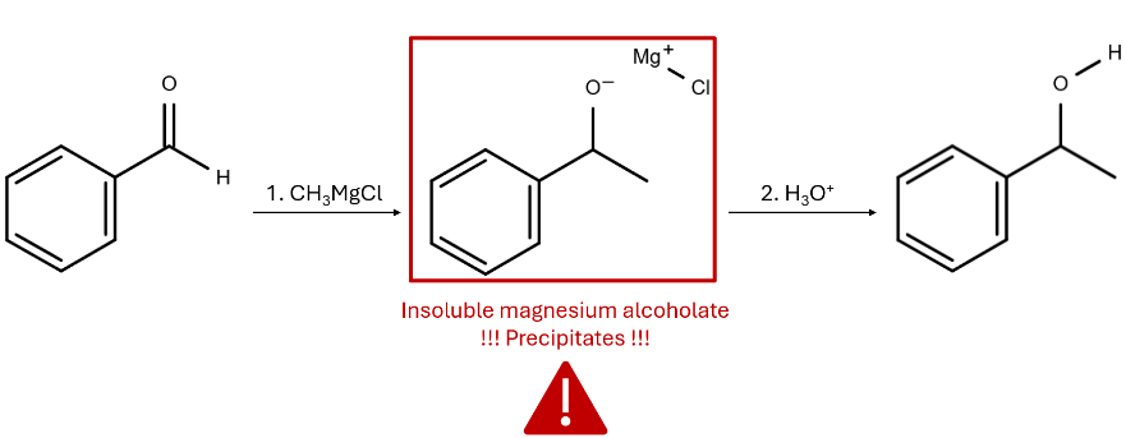
Part A: Industrial Production of Grignard Reagents
State of the Art
Grignard reagents have been produced at industrial scale using traditional batch processes for more than one hundred years. The earliest approaches, based on diethyl ether, have largely been replaced by higher-boiling solvents such as tetrahydrofuran (THF), improving overall process safety.
This reaction is intrinsically challenging for several reasons. First, it is highly exothermic, with a typical reaction enthalpy of about 340 kJ/mol. Second, the kinetic profile is nonlinear and often exhibits an unpredictable induction period. Finally, some Grignard reagents can decompose under certain conditions, potentially leading to uncontrolled runaway reactions.
Despite these hazards and the lack of truly safe alternatives, industry still relies on batch processes for large-scale synthesis, in some cases charging up to 500 kg of magnesium per batch1. The frequency of incidents and casualties clearly demonstrates that this reaction is hazardous.
MgFlow® Technology – Grignard Production in Continuous Flow

Driven by the emergence of flow chemistry as a safer platform for hazardous transformations, CHEMIUM initiated, in 2016, the development of a continuous flow system for Grignard reactions.
This technology reached commercial readiness and entered commercial production in 2023. CHEMIUM now produces and sells Grignard reagents on large scale using its proprietary MgFlow® technology2, and offers this technology under license.
Why Grignard Reagents Should Be Produced in Continuous Mode
A continuous production of Grignard reagents with the MgFlow® technology is bringing several advantages as highlighted in Scheme 2 and detailed below.
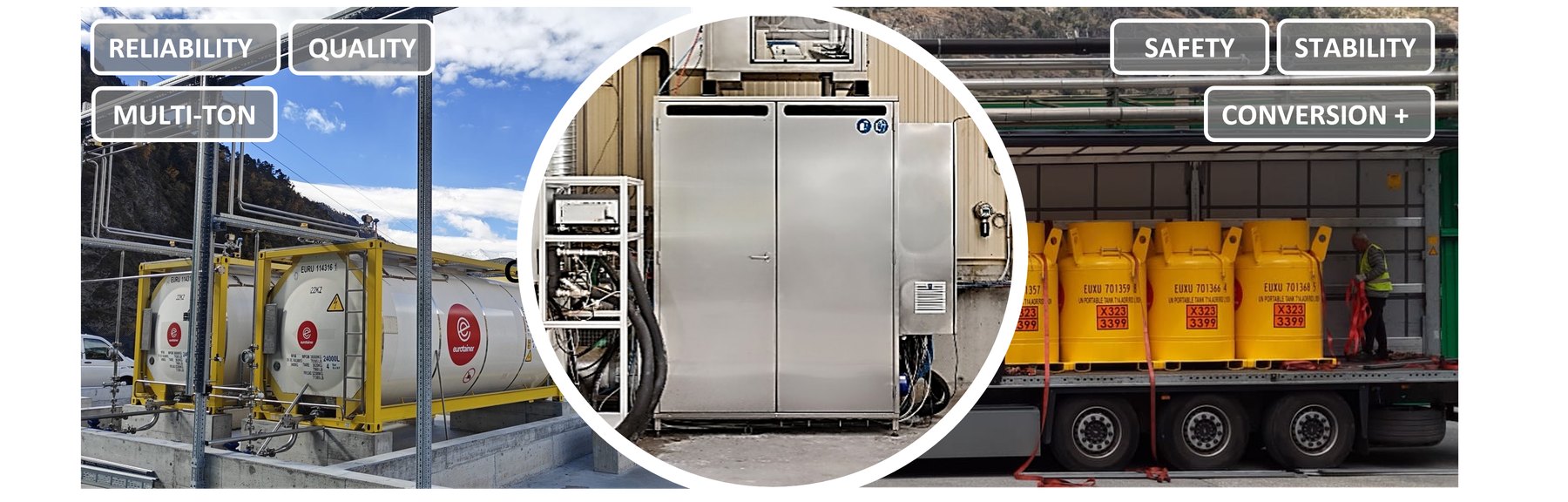
- Enhanced Safety and Process ControlSmall reaction volume, efficient heat removal, and high automation minimize runaway risks and manual handling.
- Improved Product QualityReal-time PAT monitoring ensures consistent quality, automatic rejection of off-spec material, higher selectivity (reduced Wurtz coupling), and higher yields with limited degradation.
- Optimized ConversionsIn many cases, the technology enables the use of chlorides instead of bromides, reducing raw material costs and increasing throughput.
- Cost EfficiencyLower cooling demand, compact equipment footprint, and reduced infrastructure requirements.
- Fast Development and Seamless Scale-UpDirect transition from kilogram to multi-ton scale without process redesign.
Grignard Produced During This Study
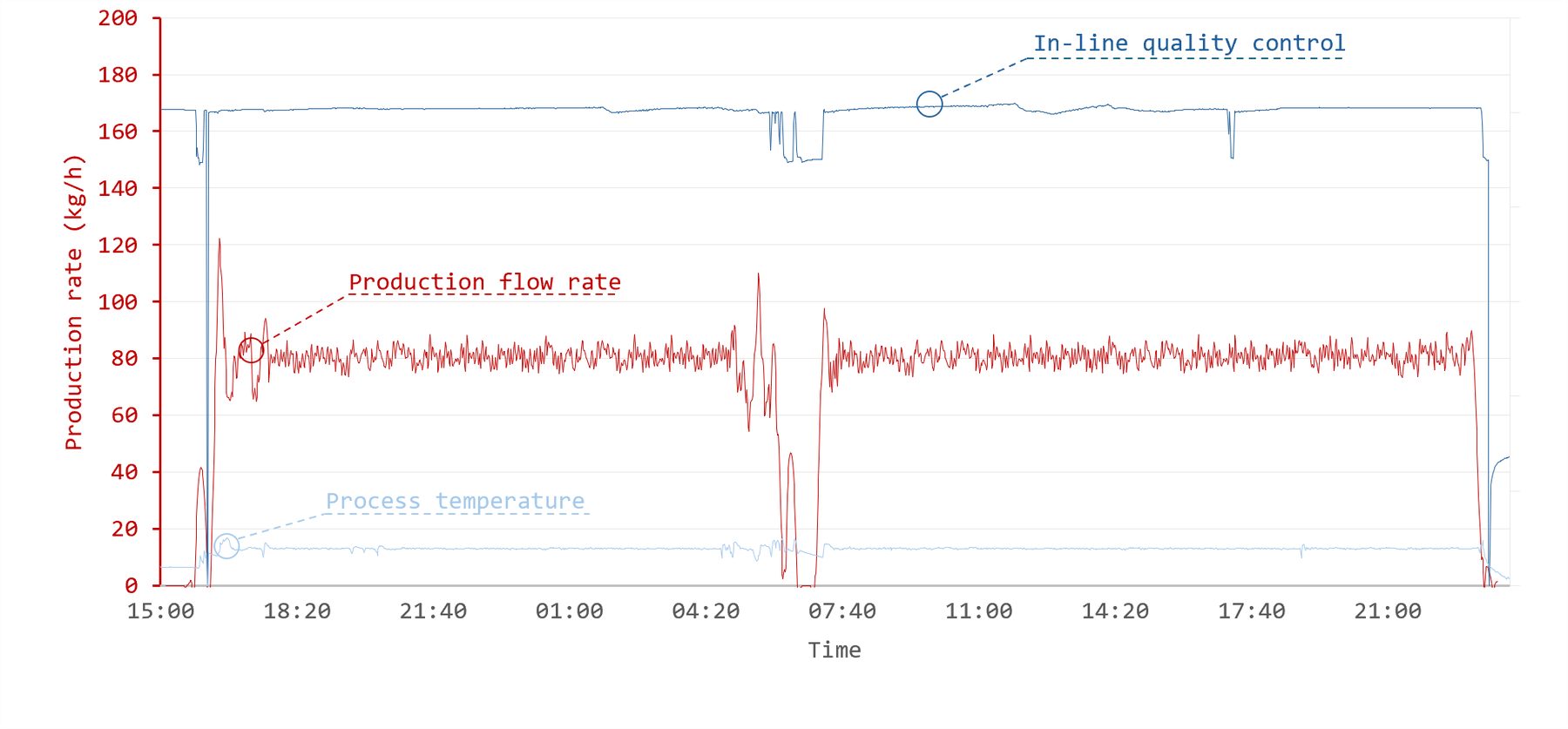
The Grignard reagent used in this study, methylmagnesium chloride in an ethereal solvent, was produced on CHEMIUM’s continuous manufacturing unit (MgFlow®) from methyl chloride and metallic magnesium. The product quality remained unchanged throughout the production campaign despite the challenge of handling gaseous, liquid and solid reagents simultaneously, as illustrated in Scheme 3.
Part B: Downstream Use of Grignard
Industrial Challenges
A substantial amount of heat is released in downstream processes because of the high reactivity of Grignard reagents, and these reactions also generate insoluble magnesium salts.
The combination of solids formation and strong exothermicity makes efficient heat removal particularly challenging, especially in batch reactors. In flow systems—particularly static flow reactors—solid formation can lead to reactor clogging. In both cases, poor heat and solids management can cause local temperature excursions, promoting side reactions, yield losses, or, in the worst case, runaway reactions. Consequently, processes involving Grignard reagents are sometimes regrettably avoided in industry, or they require cooling to well below room temperature, which can be prohibitively expensive. For both Grignard manufacturing and downstream use, an improved technological approach is therefore highly beneficial.
SpinPro Reactors and Benefits for Grignard Downstream Chemistry
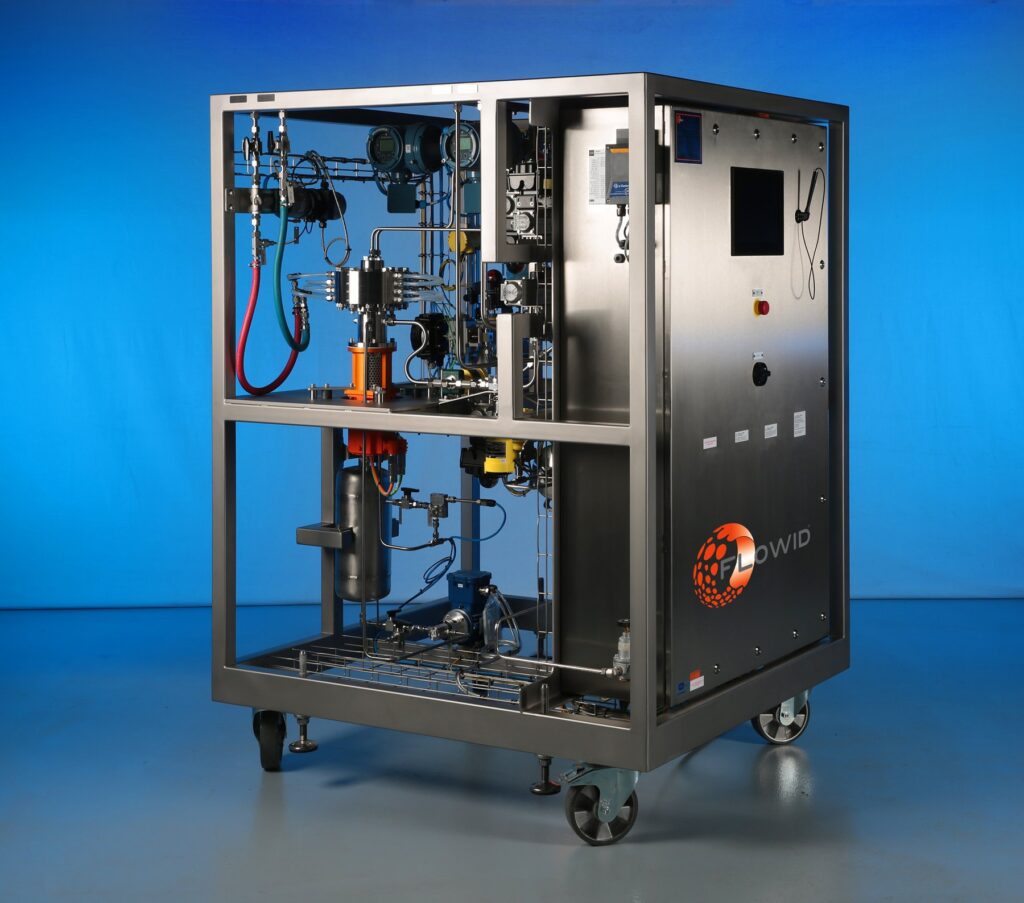
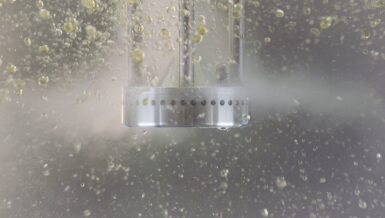
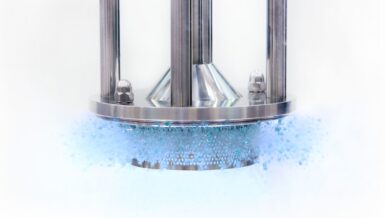
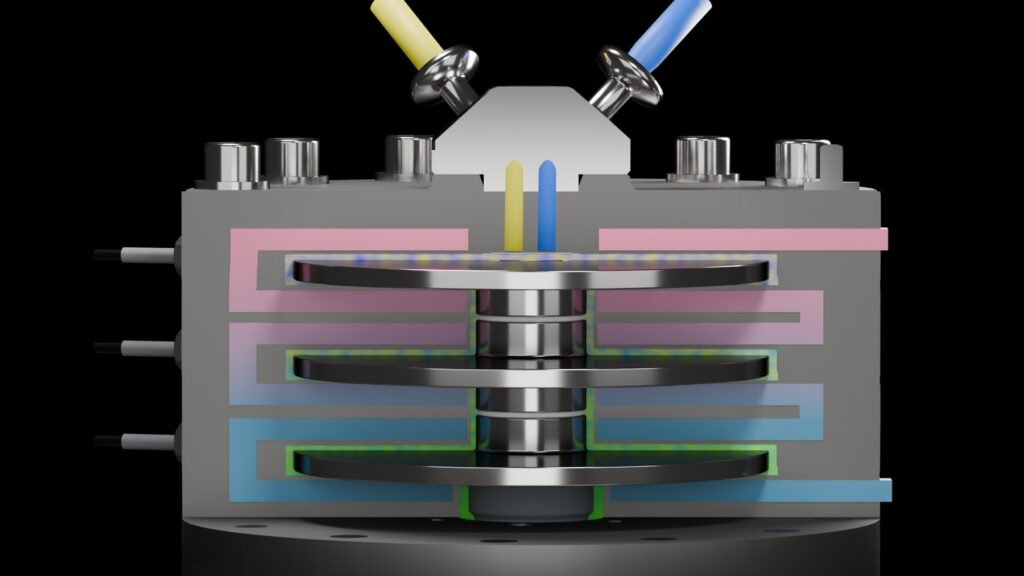
SpinPro reactors are a dynamic type of flow reactor from Flowid which decouples the effect of residence time and mixing intensity. The heart of the technology consists of a rapidly rotating disc (the rotor) inside a very narrow encasing housing (the stator). The rotor typically rotates at several thousands of revolutions per minute while the distance between the rotor and the stator is of the order of a millimeter. This rapid change of velocity over such a narrow gap gives rise to very strong shear forces in the reaction medium inside the reactor which creates a very fine micro-dispersion of tiny bubbles and droplets in multiphase systems. In addition, the high rotor speed induces very intense turbulence which enhances the mixing intensity so that mass and heat transfer take place under intensified conditions. Moreover, the highly turbulent fluid constantly keeps solid particles in motion, suppressing settling and agglomeration that typically occurs in static types of flow reactors.
This makes the reactor particularly well suited for exothermic, mixing sensitive and solid-forming reactions.
Experimental Results and Process Performance

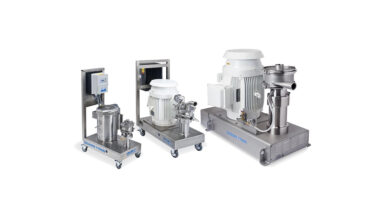
At Flowid’s FlowLab, a SpinPro reactor was set up with three inlets: one for the Grignard reagent, one for the substrate, and one for the acidic quench solution. Grignard reagent from the MgFlow® unit, substrate, and quench were all directly pumped into the reactor while measuring and accurately controlling the flow rates with a Coriolis type mass flow meter. Reaction and quench both took place within a single reactor. Because solids were handled very efficiently, no additional solvent was required beyond the solvent in which the Grignard reagent was prepared, and substrates were fed neat. In the reactions presented here, the substrates were aryl carbonyl compounds that formed fragrance molecules upon reaction with the Grignard reagent (methylmagnesium chloride in this case), followed by acidic aqueous quench.
Very good yields and conversions were obtained for the 3 electrophilic substrates screened in this trial (see Table 1) and the process remained smooth and stable throughout the entire run.
| Fragrance 1 | Fragrance 2 | Fragrance 3 | |
|---|---|---|---|
| Product | 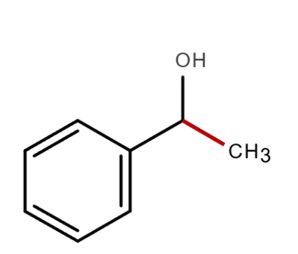 | 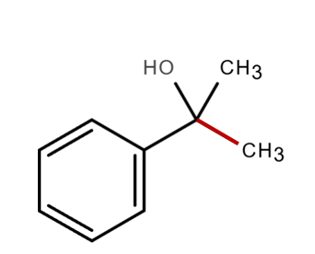 | 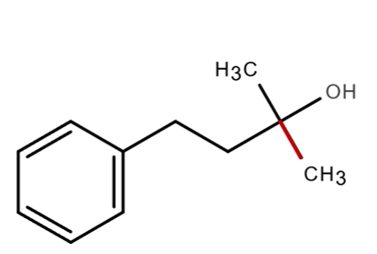 |
| Molecule (CAS) | Phenethylalcohol (98-85-1) | 2-phenyl-2-propanol (617-94-7) | Dimethyl phenylpropanol (103-05-9) |
| Trade name | “Styrallyl alcohol” (Bedoukian) | – | “Carbinol Muguet” (Firmenich) |
| Scent | Gardenia-hyacinth | Floral, precursor | Lily, herbaceous |
| Starting material | Benzaldehyde | Acetophenone | Benzyl acetone |
| Grignard | MMC* | MMC* | MMC* |
| Conversion | > 99.9% | > 99.9% | > 99.9% |
| Yield | > 99.9% | 92% | 86% |
Safety Advantages of Continuous Grignard Processing
The general advantage of flow processing is a reduced volume of reactive material, which is inherently safer and yields more control over the reactive volume. These aspects are of major importance for Grignard processing, as excessive heat locally can cause runaway reactions. Additionally, the solids involved make extraction of heat extra complex. The application of these advanced processing technologies provides the extra safety needed to perform these processes comfortably on the industrial scale.
Industrial Applications
SpinPro reactors have always been used in various industrial processes for over a decade and for multiple applications. Typical applications involve (reactive) gas/liquid multiphase processes, where mass- and heat transfer are optimally used. Here, reaction times can sometimes be reduced by more than 90%. Other applications include, for example, precipitations, where the benefits discussed above are also used. There are of course many more application examples to be imagined, which generally involve relatively energetic processes that benefit from the small and highly controlled reactor volume.
Economic Impact
Flow reactors can often be implemented for substantially lower CAPEX and OPEX, due to their smaller footprint and greater inherent safety. Additionally, increases in efficiency are often obtained from the increased control over the smaller reactive environment compared to batch. These factors combined mean that return on investments are often obtained faster using flow than would be in a batch process. Finally, the smaller footprint is also helpful in permitting and compliance matters.
Conclusion
This work demonstrates that Grignard chemistry can be turned from a perceived safety liability into a robust and scalable manufacturing platform when implemented in continuous mode.
By combining CHEMIUM’s MgFlow® technology for Grignard reagent production with Flowid’s SpinPro reactor for downstream transformation, high conversions, excellent yields, and stable operation were achieved for fragrance intermediates derived from aryl carbonyl substrates.
The integrated continuous approach addresses the two main industrial hurdles of Grignard chemistry—strong exothermicity and solid formation—through precise temperature control, efficient dosing, efficient heat transfer, and reliable solids handling in a compact reactor footprint.
As a result, processes that are often avoided or heavily overengineered in batch become both safer and economically attractive, opening the way to broader industrial adoption of Grignard chemistry in fine chemicals, fragrances, and beyond.
Authors and References
W.J. Niels Klement a, L. De Backer b, A. Nagy b, P. Boulens b, K. van Eeten a
(a) FLOWID, Valeton 2A, 5301 LW Zaltbommel, The Netherlands
(b) CHEMIUM SRL, Monnet Centre, Avenue Jean Monnet, 1; B-1348 Louvain-la-Neuve; Belgium
1 Prativa B.S. Molecules 2010, 15 – https://pmc.ncbi.nlm.nih.gov/articles/PMC6257204/pdf/molecules-15-01825.pdf
2 For details, please visit https://www.chemium.com/grignard_reagents/