
Technology Zone
Level Control and Measurement
Level control and measurement tell you how much is in the tank, silo or vessel. This zone covers radar, ultrasonic, hydrostatic, capacitive and float instruments and the switches and controllers that protect the process.
All articles in this zone
Level Control and Measurement — page 3 of 25
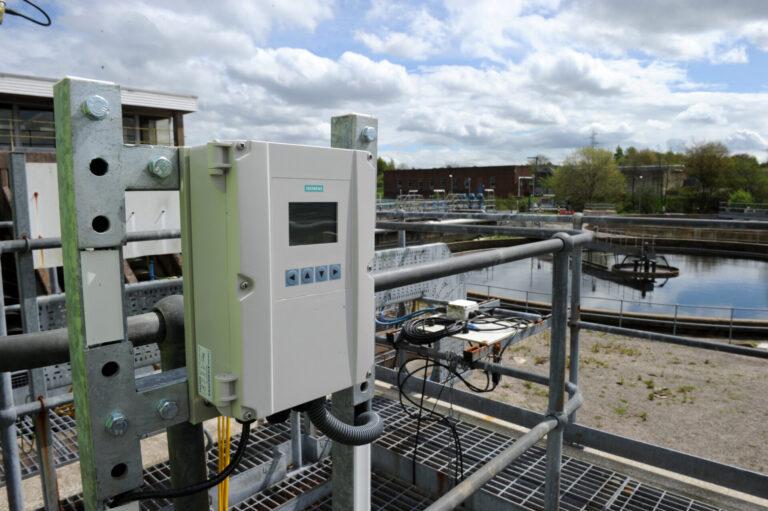
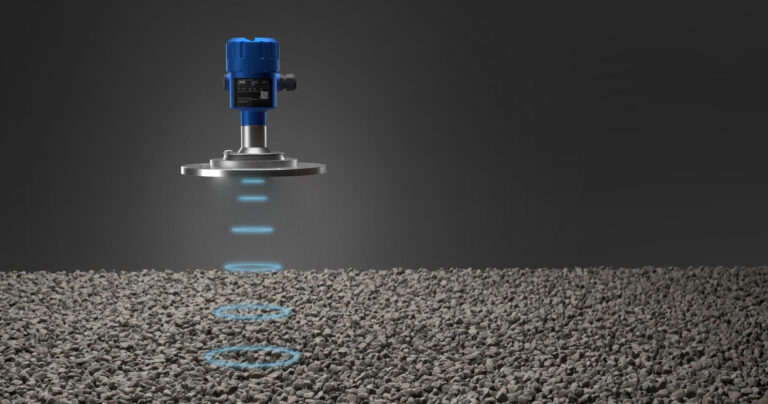

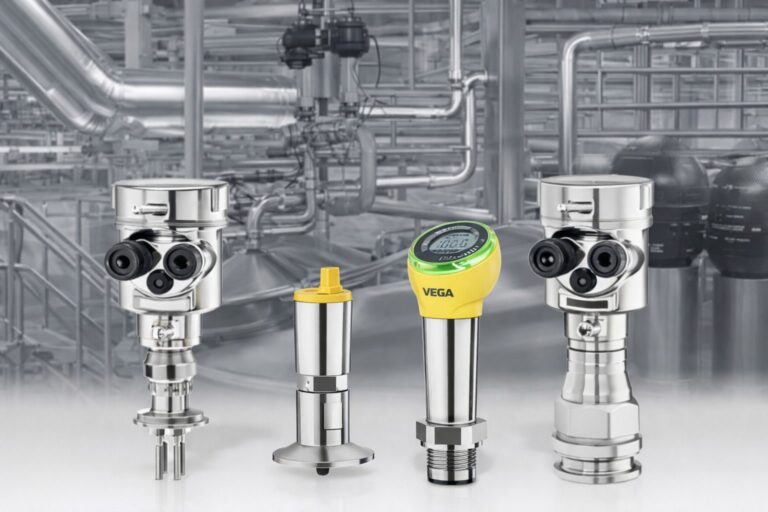
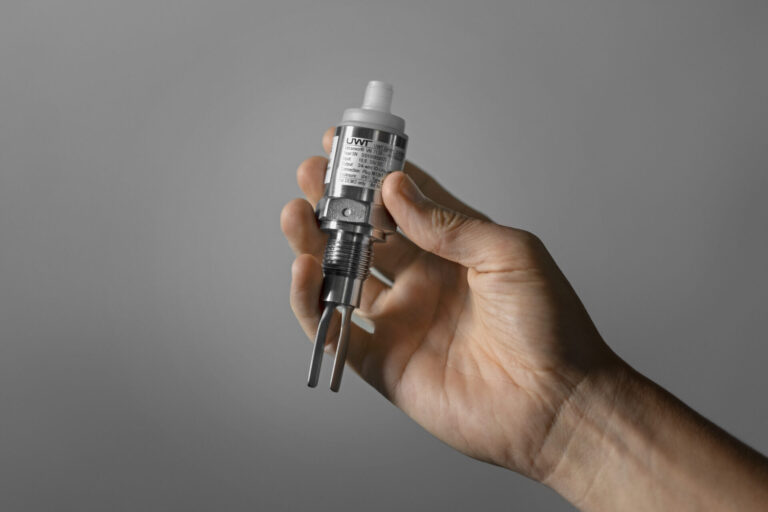


Promoted videos
Level Control and Measurement in action
What this zone covers
Level Control and Measurement: how it works, key numbers and troubleshooting
Fundamentals
Contact or non-contact
Every level measurement starts with whether the instrument may touch the product. Radar, ultrasonic and optical devices look down from the roof and never wet, which suits aggressive, sticky or hygienic duties. Hydrostatic, capacitive, float and guided radar devices reach into the liquid and are usually cheaper, more tolerant of foam and vapour, and easier to verify. The product, not the price list, decides which family is even allowed.
Radar and guided radar
A radar sends a microwave pulse and times the echo from the surface. Free-space radar needs a clear view and a surface that reflects, so a low dielectric liquid, heavy foam or an agitator can steal the echo. Guided wave radar sends the same pulse down a probe, which keeps the signal together in narrow vessels, in foam and at low dielectric, at the cost of something hanging in the product.
Hydrostatic and differential pressure
The pressure at the bottom of a tank is the height times the density times gravity, so a pressure transmitter is a level transmitter as long as the density is known. It is cheap, robust and unbothered by foam or vapour, and it is wrong the moment the density changes with temperature or with product. On a closed vessel the second leg has to compensate the head space, which is where most of the errors come from.
Points, not ranges
Much of what a plant calls level is really a switch: high high, low low, pump on, pump off. Vibrating forks, conductive probes, floats and capacitance switches do that job for a fraction of the price of a transmitter, and they fail in ways that are easier to test. A safety instrumented trip nearly always ends up as an independent switch rather than as a second output from the same transmitter.
From level to control
Level loops are integrating: the tank keeps filling while the controller thinks. That makes them prone to slow oscillation if they are tuned like a flow loop, and it is why averaging level control, which lets the level drift within a band to smooth the downstream flow, is often better than holding a setpoint exactly. Where the vessel protects equipment, the trip belongs on its own instrument, not on the control loop.
Key parameters
| Parameter | Typical range | Rule of thumb |
|---|---|---|
| Radar dielectric constant | Free-space radar from 1.8, guided radar from 1.4 | Hydrocarbons and solvents sit low; check the value before choosing free-space |
| Accuracy | Radar 2 to 3 mm, hydrostatic 0.1 to 0.5 % of span, ultrasonic 3 to 6 mm | On a wide tank a millimetre of level is a lot of litres; quote the volume error |
| Blocking distance | 100 to 500 mm below the antenna | Mount high enough that the maximum level never enters the dead zone |
| Nozzle length and diameter | Nozzle no longer than its diameter for free-space radar | A long narrow nozzle rings and puts a false echo right at the top of the range |
| Density assumption, hydrostatic | 1 % density error is 1 % level error | Compensate with temperature, or use a second principle for custody figures |
| Foam tolerance | Guided radar and hydrostatic cope; free-space radar and ultrasonic often do not | Test on the real product; foam behaviour cannot be read from a datasheet |
| Switch differential | 20 to 100 mm between on and off | Too small a gap and the pump starts every minute; count the starts per hour |
| Level loop tuning | Integrating process, low gain and long integral time | Allow the level to move inside a band; smoothing the outflow is worth more than a flat trend |
Troubleshooting
| Symptom | Likely causes | What to do |
|---|---|---|
| Level reading jumps to full or to empty | Lost echo on radar or ultrasonic, condensation on the antenna, or an agitator blade passing under the beam | Check the false echo map, move the instrument away from the agitator and the fill stream, and fit a purge or a drip shield |
| Reading drifts slowly over weeks | Product build-up on the probe, a shifted zero on a hydrostatic transmitter, or density change with season | Clean the probe, re-zero against a manual dip, and add temperature compensation if the density moves |
| Radar loses the surface when the tank is nearly empty | Echo from the tank floor is stronger than the echo from a thin low dielectric layer | Switch to guided radar, or accept a raised zero and put the low low trip on a separate switch |
| Foam gives a level that is too high | The instrument is reading the top of the foam rather than the liquid | Use guided radar or hydrostatic, or fit a stilling well so the measurement sits in clear liquid |
| Differential pressure level wrong on a closed vessel | Wet leg dried out, condensate in the dry leg, or the head space pressure changed | Refill or drain the impulse line, fit a sealed capillary system, and verify at two known levels |
| Pump cycles far too often | Switch differential too small, or level control tuned tight on an integrating process | Widen the differential, or move to averaging level control so the outflow is smooth |
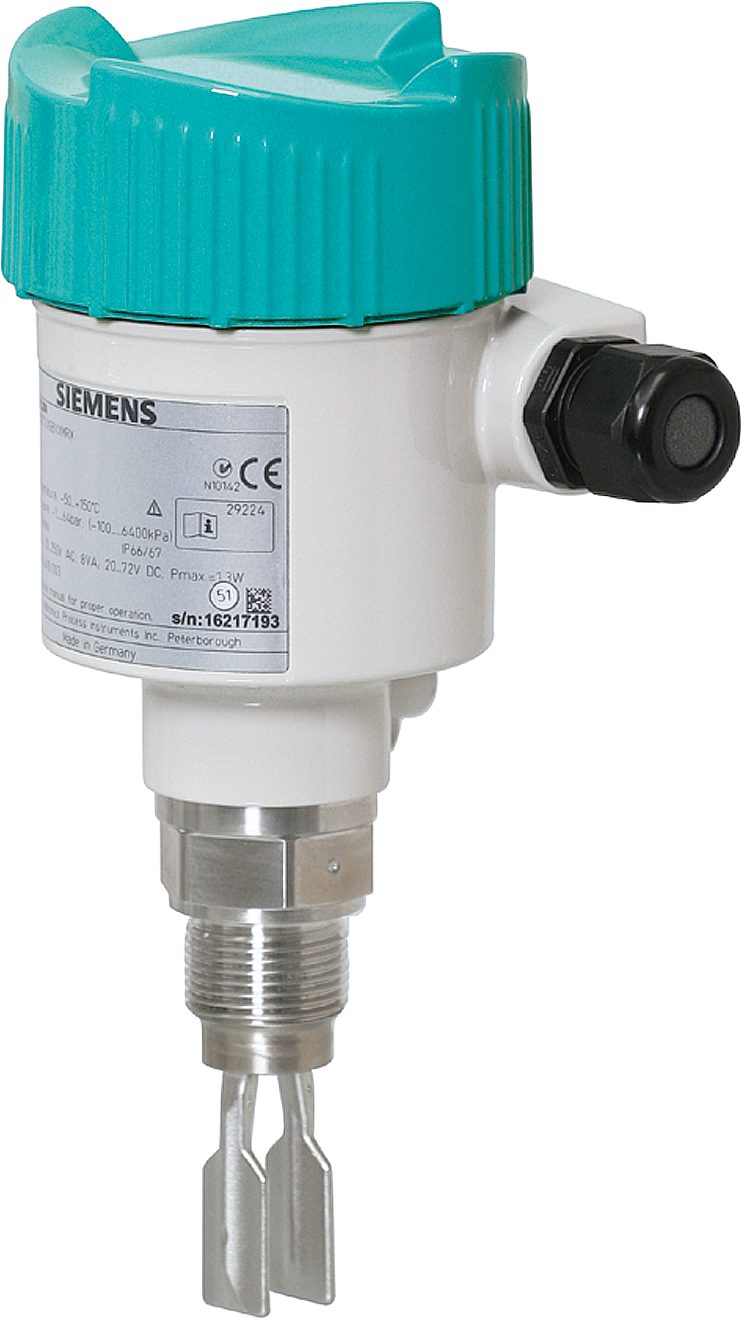
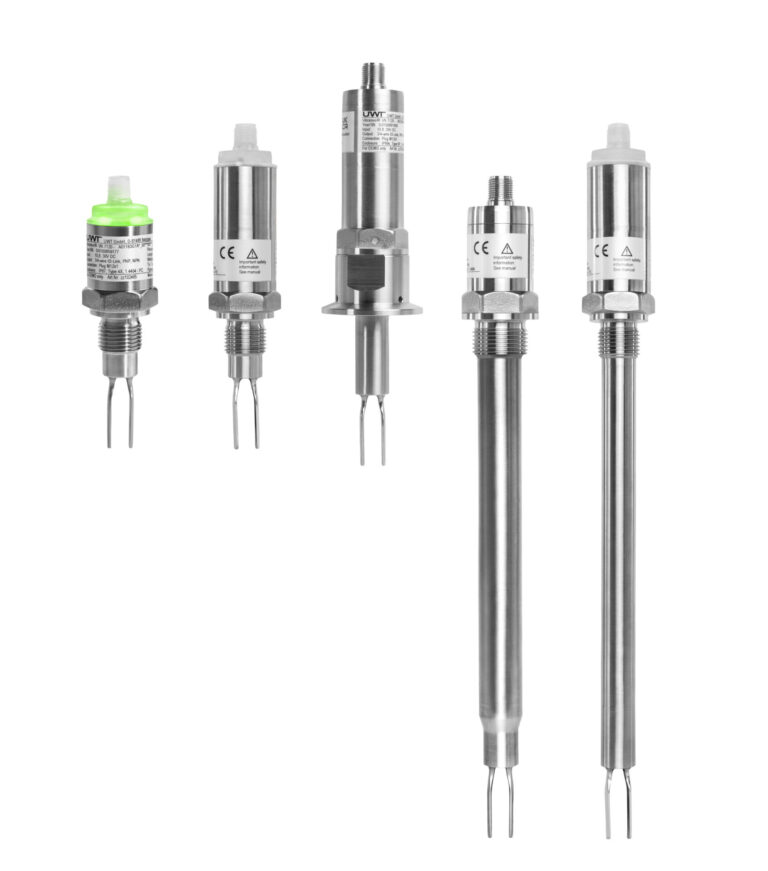
| Vibrating fork switch stays wet | Product bridging, sticky residue on the tines, or a mounting angle that drains towards the fork | Angle the fork so it drains, choose a coated or extended version, and add the switch to the cleaning route |
Go deeper: news and case studies · frequently asked questions
Equipment Guide
Level Control and Measurement in the Equipment Guide
9 equipment types
Recommended manufacturers
 Anderson-Negele
 is a global company specializing in the development and production of sensors and measuring equipment for hygienic applications. As your reliable and flexible partner, we aim to always provide you with the best solution for your process.
Anderson-Negele
Anderson-Negele is a global company specializing in the development and production of sensors and measuring equipment for hygienic applications. As your reliable and flexible partner, we aim to always provide you with the best solution for your process.
 Titan Enterprises Ltd
Titan Enterprises design & manufacture high quality, high performance, precision liquid flowmeters. Titan’s ultrasonic, oval gear & turbine flow meters, including NSF-approved devices, meet liquid flow control demands across industry sectors. The parameters & technology of Titan’s flowmeters fulfil application specifications of a broad scope of industrial processes, batching, laboratory & hazardous environments.
Titan Enterprises Ltd
Titan Enterprises design & manufacture high quality, high performance, precision liquid flowmeters. Titan’s ultrasonic, oval gear & turbine flow meters, including NSF-approved devices, meet liquid flow control demands across industry sectors. The parameters & technology of Titan’s flowmeters fulfil application specifications of a broad scope of industrial processes, batching, laboratory & hazardous environments.
 ABB Measurement and Analytics
To operate any process efficiently, it is essential to actuate, measure, record and control. ABB is your best partner when selecting measurement solutions that deliver maximum return on your investment.
ABB Measurement and Analytics
To operate any process efficiently, it is essential to actuate, measure, record and control. ABB is your best partner when selecting measurement solutions that deliver maximum return on your investment.
 Siemens Industry, Inc.
Siemens Process Instrumentation offers innovative measurement solutions to increase plant efficiency and enhance product quality. Siemens extensive portfolio of process instruments for flow, level, pressure and temperature measurement, provides critical data that enables you to optimize your process, reduce energy consumption and ensure safety.
Siemens Industry, Inc.
Siemens Process Instrumentation offers innovative measurement solutions to increase plant efficiency and enhance product quality. Siemens extensive portfolio of process instruments for flow, level, pressure and temperature measurement, provides critical data that enables you to optimize your process, reduce energy consumption and ensure safety.
 MadisonSensor
 is a leader in the design, engineering, and U.S. manufacturing of engineered fluid sensing solutions for a wide range of real-world applications. Our products range from liquid level and flow sensors and switches to technologically complex assemblies.
MadisonSensor
MadisonSensor is a leader in the design, engineering, and U.S. manufacturing of engineered fluid sensing solutions for a wide range of real-world applications. Our products range from liquid level and flow sensors and switches to technologically complex assemblies.
 Fluid Components International LLC
FCI designs and manufactures thermal mass flow meters, flow switches and level switches for industrial process measurement applications utilizing patented thermal dispersion flow measurement technologies.
Fluid Components International LLC
FCI designs and manufactures thermal mass flow meters, flow switches and level switches for industrial process measurement applications utilizing patented thermal dispersion flow measurement technologies.
 GF
GF is the leading flow solutions provider worldwide, enabling the safe and sustainable transport of fluids. The company specializes in plastic piping systems and system solutions plus services in all project phases.
GF
GF is the leading flow solutions provider worldwide, enabling the safe and sustainable transport of fluids. The company specializes in plastic piping systems and system solutions plus services in all project phases.
 VEGA Grieshaber KG
The VEGA Grieshaber KG product portfolio extends from sensors for measurement of level, point level and pressure to equipment and software for integration into process control systems.
VEGA Grieshaber KG
The VEGA Grieshaber KG product portfolio extends from sensors for measurement of level, point level and pressure to equipment and software for integration into process control systems.
Ask the Expert
Ask a level control and measurement expert — free
Engineers and product specialists who answer technical questions from readers. The answer comes back to you by e-mail; when we publish it, other readers benefit too.
 Joshua Brown
Industrial Tomography Systems (ITS/ITOMS)
Joshua Brown
Industrial Tomography Systems (ITS/ITOMS)
Josh is a Technical Engineer and is an integral member of Industrial Tomography Systems’ talented engineering team. Josh is responsible for creating…
Ask a question Dave Zawilinski
MadisonSensor
Dave Zawilinski
MadisonSensor
As Engineering Director at MadisonCompany, Dave Zawilinski brings 45 years of expertise in New Product Introduction and Lean manufacturing. He specializes in…
Ask a question Natalie Waldecker
VEGA Grieshaber KG
Natalie Waldecker
VEGA Grieshaber KG
Natalie Waldecker, Portfolio Manager Food and Pharma, knows the challenges of the demanding industries inside out. With her broad application knowledge, she…
Ask a question Ryan Fitzgerald
Anderson-Negele
Ryan Fitzgerald
Anderson-Negele
Ryan Fitzgerald, Product Manager at Anderson-Negele, is an expert for the process management sensor portfolio which includes electromagnetic flow meters, Coriolis flow…
Ask a questionMarket & Technology Focus
Level Control and Measurement, in depth in your inbox
Every Thursday edition takes one market or technology in depth. These are the editions on this zone — read them online or get the next one by e-mail.
Subscribe to our E-newsletters
Join 36,000+ engineers, plant managers and technical buyers who follow powder and bulk solids technology with us. Free, twice a week.

Questions and answers
Frequently asked about level control and measurement
Radar or hydrostatic for a storage tank?
Radar measures height directly and does not care what the density does, which makes it the safer choice on products that change with temperature or grade. Hydrostatic is cheaper, unbothered by foam and vapour, and easy to verify against a dip, but it reads pressure and converts with an assumed density. On a mixed-product tank farm that assumption is usually the largest error in the system.
Why does my radar lose the echo on a low dielectric liquid?
Microwaves reflect on the change in dielectric constant. Hydrocarbons, solvents and liquefied gases sit near the low end, so a large part of the pulse travels straight through and bounces off the tank floor instead. Guided wave radar keeps the pulse concentrated along the probe and copes down to about 1.4; free-space radar wants roughly 1.8 or more.
How do I measure level through foam?
Avoid looking at the foam. Guided wave radar reads through most foam layers, hydrostatic ignores them altogether, and a stilling well or bypass chamber gives any instrument a column of clear liquid to work in. Free-space radar and ultrasonic are the two that most often read the top of the foam and report a tank that is fuller than it is.
Do I need a separate instrument for the high level trip?
Almost always, yes. A trip that shares an instrument with the control loop shares its failure modes: the same coating, the same lost echo, the same drifted zero. An independent switch on a different principle is cheap, testable and is what a safety assessment will expect to find.
What is averaging level control?
It is deliberately letting the level move within a band rather than holding a setpoint. The vessel then absorbs the variation instead of passing it downstream, and the outflow stays steady, which is exactly what a distillation column or a filter wants to see. It needs a low controller gain and a long integral time, and it usually looks alarming to anyone who expects a flat trend.
Where should the instrument be mounted on the tank roof?
Away from the fill stream, away from the agitator, away from the wall and outside any internal structure. Free-space radar in particular wants a nozzle no longer than its diameter, and a clear cone down to the lowest level. Most false echoes are mounting decisions made on site rather than faults in the instrument.
How do I keep a probe from fouling?
Choose the material and the surface for the product, angle anything horizontal so it drains, and put the probe on the cleaning route rather than leaving it to a shutdown. Where the product is genuinely sticky, a non-contact principle or a bypass chamber that can be cleaned in place is worth the extra cost, because a coated probe drifts long before it fails outright.
What is the difference between this Technology Zone and the Equipment Guide?
The zone is the editorial side: news, case studies, videos, newsletter editions and field experts. The Equipment Guide is the directory side: equipment types and the manufacturers that build them. This page links to its Equipment Guide category and back.
How do I find a manufacturer of level control and measurement equipment?
Open the Equipment Guide category for this zone, pick an equipment type and open a manufacturer profile. Partner profiles carry direct contact details; other listings link to the company website.
Can I ask a technical question before I buy?
Yes. Ask the Expert puts your question to a field expert in this zone. The answer comes back to you by e-mail; when we publish it, other readers benefit too.