


Technology Zone
Pumps and Pumping Systems
Pumps and pumping systems move liquids through every stage of the process. This zone covers centrifugal, positive displacement, diaphragm, peristaltic and dosing pumps and the drives, seals and controls around them.
All articles in this zone
Pumps and Pumping Systems — page 63 of 76


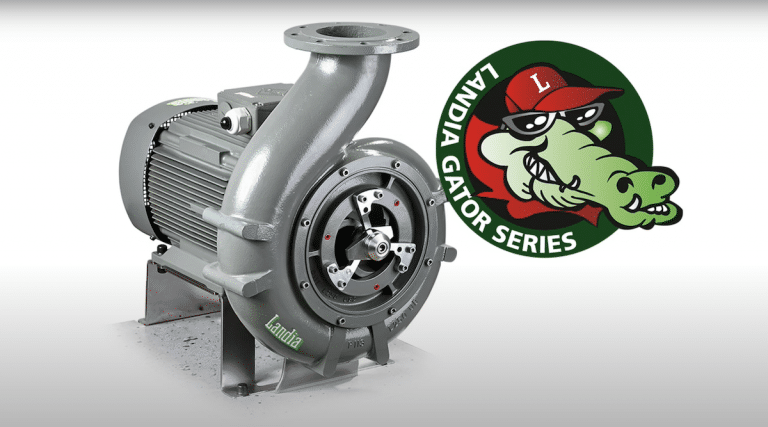



Promoted videos
Pumps and Pumping Systems in action
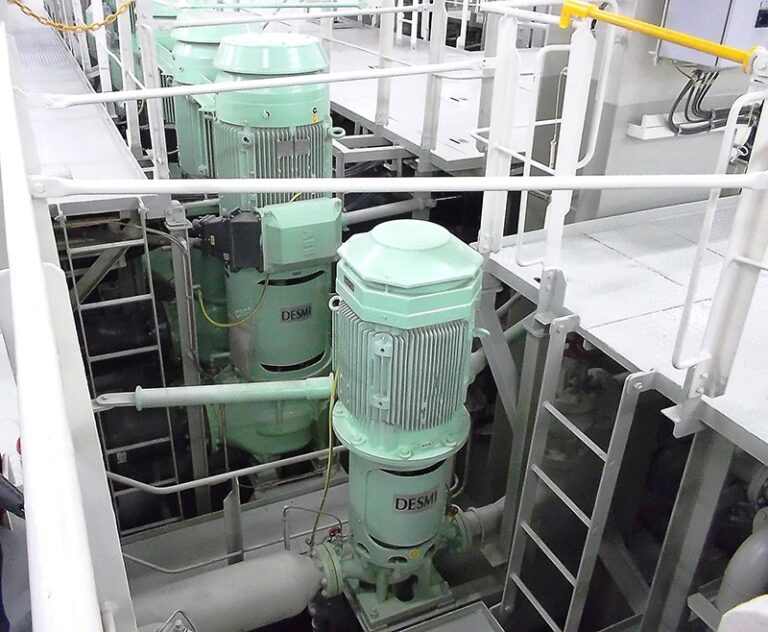
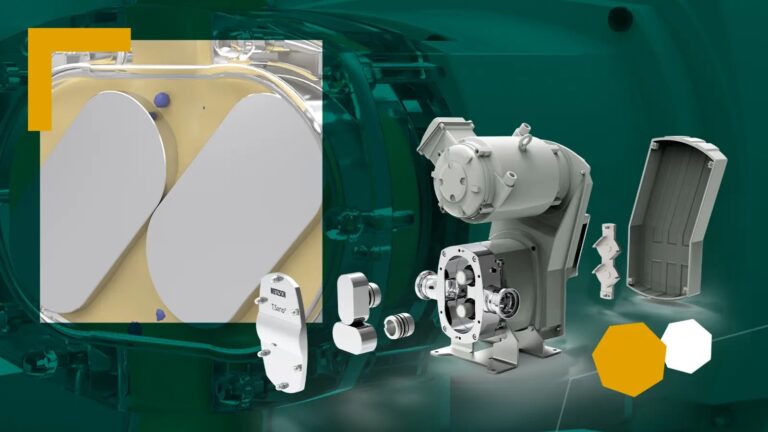

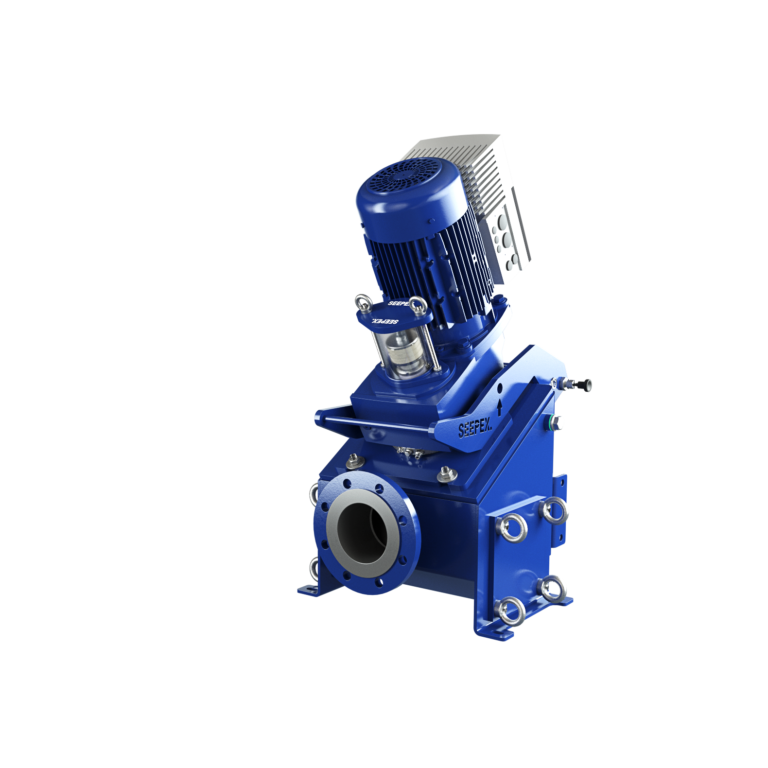
What this zone covers
Pumps and Pumping Systems: how it works, key numbers and troubleshooting
Fundamentals
Centrifugal pumps
An impeller adds velocity to the liquid and the volute turns that velocity into pressure. Flow and head are linked by the pump curve, so the duty point is wherever that curve crosses the resistance of the system. The affinity laws then say what happens at another speed: flow moves with speed, head with the square, absorbed power with the cube. That last one is why slowing a pump down saves far more energy than throttling it.
Positive displacement pumps
A gear, lobe, screw, piston, diaphragm or hose pump traps a fixed volume and pushes it along, so flow stays roughly constant whatever the pressure. That makes them the answer for viscous liquids, for dosing, and for anything that must keep moving against a rising back pressure. The trade is that they will happily build pressure until something bursts, so a relief valve is not optional.
NPSH and cavitation
A pump can only pull liquid in if the pressure at the suction eye stays above the vapour pressure. Available NPSH comes from the tank level, the atmospheric or blanket pressure and the friction in the suction line; required NPSH comes from the pump. When available drops below required, vapour bubbles form and collapse on the impeller, and the noise, the vibration and the pitting follow within weeks.
Sealing the shaft
Where the shaft leaves the casing you either seal it or avoid the problem. Gland packing is cheap and tolerant but drips by design; a mechanical seal runs two lapped faces against each other and needs a clean, cool film between them, flushed or quenched if the product is dirty or hot. Magnetic drive and canned motor pumps have no shaft seal at all, which is why they are standard for solvents, acids and anything that must not escape.
Driving and controlling the pump
The motor, the drive and the control strategy decide most of the running cost. A control valve wastes the head it destroys; a variable speed drive moves the pump curve instead and cuts absorbed power by the cube of the speed change. Below roughly half speed a centrifugal pump loses head faster than it loses friction, so a minimum speed and a minimum flow bypass belong in the design.
Key parameters
| Parameter | Typical range | Rule of thumb |
|---|---|---|
| Duty point against BEP | 70 to 120 % of best efficiency flow | Outside that window radial loads rise and bearings and seals pay for it |
| NPSH margin | NPSH available 0.5 to 1 m above NPSH required, more for hot or light liquids | Take the margin at the highest flow, not at the duty point on paper |
| Suction line velocity | 0.6 to 1.5 m/s | One size larger on the suction than on the discharge is normal, not a mistake |
| Discharge line velocity | 1.5 to 3 m/s | Above 3 m/s friction and erosion climb faster than the pipe saving |
| Viscosity, centrifugal | Practical up to 200 to 300 cP | Beyond that head and efficiency fall away and a positive displacement pump wins |
| Minimum continuous flow | 10 to 30 % of BEP | Fit a bypass or a minimum flow valve; a pump at shut-off boils itself dry |
| Efficiency | Centrifugal 60 to 85 %, positive displacement 70 to 90 % | Efficiency at the duty point matters, not the number on the datasheet |
| Speed turndown on a drive | Down to 50 to 60 % of rated speed | Check the head curve still clears the static head at the lowest speed |
Troubleshooting
| Symptom | Likely causes | What to do |
|---|---|---|
| Pump runs but delivers nothing | Lost prime, air pocket in the suction line, closed valve, or wrong rotation after a motor rewire | Vent the casing, check the rotation arrow, walk the suction line for high points and confirm the tank valve is open |
| Noise like gravel in the casing | Cavitation: suction lift too high, strainer blocked, liquid too hot, or flow far above the design point | Raise the level or the suction pressure, clean the strainer, shorten and widen the suction line, and trim the flow back towards BEP |
| Mechanical seal fails within weeks | Dry running, no flush on a dirty product, misalignment, or a duty point far off BEP | Check the seal support plan, restore the flush, laser align the coupling and move the duty point back into the window |
| Vibration rises over a few months | Impeller wear or fouling, worn wear rings, bearing damage, or a pipe strain that grew after a modification | Trend the vibration, open and inspect the impeller and wear rings, and release the pipe flanges to check for strain |
| Bearings keep failing on the same pump | Over-greasing, water in the oil, shaft misalignment, or running off BEP | Set a lubrication schedule, fit a proper breather, re-align cold and hot, and correct the duty point |
| Motor trips on overload | Liquid denser or more viscous than designed, speed too high, or a blocked discharge that moved the pump along its curve | Check the actual density and viscosity, measure the current against the curve, and confirm the discharge is genuinely open |
| Flow slowly drops over a year | Wear ring clearance opening up, impeller erosion, or scaling in the pipework | Measure the head against the original curve, renew the wear rings, and clean or replace the line before blaming the pump |
Go deeper: news and case studies · frequently asked questions
Equipment Guide
Pumps and Pumping Systems in the Equipment Guide
16 equipment types
Recommended manufacturers
 Landia a/s
Landia is a worldwide supplier of Chopper Pumps and Mixer Solutions with its main businesses being wastewater anaerobic digestion/biogas agriculture and recycling of waste products.
Landia a/s
Landia is a worldwide supplier of Chopper Pumps and Mixer Solutions with its main businesses being wastewater anaerobic digestion/biogas agriculture and recycling of waste products.
 NETZSCH Pumpen & Systeme GmbH
For more than 60 years, NETZSCH Pumps & Systems has served markets worldwide with Pumps & Pumping systems and accessories, providing customized, sophisticated solutions for applications in every type of industry.
NETZSCH Pumpen & Systeme GmbH
For more than 60 years, NETZSCH Pumps & Systems has served markets worldwide with Pumps & Pumping systems and accessories, providing customized, sophisticated solutions for applications in every type of industry.
 Cole-Parmer
, an Antylia Scientific company is a global manufacturer of lab equipment and supplies for research and process.
Cole-Parmer
Cole-Parmer, an Antylia Scientific company is a global manufacturer of lab equipment and supplies for research and process.

 Industrial Flow Solutions
™ specializes in the design, manufacturing, sales, & service of wastewater pumps & controls for municipal, industrial, commercial, and residential applications.
Industrial Flow Solutions
Industrial Flow Solutions™ specializes in the design, manufacturing, sales, & service of wastewater pumps & controls for municipal, industrial, commercial, and residential applications.
 CP Pumpen AG
CP Pumps are leading manufacturer of premium quality centrifugal chemical process pumps and provider of services dedicated to helping our customers increase energy efficiency and achieve sustainable environmental improvements in their fluid handling systems.
CP Pumpen AG
CP Pumps are leading manufacturer of premium quality centrifugal chemical process pumps and provider of services dedicated to helping our customers increase energy efficiency and achieve sustainable environmental improvements in their fluid handling systems.
 HERMETIC-Pumpen GmbH
 is a leading developer and manufacturer of hermetically sealed pumps and pumping technologies. The specialist for canned motor pumps has earned a worldwide reputation for its safe and long-lasting pumps, which can be used for the most extreme applications and conveying hazardous media.
HERMETIC-Pumpen GmbH
HERMETIC-Pumpen GmbH is a leading developer and manufacturer of hermetically sealed pumps and pumping technologies. The specialist for canned motor pumps has earned a worldwide reputation for its safe and long-lasting pumps, which can be used for the most extreme applications and conveying hazardous media.
 Emile Egger & Cie SA
 is a medium-sized, independent and owner-operated Swiss industrial enterprise with a concentration on the development and manufacture of pumps and Iris® diaphragm control valves.
Emile Egger & Cie SA
Emile Egger & Cie SA is a medium-sized, independent and owner-operated Swiss industrial enterprise with a concentration on the development and manufacture of pumps and Iris® diaphragm control valves.
Ask the Expert
Ask a pumps and pumping systems expert — free
Engineers and product specialists who answer technical questions from readers. The answer comes back to you by e-mail; when we publish it, other readers benefit too.
 Lee Sandry
Watson-Marlow Fluid Technology Solutions
Lee Sandry
Watson-Marlow Fluid Technology Solutions
Hello, my name is Lee Sandry and I am a Sector Training Manager at Watson-Marlow Fluid Technology Solutions. My role primarily involves…
Ask a question Dominik Hegen
HERMETIC-Pumpen GmbH
Dominik Hegen
HERMETIC-Pumpen GmbH
A pump is more than just rotary equipment. It is the promise to solve a pumping task safely and reliably. In his…
Ask a question Francisco Hernandez
HRS Heat Exchangers
Francisco Hernandez
HRS Heat Exchangers
Francisco graduated as an industrial technical engineer at the Universidad Politécnica de Cartagena (Murcia, Spain) in 1993, and joined HRS in 1998.…
Ask a question Martin Hangaard Andersen
Landia a/s
Martin Hangaard Andersen
Landia a/s
Martin Hangaard Andersen, Technical Supervisor with Landia a/s has 20 years of experience with mixing technology, pumps and pumping systems. Martin holds…
Ask a questionMarket & Technology Focus
Pumps and Pumping Systems, in depth in your inbox
Every Thursday edition takes one market or technology in depth. These are the editions on this zone — read them online or get the next one by e-mail.
Subscribe to our E-newsletters
Questions and answers
Frequently asked about pumps and pumping systems
Centrifugal or positive displacement?
Centrifugal pumps suit thin liquids, high flows and systems where the flow may vary with pressure; they are cheaper, simpler and easier to control. Positive displacement pumps suit viscous liquids, low flows, dosing and any duty where the flow must stay constant while the back pressure rises. A rough dividing line is 200 to 300 cP viscosity, or the moment the required accuracy becomes a percentage rather than an order of magnitude.
Why does my pump cavitate?
Because the pressure at the suction eye has fallen below the vapour pressure of the liquid. The usual culprits are a blocked strainer, a suction line that is too long or too narrow, a level that has dropped, or a liquid running hotter than the design. Cavitation is a system problem far more often than a pump problem, so measure the available NPSH before changing the pump.
Should I throttle a valve or slow the pump down?
Slow it down whenever the duty allows. Throttling moves the pump up its curve and destroys the head across the valve, so you still pay for it. A variable speed drive moves the whole curve and absorbed power falls with the cube of the speed, which typically pays back within a year or two on a pump that runs continuously at part load. Keep a minimum speed so the pump still clears the static head.
Mechanical seal or seal-less?
A mechanical seal is cheaper and serviceable, but it needs a clean film between the faces and it will always leak a little. Magnetic drive and canned motor pumps remove the leak path altogether, which is why they are standard for solvents, acids and hazardous duties. The price is a lower tolerance for dry running and for ferrous particles, and a higher purchase cost.
How do I pump a shear-sensitive product?
Keep the speed and the shear rate down and avoid tight clearances. Lobe, circumferential piston, progressive cavity and hose pumps handle emulsions, crystals, fruit pieces and live cultures far better than a high speed centrifugal. If a centrifugal is unavoidable, oversize the impeller and run it slowly rather than trimming a small one and running it fast.
What does running off the best efficiency point actually cost?
More than the efficiency figure suggests. Away from BEP the flow around the impeller becomes uneven, the radial load on the shaft rises, and that load lands on the bearings and the seal. Pumps run hard to the left of BEP typically show seal and bearing failures within months, long before anyone notices the extra kilowatts.
How long can a pump run dry?
A centrifugal with a mechanical seal often has seconds rather than minutes, because the seal faces rely on the liquid for cooling. Gland packing and hose pumps tolerate more; magnetic drive pumps can lose the bearing bushes almost at once. If dry running is a real risk, fit level or power monitoring that stops the pump, rather than relying on the operator.
What is the difference between this Technology Zone and the Equipment Guide?
The zone is the editorial side: news, case studies, videos, newsletter editions and field experts. The Equipment Guide is the directory side: equipment types and the manufacturers that build them. This page links to its Equipment Guide category and back.
How do I find a manufacturer of pumps and pumping systems equipment?
Open the Equipment Guide category for this zone, pick an equipment type and open a manufacturer profile. Partner profiles carry direct contact details; other listings link to the company website.
Can I ask a technical question before I buy?
Yes. Ask the Expert puts your question to a field expert in this zone. The answer comes back to you by e-mail; when we publish it, other readers benefit too.