


Technology Zone
Temperature Control and Measurement
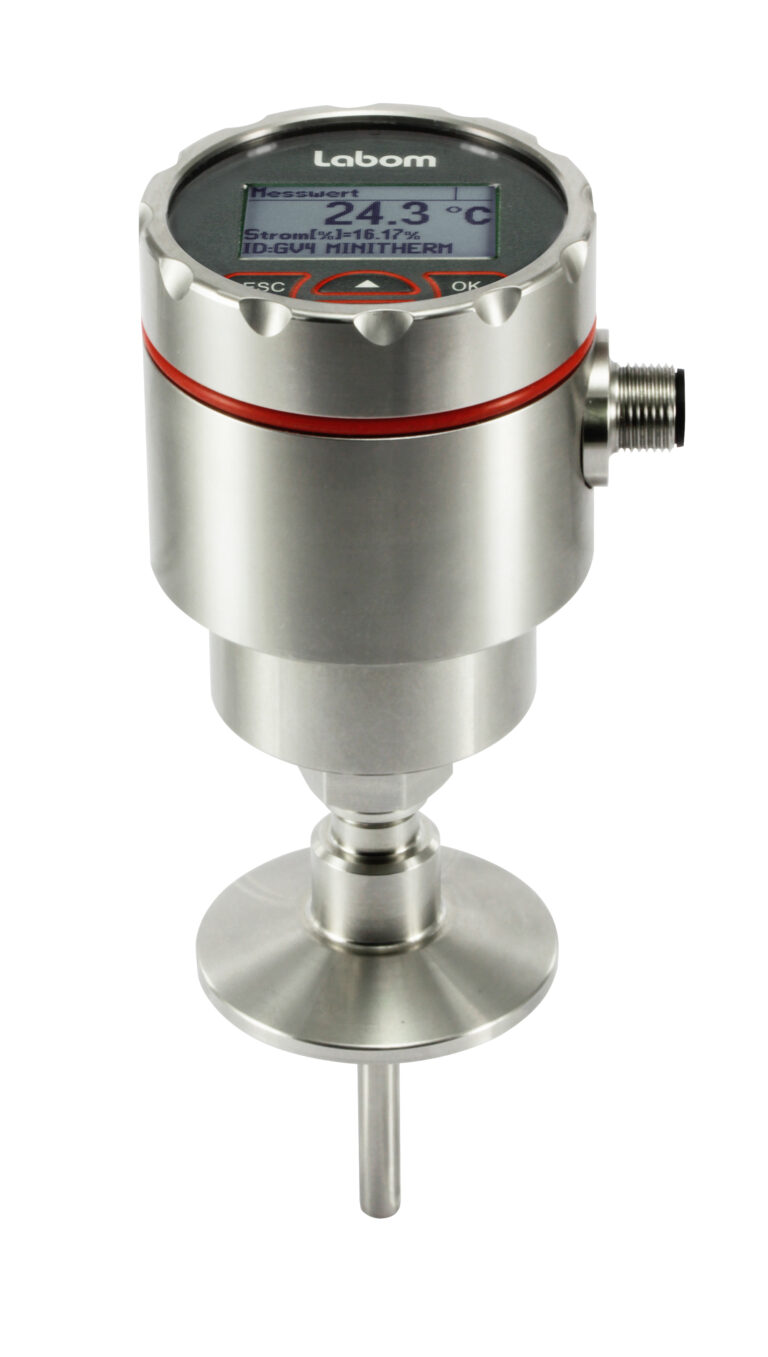
Temperature control and measurement keep reactions, storage and transfer within specification. This zone covers sensors, transmitters, thermowells, controllers and heat-tracing systems.
All articles in this zone
Temperature Control and Measurement — page 2 of 7


Promoted videos
Temperature Control and Measurement in action
What this zone covers
Temperature Control and Measurement: how it works, key numbers and troubleshooting
Fundamentals
Thermocouple or resistance sensor
A thermocouple makes a small voltage where two dissimilar metals meet, which gives a wide range, a fast response and a low price, at the cost of accuracy and of drift as the junction ages. A resistance thermometer, in practice a Pt100 or Pt1000, changes resistance with temperature in a way that is stable, repeatable and interchangeable. Below about 600 degrees Celsius the resistance sensor is nearly always the better instrument; above it the thermocouple wins by default.
The thermowell decides the answer
The sensor measures the tip of the well, not the process. If the well is too short, sits in a dead leg, or has an air gap between the tip and the sensor, the reading is a slow average of the pipe and the room. Immersion of at least ten times the well diameter, a tip in the flowing stream, and thermal paste or a spring-loaded sensor are what turn a good instrument into a correct reading.
Heat transfer, not just measurement
This zone is also about moving heat: shell and tube, plate and frame, and jacketed vessels on one side; electric trace heating, steam tracing and insulation on the other. Heat exchanger duty falls away as fouling builds, and the earliest signal is nearly always the temperature approach between the two streams rather than an outlet temperature on its own.
Control loops with long dead time
Temperature loops are slow and they carry dead time: the heat has to travel before the sensor sees it. A controller tuned for that dead time is sluggish; one tuned as if it were absent overshoots and cycles. Cascade control, where a fast jacket or steam loop sits inside a slow product loop, is the standard answer, and it is worth more than any amount of retuning of a single loop.
Calibration and traceability
A temperature reading that feeds a batch record, a pasteurisation step or a custody calculation has to be traceable. That means a calibrated reference, a documented interval, and a record of the as-found value, not just the as-left. Dry block calibrators handle most process work in place; sensors that matter get a bath and a certificate.
Key parameters
| Parameter | Typical range | Rule of thumb |
|---|---|---|
| Pt100 tolerance | Class AA 0.1 degrees at 0, Class A 0.15, Class B 0.3 | Interchangeability, not resolution, is what makes a sensor swappable |
| Thermocouple accuracy | Type K around 1.5 degrees or 0.4 % of reading | Drift grows with hours at temperature; plan replacement, not recalibration |
| Immersion depth | At least 10 well diameters into the flow | Short wells read the pipe wall, and the error grows with the difference to ambient |
| Response time, t90 | Bare sensor 1 to 5 s, in a thermowell 20 to 120 s | The well, not the sensor, sets how fast a temperature loop can be |
| Wiring | Three or four wire for Pt100 | Two wire adds the lead resistance straight into the reading |
| Heat exchanger approach | 3 to 10 degrees between the two streams | Trend the approach; it shows fouling long before the outlet temperature moves |
| Trace heating output | 10 to 30 W/m for frost protection, more for maintaining temperature | Size on the insulation and the worst ambient, not on the pipe alone |
| Cascade loop ratio | Inner loop at least five times faster than the outer | If the two loops are close in speed they fight each other |
Troubleshooting
| Symptom | Likely causes | What to do |
|---|---|---|
| Reading lags minutes behind reality | Air gap between sensor and thermowell tip, oversized well, or the sensor not reaching the bottom | Use a spring loaded sensor with thermal paste, check the insert length against the well, and choose a thinner tip |
| Temperature reads low on a hot line | Insufficient immersion, uninsulated well, or the well in a dead leg | Move the well into the flow at an elbow or at an angle, insulate the nozzle, and lengthen the immersion |
| Loop cycles slowly with a large swing | Dead time treated as lag in the tuning, or a single loop where a cascade is needed | Measure the dead time, retune on that basis, and put a fast jacket or steam loop inside the product loop |
| Thermocouple reading drifts over a season | Junction ageing, contamination, or an extension cable of the wrong alloy | Replace rather than recalibrate, and verify the extension cable and the polarity at every junction |
| Heat exchanger no longer reaches duty | Fouling, air in the shell, or a bypass leaking internally | Trend the approach temperature and the differential pressure together, vent the shell, and pressure-test for internal leakage |
| Trace heated line freezes anyway | Insulation wet or missing at supports and valves, controller sensing the wrong spot, or a broken circuit | Insulate the fittings, put the sensor at the coldest point of the circuit, and check continuity before the season |
| Two sensors in the same line disagree | Different immersion, one in a dead leg, or a stratified flow after a mixing point | Compare the immersion first, then move one downstream of a bend where the flow has mixed |
Go deeper: news and case studies · frequently asked questions
Equipment Guide
Temperature Control and Measurement in the Equipment Guide
6 equipment types
Recommended manufacturers
 Endress+Hauser AG
Endress+Hauser is a global leader in measurement instrumentation, services and solutions for industrial process engineering. We provide process solutions for flow, level, pressure, analytics, temperature, recording and digital communications, optimizing processes in terms of economic efficiency, safety & environmental impact.
Endress+Hauser AG
Endress+Hauser is a global leader in measurement instrumentation, services and solutions for industrial process engineering. We provide process solutions for flow, level, pressure, analytics, temperature, recording and digital communications, optimizing processes in terms of economic efficiency, safety & environmental impact.
 Anderson-Negele
 is a global company specializing in the development and production of sensors and measuring equipment for hygienic applications. As your reliable and flexible partner, we aim to always provide you with the best solution for your process.
Anderson-Negele
Anderson-Negele is a global company specializing in the development and production of sensors and measuring equipment for hygienic applications. As your reliable and flexible partner, we aim to always provide you with the best solution for your process.
 Siemens Industry, Inc.
Siemens Process Instrumentation offers innovative measurement solutions to increase plant efficiency and enhance product quality. Siemens extensive portfolio of process instruments for flow, level, pressure and temperature measurement, provides critical data that enables you to optimize your process, reduce energy consumption and ensure safety.
Siemens Industry, Inc.
Siemens Process Instrumentation offers innovative measurement solutions to increase plant efficiency and enhance product quality. Siemens extensive portfolio of process instruments for flow, level, pressure and temperature measurement, provides critical data that enables you to optimize your process, reduce energy consumption and ensure safety.
 GF
GF is the leading flow solutions provider worldwide, enabling the safe and sustainable transport of fluids. The company specializes in plastic piping systems and system solutions plus services in all project phases.
GF
GF is the leading flow solutions provider worldwide, enabling the safe and sustainable transport of fluids. The company specializes in plastic piping systems and system solutions plus services in all project phases.
Ask the Expert
Ask a temperature control and measurement expert — free
Engineers and product specialists who answer technical questions from readers. The answer comes back to you by e-mail; when we publish it, other readers benefit too.
 Ryan Fitzgerald
Anderson-Negele
Ryan Fitzgerald
Anderson-Negele
Ryan Fitzgerald, Product Manager at Anderson-Negele, is an expert for the process management sensor portfolio which includes electromagnetic flow meters, Coriolis flow…
Ask a question Dietmar Saecker
Endress+Hauser AG
Dietmar Saecker
Endress+Hauser AG
Dietmar Saecker is temperature measurement expert at Endress+Hauser in Nesselwang, Germany. His experience covers technical sales support, consulting for difficult temperature measurement…
Ask a question Erik Tiemensma
Bronkhorst High-Tech B.V.
Erik Tiemensma
Bronkhorst High-Tech B.V.
Erik Tiemensma, Sales Knowledge Manager, has over 20 years of experience in flow and pressure measurement and control for gas, liquid and…
Ask a question Francisco Hernandez
HRS Heat Exchangers
Francisco Hernandez
HRS Heat Exchangers
Francisco graduated as an industrial technical engineer at the Universidad Politécnica de Cartagena (Murcia, Spain) in 1993, and joined HRS in 1998.…
Ask a questionMarket & Technology Focus
Temperature Control and Measurement, in depth in your inbox
Every Thursday edition takes one market or technology in depth. These are the editions on this zone — read them online or get the next one by e-mail.
Subscribe to our E-newsletters
Questions and answers
Frequently asked about temperature control and measurement
Pt100 or thermocouple?
Below roughly 600 degrees Celsius, Pt100. It is stable, interchangeable and accurate enough that a replacement sensor needs no recalibration of the loop. A thermocouple earns its place above that, in very fast measurements, or where the sensor is consumable and the price matters more than the drift. Mixing both in one plant is normal; mixing them in one control scheme rarely is.
Does the thermowell really matter that much?
It is usually the largest error in the measurement. The sensor reads the inside of the well tip, so an air gap, a well that stops short of the flow, or one sitting in a dead leg turns a 0.1 degree instrument into a several degree reading that also lags by a minute. Immersion of ten well diameters, a tip in the moving stream and a spring-loaded sensor fix nearly all of it.
Why is my temperature loop so hard to tune?
Because it carries dead time as well as lag: the heat has to travel to the sensor before the controller learns anything. Tuning as if the delay were not there gives overshoot and slow cycling. Measure the dead time, tune on it, and where the process allows, use cascade control with a fast inner loop on the jacket or the steam valve.
How do I know a heat exchanger is fouling?
Watch the approach temperature between the two streams, not the outlet on its own. As the surface fouls the approach widens steadily while the outlet can still be held by opening the control valve further, so the outlet trend looks fine right up to the moment it does not. Plot the approach and the pressure drop together and the cleaning interval writes itself.
Two wire, three wire or four wire?
For a Pt100, three wire is the practical minimum: it compensates the lead resistance, which otherwise lands directly in the reading and grows with cable length. Four wire removes the last of it and is worth using for reference and laboratory measurements. Two wire is acceptable only for a short cable to a nearby transmitter.
How often should temperature instruments be calibrated?
That depends on what the reading is used for. A sensor that only trends a utility line can run for years; one that certifies a pasteurisation or a batch record needs a documented interval, an as-found value and a traceable reference. Resistance sensors drift slowly and predictably; thermocouples drift with hours at temperature, so those get replaced rather than adjusted.
Where do I put the sensor in a vessel?
In the moving product, away from the wall and away from the heating surface. A sensor near the jacket reads the jacket, which is why a batch can look on temperature while the bulk is several degrees behind. In a stirred vessel, near the impeller discharge is the honest place; in a static one, expect stratification and measure at more than one height.
What is the difference between this Technology Zone and the Equipment Guide?
The zone is the editorial side: news, case studies, videos, newsletter editions and field experts. The Equipment Guide is the directory side: equipment types and the manufacturers that build them. This page links to its Equipment Guide category and back.
How do I find a manufacturer of temperature control and measurement equipment?
Open the Equipment Guide category for this zone, pick an equipment type and open a manufacturer profile. Partner profiles carry direct contact details; other listings link to the company website.
Can I ask a technical question before I buy?
Yes. Ask the Expert puts your question to a field expert in this zone. The answer comes back to you by e-mail; when we publish it, other readers benefit too.