




Technology Zone
Process and Control Valves
Process control valves regulate flow, pressure and direction in liquid and gas lines. This zone covers control, ball, butterfly, diaphragm, solenoid and safety valves and their actuators and positioners.
All articles in this zone
Process and Control Valves — page 28 of 51

Promoted videos
Process and Control Valves in action
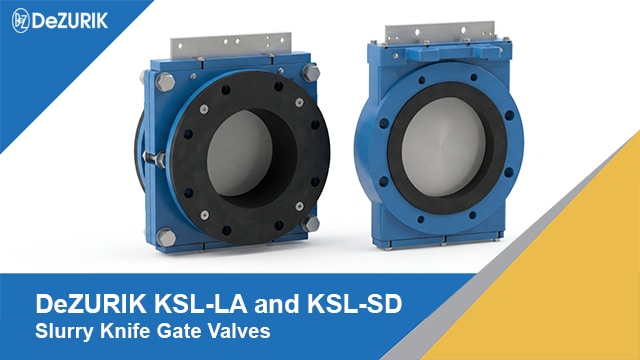
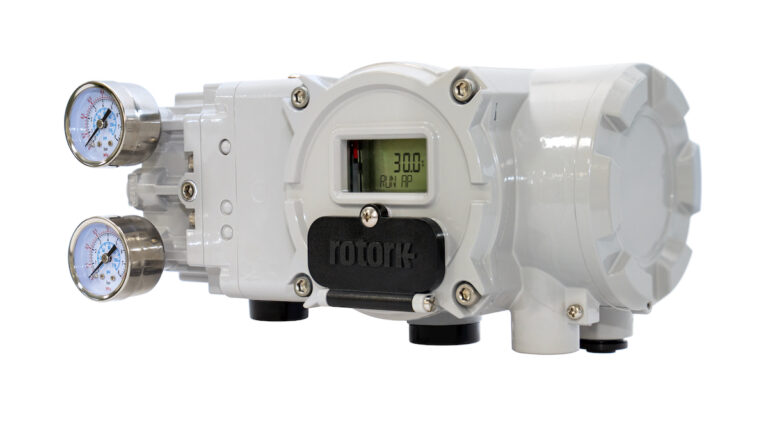
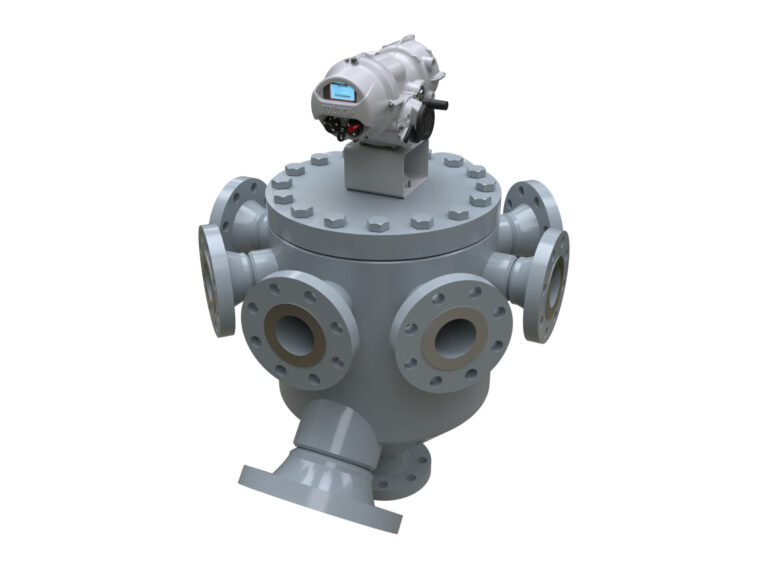

What this zone covers
Process and Control Valves: how it works, key numbers and troubleshooting
Fundamentals
What a control valve actually does
A control valve is a variable restriction. The positioner moves the plug, ball or disc until the flow through the opening matches what the controller asked for, and everything the valve removes from the line is pressure that the pump had to add. That is why valve sizing and pump sizing are the same conversation: a valve that only ever opens a tenth is not precise, it is oversized.
The valve families
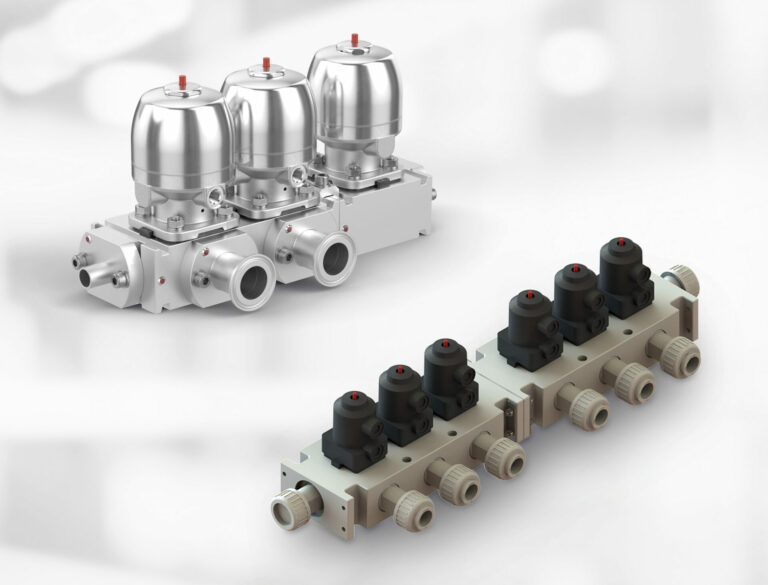
Globe valves modulate well and seal tightly, and they carry most of the demanding throttling duties. Ball and butterfly valves are cheap, compact and fast, and with a segmented ball or an eccentric disc they modulate acceptably. Diaphragm and pinch valves keep the mechanism out of the product, which is what hygienic and slurry lines need. Solenoid valves switch small lines directly, without an actuator.
Characteristic and rangeability
The inherent characteristic describes how flow rises with travel. Equal percentage gives small changes near the seat and large ones near open, which suits a system where the pressure drop across the valve falls as flow rises; linear suits a valve that keeps most of the drop. Rangeability is the ratio between the largest and smallest controllable flow, typically 20:1 to 50:1 for a globe valve and far less for a butterfly.
Actuators and positioners
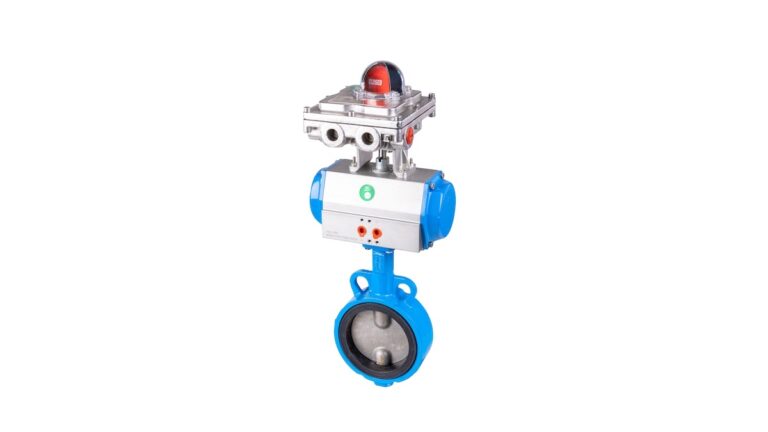
Spring and diaphragm actuators are slow, strong and fail predictably, which is why they still dominate. Piston actuators give more thrust in less space, electric actuators need no air, and each one needs a positioner to close the loop on travel rather than on signal. A smart positioner also reports travel, cycle counts and dead band, which is what turns a valve into something you can maintain before it fails.
Cavitation, flashing and noise
When the pressure inside the valve drops below the vapour pressure the liquid boils. If it recovers, the bubbles collapse against the trim and cut it away within months; if it does not, the flow flashes and erodes the body downstream. Multi-stage trim, a larger valve body with a reduced port, or splitting the drop across two valves are the usual answers, and they are cheaper than replacing trim twice a year.
Key parameters
| Parameter | Typical range | Rule of thumb |
|---|---|---|
| Working travel | 20 to 80 % of stroke at normal flow | A valve that sits below 10 % open is oversized and will not control |
| Valve pressure drop | 25 to 50 % of the total system drop at design flow | Too little drop across the valve and the loop loses authority |
| Rangeability | Globe 30:1 to 50:1, segmented ball 100:1, butterfly 15:1 | Compare against the real turndown of the process, not against the maximum |
| Seat leakage class | Class IV for metal seats, Class VI for soft seats | A control valve is not a shut-off valve; fit a separate isolation valve |
| Dead band of the loop | Under 1 % with a smart positioner, 5 % or more with worn packing | Measure it before retuning the controller; most hunting is mechanical |
| Stroking speed | 2 to 10 s for a 100 mm valve | The valve, not the meter, usually sets how fast the loop can respond |
| Actuator air supply | 4 to 7 bar, clean and dry to ISO 8573-1 class 3 | Wet or oily air is the most common cause of sticking positioners |
| Noise limit | Above 85 dBA the trim is being damaged, not just heard | Treat noise as a sizing symptom, not as something to lag away |
Troubleshooting
| Symptom | Likely causes | What to do |
|---|---|---|
| The loop hunts around setpoint | Valve oversized, packing too tight, dead band in the positioner, or a controller tuned for a different valve | Measure the travel against the signal first, free or repack the stem, then resize or retune |
| Valve will not close fully | Debris on the seat, actuator thrust too low for the differential, or a bench set that has drifted | Stroke the valve and check the seating force against the actual differential pressure, and clean or lap the seat |
| Trim is cut away after a few months | Cavitation, flashing, or a valve throttling far more drop than it was sized for | Recalculate the pressure recovery factor, fit anti-cavitation trim or split the drop over two stages |
| Stem leaks shortly after repacking | Wrong packing set, over-tightened gland, side load from a bent stem, or a scored stem surface | Renew the stem if it is scored, use the specified packing set and torque the gland to the figure, not to feel |
| Valve responds to large signals but not to small ones | Stiction from packing or from an actuator with no positioner | Fit or recalibrate a positioner, loosen the gland to the minimum that seals, and check the guide bushings |
| Whistling or rattling at part load | Cavitation, flashing, or high velocity through an undersized port | Check the outlet velocity and the cavitation index at the real duty, and consider a larger body with a reduced trim |
| Air consumption keeps rising | Leaking actuator diaphragm, a positioner constantly correcting, or a leak in the tubing | Isolate the valve and pressure-test the actuator; a positioner that never rests points at a mechanical problem downstream of it |
Go deeper: news and case studies · frequently asked questions
Equipment Guide
Process and Control Valves in the Equipment Guide
13 equipment types
Recommended manufacturers
 Bronkhorst High-Tech B.V.
Bronkhorst High-Tech offers an extensive product range of thermal, Coriolis and ultrasonic flow meters and controllers. We offer numerous styles of both standard and bespoke instruments for applications in laboratory, machinery and industry and we closely cooperate with OEM’s in the field of customer specific designs for gas, liquid or vapour control.
Bronkhorst High-Tech B.V.
Bronkhorst High-Tech offers an extensive product range of thermal, Coriolis and ultrasonic flow meters and controllers. We offer numerous styles of both standard and bespoke instruments for applications in laboratory, machinery and industry and we closely cooperate with OEM’s in the field of customer specific designs for gas, liquid or vapour control.
 GF
GF is the leading flow solutions provider worldwide, enabling the safe and sustainable transport of fluids. The company specializes in plastic piping systems and system solutions plus services in all project phases.
GF
GF is the leading flow solutions provider worldwide, enabling the safe and sustainable transport of fluids. The company specializes in plastic piping systems and system solutions plus services in all project phases.
 Habonim
 has over 75 years of experience, committing to engineering, manufacturing, and supplying superior products, while providing excellent personal service to our customers. We take pride in incorporating quality, innovation, reliability, and safety into our products.
Habonim
Habonim has over 75 years of experience, committing to engineering, manufacturing, and supplying superior products, while providing excellent personal service to our customers. We take pride in incorporating quality, innovation, reliability, and safety into our products.
 Siemens Industry, Inc.
Siemens Process Instrumentation offers innovative measurement solutions to increase plant efficiency and enhance product quality. Siemens extensive portfolio of process instruments for flow, level, pressure and temperature measurement, provides critical data that enables you to optimize your process, reduce energy consumption and ensure safety.
Siemens Industry, Inc.
Siemens Process Instrumentation offers innovative measurement solutions to increase plant efficiency and enhance product quality. Siemens extensive portfolio of process instruments for flow, level, pressure and temperature measurement, provides critical data that enables you to optimize your process, reduce energy consumption and ensure safety.
 Clarke Valve
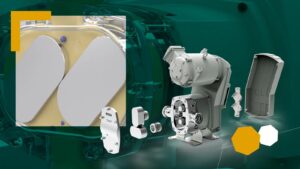
 is the exclusive manufacturer of the Dilating Disk™ Valve, a next generation control valve. This advanced technology quarter-turn valve is characterized by its three interlocking petals that control the flow of process fluid. This patented stem-seal technology reduces fugitive emissions by 98% and records a methane leakage rate of only 2 PPM under the API 641 and ISO 15848-1 standards.
Clarke Valve
Clarke Valve is the exclusive manufacturer of the Dilating Disk™ Valve, a next generation control valve. This advanced technology quarter-turn valve is characterized by its three interlocking petals that control the flow of process fluid. This patented stem-seal technology reduces fugitive emissions by 98% and records a methane leakage rate of only 2 PPM under the API 641 and ISO 15848-1 standards.
 Emile Egger & Cie SA
 is a medium-sized, independent and owner-operated Swiss industrial enterprise with a concentration on the development and manufacture of pumps and Iris® diaphragm control valves.
Emile Egger & Cie SA
Emile Egger & Cie SA is a medium-sized, independent and owner-operated Swiss industrial enterprise with a concentration on the development and manufacture of pumps and Iris® diaphragm control valves.
 Oliver Valves
 is a manufacturer of engineered-to-precision valves.
Oliver Valves
Oliver Valves is a manufacturer of engineered-to-precision valves.
 Cole-Parmer
, an Antylia Scientific company is a global manufacturer of lab equipment and supplies for research and process.
Cole-Parmer
Cole-Parmer, an Antylia Scientific company is a global manufacturer of lab equipment and supplies for research and process.
Ask the Expert
Ask a process and control valves expert — free
Engineers and product specialists who answer technical questions from readers. The answer comes back to you by e-mail; when we publish it, other readers benefit too.
 Eldad Ohayon
Habonim
Eldad Ohayon
Habonim
Eldad Ohayon is an experienced product management and business development professional with over 15 years of experience in industrial valves and fluid…
Ask a question Kyle Daniels
Clarke Valve
Kyle Daniels
Clarke Valve
Kyle Daniels, CEO, is an Aerospace Engineer and the inventor, Chief Engineer, and Head of Product Design of the Dilating Disk Valve™,…
Ask a question Casey Williamson
GF
Casey Williamson
GF
Casey Williamson is Head of Business Development Microelectronics Global Industries for Georg Fischer. For the last 25 years, he has provided support…
Ask a question Erik Tiemensma
Bronkhorst High-Tech B.V.
Erik Tiemensma
Bronkhorst High-Tech B.V.
Erik Tiemensma, Sales Knowledge Manager, has over 20 years of experience in flow and pressure measurement and control for gas, liquid and…
Ask a questionMarket & Technology Focus
Process and Control Valves, in depth in your inbox
Every Thursday edition takes one market or technology in depth. These are the editions on this zone — read them online or get the next one by e-mail.
Subscribe to our E-newsletters
Questions and answers
Frequently asked about process and control valves
How do I know a control valve is oversized?
Look at the travel at normal flow. A valve that controls between 20 and 80 % of its stroke is right; one that sits at 5 or 10 % is oversized, and every small correction the controller makes lands on the part of the characteristic where the flow changes fastest. Oversizing also destroys the seat, because all the energy is dissipated in a narrow gap right at the plug.
Equal percentage or linear characteristic?
It depends on how much of the total pressure drop the valve keeps as it opens. If the drop across the valve falls sharply with flow, as it does on a long pipe run with a centrifugal pump, equal percentage compensates and the installed behaviour comes out roughly linear. If the valve keeps most of the drop whatever the flow, a linear characteristic is the better match.
Can I use a control valve as an isolation valve?
No, and it is worth being firm about that. A control valve is built to modulate; even Class VI soft seats leak a defined amount, and the seat is the part that wears. Fit a separate isolation valve so the control valve is never asked to hold pressure for hours, and so maintenance has something to work behind.
What is the difference between cavitation and flashing?
Both start the same way: the pressure inside the valve falls below the vapour pressure and bubbles form. If the downstream pressure recovers above the vapour pressure the bubbles implode against the trim and cut it, which is cavitation. If it stays below, the flow leaves the valve as a two-phase mixture and erodes the body and the pipe downstream, which is flashing. Cavitation is fixed inside the valve; flashing usually has to be designed around.
Do I need a positioner on every valve?
On any valve that modulates, yes. Without one the actuator balances signal pressure against spring force, and packing friction alone can put several percent of dead band into the loop. A positioner closes the loop on actual travel, and a smart one reports the travel, the cycle count and the dead band, which is what lets you plan a repack instead of discovering it.
How often should a control valve be serviced?
Base it on duty and on what the positioner reports rather than on the calendar. A clean, low-differential valve can run for years; a valve on a cavitating or abrasive duty may need trim inspection every season. Cycle counts, rising air consumption and growing dead band are the three numbers that tell you when, and they are all available without shutting the line down.
Butterfly or globe for throttling?
Globe, if the duty is demanding: better rangeability, better seat life and a predictable characteristic. Butterfly wins on price, weight and space, and a high performance eccentric disc modulates well enough for many utility and water duties. The decision usually comes down to the pressure drop and to whether the line size makes a globe valve unaffordable.
What is the difference between this Technology Zone and the Equipment Guide?
The zone is the editorial side: news, case studies, videos, newsletter editions and field experts. The Equipment Guide is the directory side: equipment types and the manufacturers that build them. This page links to its Equipment Guide category and back.
How do I find a manufacturer of process and control valves equipment?
Open the Equipment Guide category for this zone, pick an equipment type and open a manufacturer profile. Partner profiles carry direct contact details; other listings link to the company website.
Can I ask a technical question before I buy?
Yes. Ask the Expert puts your question to a field expert in this zone. The answer comes back to you by e-mail; when we publish it, other readers benefit too.